

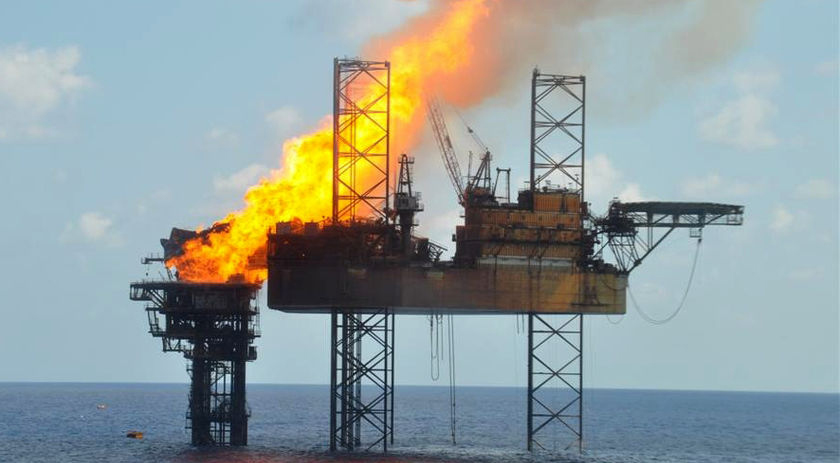

- Ghana Must Shape Its Own Energy Transition or Risk Losing Petroleum Value – PIAC Warns
The Public Interest and Accountability Committee has warned that Ghana’s petroleum industry could face significant pressure if global energy transition policies are adopted without proper regard for the country’s economic needs, development priorities and energy security realities.
The warning, issued by PIAC Technical Director Mark Agyemang during a lecture for the second cohort of the Africa Extractive Media Fellowship, places Ghana at the centre of one of the most difficult questions facing resource-rich developing countries: how to support the global shift to cleaner energy without prematurely weakening industries that still finance growth, jobs, infrastructure and public revenue.
Mr Agyemang said the energy transition remains one of the major threats to oil-producing countries such as Ghana, especially if international climate policies are implemented through a uniform framework that does not account for differences in national circumstances.
“Energy transition is the main threat to the industry. Adopting a global policy could be problematic because countries could differ in their approaches to implementation,” he said.
His caution is timely. The global economy is moving steadily towards low-carbon energy, pushed by climate commitments, investor pressure, new technologies, electric mobility, renewable energy expansion and tighter financing conditions for fossil fuel projects. For developed economies with deep capital markets and diversified industrial bases, the transition can be managed with stronger buffers. For countries such as Ghana, the risks are more complicated.
Ghana is not a major global oil producer, but petroleum remains important to its public finances, foreign exchange earnings, energy security and broader economic planning. The country is still trying to maximise value from its oil and gas resources, expand gas use for power generation, attract upstream investment and strengthen local participation in the sector. A rapid global shift away from fossil fuel financing could therefore reduce investment appetite before Ghana fully benefits from its petroleum resources.
This is the dilemma PIAC is pointing to.
The energy transition is necessary, but it is not neutral. It creates winners and losers. Countries with strong renewable technology industries, capital access and advanced grids may gain faster. Countries still dependent on extractive revenues may face stranded assets, reduced exploration interest, weaker petroleum revenues and pressure on energy supply planning.
For Ghana, the danger is not only that oil demand may fall over time. The more immediate danger is that investment decisions could change before demand disappears. If international lenders, insurers and investors begin pulling back from oil and gas projects, countries with undeveloped or underdeveloped reserves could struggle to secure capital. That could leave resources underground while the fiscal and developmental needs they were expected to support remain unresolved.
Mr Agyemang’s argument that countries differ in development levels, energy demand and dependence on fossil fuel resources is therefore central to the debate. A transition pathway that may be realistic for a wealthy industrial economy may not work for a country still expanding electricity access, building industrial capacity and seeking to create jobs.
This does not mean Ghana should resist cleaner energy. It means Ghana must negotiate the transition carefully.
The country needs a balanced strategy that protects current petroleum value while preparing for a lower-carbon future. That requires stronger gas policy, investment in renewables, improved power-sector efficiency, better petroleum revenue management, local content development and clear planning around the long-term role of oil and gas.
Natural gas is especially important. For Ghana, gas is not simply a fossil fuel; it is also a transition fuel that supports power generation and can reduce dependence on more expensive liquid fuels. If global policies treat all hydrocarbons in the same way, countries such as Ghana could be penalised for using gas to stabilise electricity supply and support industrialisation.
PIAC’s call for regional cooperation also deserves attention. Mr Agyemang urged Ghana to work with other countries in the region to develop coordinated strategies that reflect shared economic realities while responding to evolving global climate policies. (MyJoyOnline)
That is a practical proposal. West African oil and gas producers face similar challenges: how to secure investment, protect revenue, build domestic energy systems and respond to climate pressures. Acting individually, these countries may have limited influence in global negotiations. Acting together, they may be better positioned to argue for transition financing, technology transfer, gas as a transition fuel, and policy flexibility for developing economies.
Regional cooperation could also strengthen energy security. West Africa has opportunities in cross-border power trade, gas infrastructure, refining, petrochemicals, renewable energy integration and shared logistics. A coordinated regional approach would help countries avoid fragmented policy responses and strengthen their bargaining position in climate and energy discussions.
Mr Agyemang noted that such collaboration would help safeguard petroleum industries, strengthen energy security and ensure that the transition to cleaner energy does not come at the expense of economic development.
That final point is important because the energy transition must not become another form of economic exclusion. Developing countries should not be asked to abandon resources that wealthier countries used for their own industrial rise, unless credible alternatives, financing and technology are made available.
Ghana’s policy challenge is therefore twofold. First, it must not ignore the global transition. The world is changing, and petroleum-dependent planning that assumes endless demand would be risky. Second, it must not accept external transition policies without defending its national interest. A responsible transition must be gradual, fair and aligned with development.
This requires serious domestic preparation. Ghana must improve transparency in petroleum revenue use, reduce waste in the energy sector, invest oil revenues in productive assets, and avoid using petroleum income mainly for recurrent expenditure. If oil’s long-term future is uncertain, then every dollar earned from the sector must be treated as time-sensitive development capital.
The country must also accelerate diversification. The strongest protection against transition risk is not denial; it is building an economy that can survive beyond oil. Agriculture, manufacturing, digital services, tourism, mining value addition, renewable energy and logistics must all become stronger pillars of growth.
The PIAC warning should therefore not be read as a defence of fossil fuels at all costs. It should be read as a call for realism.
Ghana cannot afford a careless transition that weakens petroleum revenues before replacement industries are ready. But Ghana also cannot afford complacency in a world where capital, technology and policy are moving toward cleaner energy.
The country must shape its own transition pathway, not simply receive one designed elsewhere.
The lecture formed part of the Africa Extractive Media Fellowship, a capacity-building programme designed to equip journalists with specialised knowledge to report on Ghana’s extractive sector, including petroleum governance, mining, energy policy and natural resource management.
That context matters because public understanding will be critical. The energy transition debate is not only technical. It is about jobs, revenue, electricity, investment, climate responsibility and national development.
PIAC’s message is clear: Ghana must engage the global energy transition with open eyes.
Cleaner energy is coming. But if Ghana does not plan carefully, the transition could arrive not as an opportunity, but as a shock to an industry the country is still counting on.

