

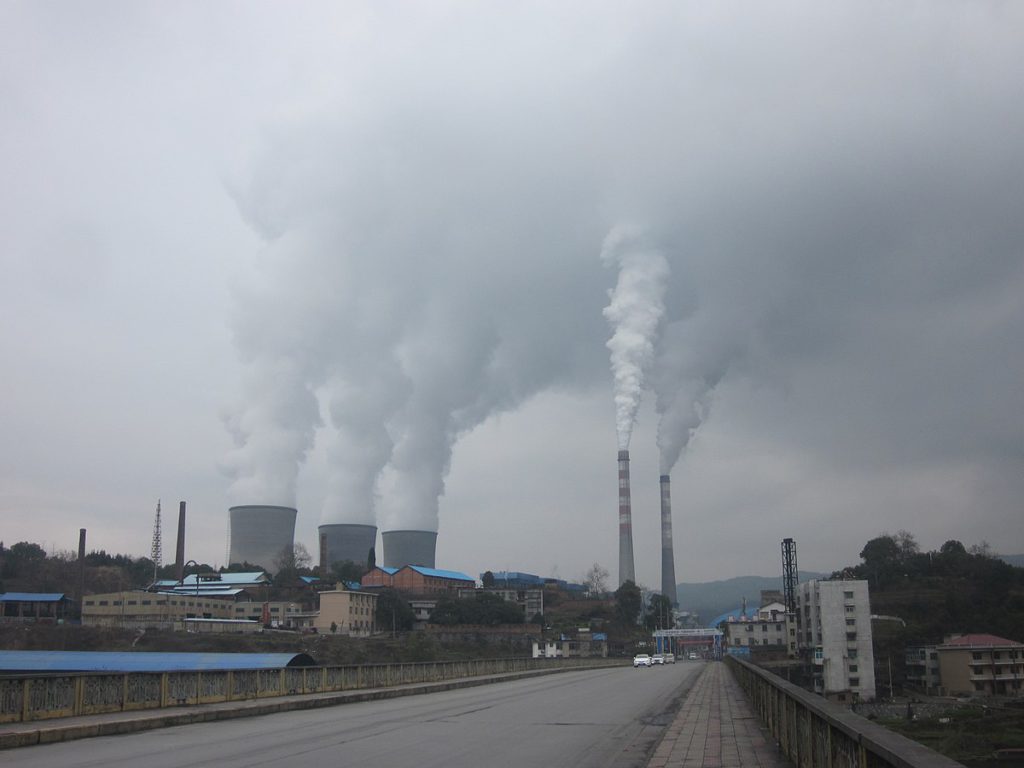

- Ghana Plans Agreement For 1,200MW Gas-Fired Power Plant Before End Of 2026
Ghana expects to sign an agreement before the end of 2026 for the construction of a 1,200-megawatt gas-fired power plant, in a significant expansion of thermal capacity intended to meet rising electricity demand and create a buffer against future supply disruptions.
President John Dramani Mahama said the proposed facility would be the country’s largest thermal power plant and form part of the government’s effort to ensure generation capacity grows ahead of demand.
The announcement advances a project outlined in the government’s 2026 Mid-Year Fiscal Policy Review, which identified Kafodzidzi-Abrobeano in the Komenda-Edina-Eguafo-Abrem Municipality of the Central Region as the proposed location.
The development is expected to proceed in phases, with the first 600MW scheduled for commissioning in 2028. The remaining capacity would take the plant to a total of 1,200MW.
If implemented on schedule, the facility would materially expand Ghana’s available generation fleet. But the project’s economic value will depend less on its headline capacity than on four unresolved questions: who will finance it, how the electricity will be priced, whether sufficient gas will be available and whether the transmission network can evacuate the power.
The government says feasibility studies have confirmed the project’s viability, while environmental assessment, engineering, permitting and financial work are progressing.
It has also acquired gas turbines directly from GE Vernova, a procurement approach that the Finance Ministry says has produced savings of between 35 and 45 per cent compared with purchasing the equipment through intermediaries.
That direct acquisition may reduce the plant’s initial equipment cost, but turbines constitute only part of the financial requirement. Civil works, transmission connections, gas infrastructure, engineering services and long-term maintenance will determine the project’s full cost.
The government has not yet disclosed the total investment required, the financing structure or the identity of all the parties expected to sign the agreement.
Those details will be particularly important given Ghana’s recent history with power-sector contracts. Generation agreements that appeared necessary during periods of shortage later became financially burdensome when demand projections, fuel availability and contractual obligations failed to align.
The new plant must therefore be assessed not only as an engineering project but as a long-term financial commitment.
Ghana’s electricity challenge has rarely been explained by installed capacity alone. A power plant may exist on paper but remain unable to generate because of maintenance problems, insufficient fuel, transmission constraints or the inability of utilities to pay producers.
The proposed 1,200MW facility could provide a substantial reserve against demand growth. Yet its usefulness will depend on how consistently it can operate and whether its output can be purchased without deepening the financial weaknesses of the electricity sector.
Thermal plants require predictable access to fuel. If domestic natural gas is unavailable, generators may be forced to depend on more expensive liquid fuels, raising generation costs and ultimately placing pressure on tariffs or government finances.
The project is consequently inseparable from Ghana’s wider gas-to-power strategy.
The government plans to develop a modular gas-processing facility capable of handling 100mn standard cubic feet of gas a day. The plant is expected to be built through a private-sector partnership, with financial close targeted before the end of 2026.
Land acquisition has been completed, while environmental studies, engineering design, financial due diligence and project structuring are under way. The proposal is expected to be submitted to Parliament for consideration.
The planned gas infrastructure could reduce the risk of building new generation capacity without securing adequate feedstock. But timing will be critical. If the power plant advances faster than the supporting gas projects, Ghana could repeat the pattern of having generation assets that cannot operate at their most efficient fuel configuration.
The government expects the plant to lower electricity-generation costs and contribute to a reduction in tariffs of between 10 and 20 per cent.
It also estimates that the first 600MW phase could create more than 2,000 direct and indirect jobs.
The tariff claim will depend on the project’s capital cost, fuel price, financing terms and utilisation rate. A modern combined-cycle plant can use natural gas more efficiently than older thermal units, producing more electricity from the same quantity of fuel.
But cheaper technology does not automatically translate into lower consumer tariffs. The final price of electricity also includes transmission losses, distribution costs, legacy debts, foreign-exchange exposure and the commercial losses of power-sector utilities.
A new plant financed in foreign currency could create additional exchange-rate risk if its revenues are collected mainly in cedis. The allocation of that risk between the state, investors and electricity consumers will be a central issue in the final agreement.
The government will also need to demonstrate that future demand is sufficient to absorb the additional capacity.
Building too little generation creates the risk of shortages. Building too much, particularly under contracts requiring payment for unused capacity, can create a different form of crisis in which the state pays for electricity that consumers do not need or utilities cannot distribute.
A credible demand forecast must therefore account for population growth, industrial expansion, mining activity, electric transportation, energy efficiency and the financial capacity of consumers to pay for power.
Ghana has been seeking to replace expensive light crude oil with domestic and imported natural gas in its thermal-generation system.
Finance Minister Cassiel Ato Forson said the switch from light crude oil to gas saved GH¢3.08bn, equivalent to US$268.5mn, in fuel costs during the first half of 2026.
The government increased gas supply for electricity generation by 35mn standard cubic feet a day by the end of June, bringing the total to approximately 490mn standard cubic feet a day. The additional volumes included 10mn standard cubic feet a day from the OCTP partners and 25mn from N-Gas.
Negotiations with the OCTP partners have also sought to raise exports from the Non-Associated Gas system from 270mn to 350mn standard cubic feet a day.
These gains are important, but a 1,200MW plant will create a significant additional call on gas. Its fuel requirements must be reconciled with the needs of existing thermal facilities and potential industrial consumers.
Ghana’s crude oil production fell from 71.4mn barrels in 2019 to about 36mn barrels in 2025, according to figures presented by the Finance Minister. That decline underlines the need for further upstream investment if gas production is to remain dependable.
“Ghana’s crude oil production declined sharply from 71.4 million barrels in 2019 to about 36 million barrels in 2025,” Dr Forson said.
“To reverse this decline, the government has introduced investor-friendly reforms that have already secured more than US$3.5 billion in new investment commitments from the Jubilee and OCTP partners.”
The government expects amendments to the West Cape Three Points and Deepwater Tano petroleum agreements to support at least 10 new wells, increase gas production and reduce the Jubilee gas price by about 18 per cent.
Those upstream reforms will be fundamental to the economics of the new plant. A gas-fired facility without affordable and reliable gas could become a costly stranded asset.
The 1,200MW facility is expected to be state-owned, making its governance and financing structure particularly important.
State ownership may allow the government to retain control over a strategic national asset and capture future returns. It may also expose taxpayers to construction overruns, operating losses and debt obligations if commercial risks are not properly managed.
The project will require transparent procurement, independent technical oversight and full disclosure of any government guarantees.
Parliament and the public should be able to determine the project’s total cost, expected tariff, gas-supply arrangements, debt obligations and risk allocation before the state assumes binding commitments.
The government must also explain how the new facility will fit into Ghana’s transition towards a more diversified power system.
Gas-fired generation can support the integration of solar and wind because thermal plants can provide power when variable renewable sources are unavailable. But a large new fossil-fuel asset may operate for several decades, creating emissions and long-term fuel obligations at a time when global financing is moving towards lower-carbon infrastructure.
That tension does not necessarily make the project uneconomic. It does mean the plant should be designed as part of an integrated energy plan rather than treated as an isolated response to future shortages.
Ghana’s central power-sector problem is not simply the absence of generating plants. It is the difficulty of aligning generation, fuel supply, transmission, distribution and payment across the electricity value chain.
The proposed 1,200MW facility could strengthen energy security and support industrial growth if it is supplied with affordable gas, financed prudently and integrated into a commercially sustainable system.
Without those conditions, it could add capacity without resolving the weaknesses that prevent existing capacity from consistently delivering affordable electricity.
The agreement expected before the end of 2026 will therefore be judged not by the size of the plant alone, but by whether it distributes the project’s financial and operational risks in a way Ghana can afford.

