

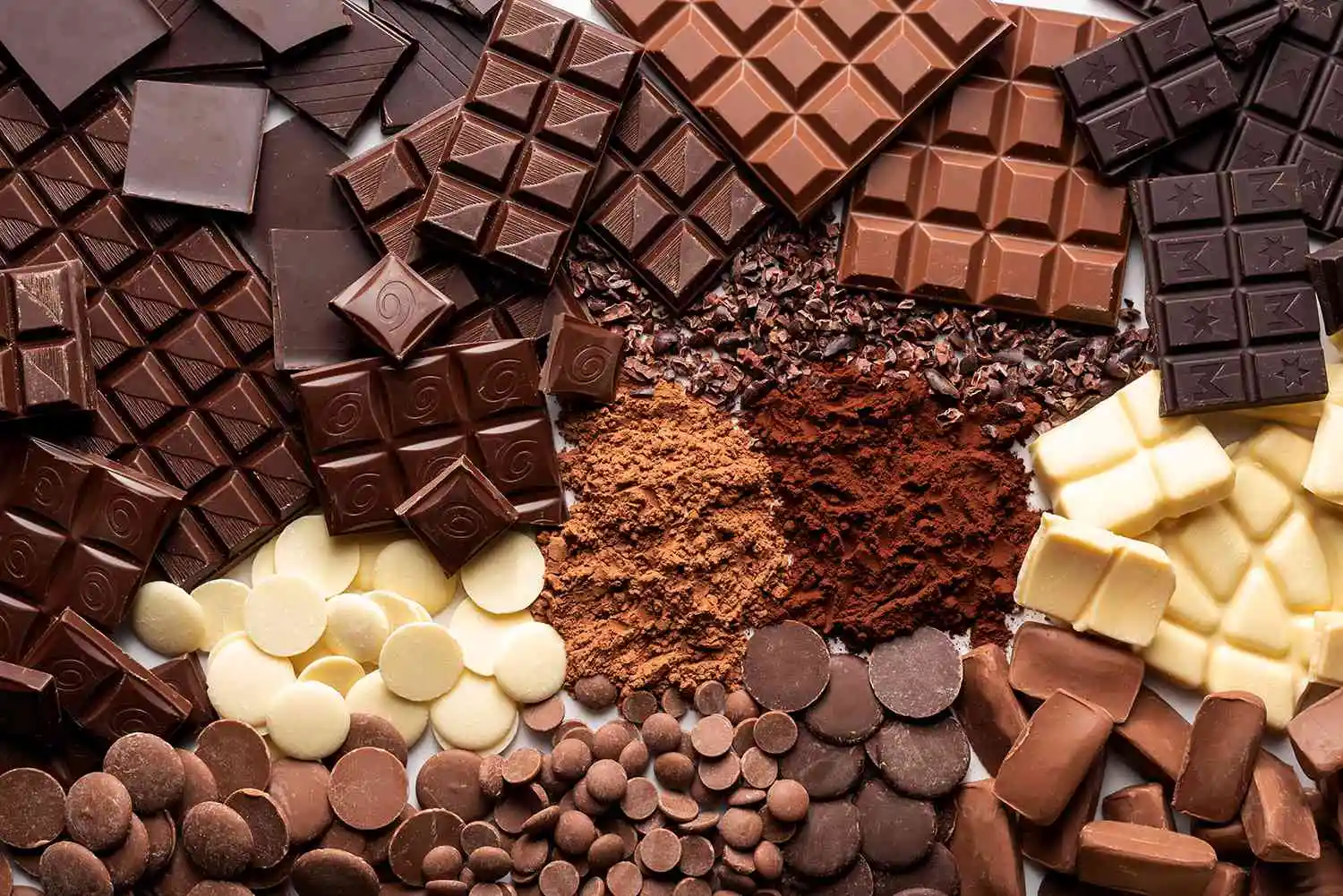

Ghana Risks Remaining a Cocoa Superpower but a Chocolate-Value Lightweight
Ghana’s position as one of the world’s most important cocoa producers is increasingly colliding with a harder economic reality: the country remains deeply embedded in the upstream end of the global chocolate industry while much of the value created from its beans is captured elsewhere.
That imbalance is becoming more consequential as Europe tightens environmental and traceability requirements for agricultural imports and as Ghana’s dependence on the European Union remains high.
Fitch Solutions estimates that an average 53.70% of Ghana’s cocoa bean exports were destined for the EU between 2021 and 2024, placing the country behind Cameroon at 74.70%, Nigeria at 57.80% and Côte d’Ivoire at 57.40%.
The numbers underline a structural vulnerability that extends beyond market concentration. Ghana is highly dependent on a destination that is simultaneously raising the cost and complexity of access, while the country still captures only a limited share of the final value generated from cocoa.
West Africa produces roughly 65.00% of the world’s cocoa and accounts for more than half of global cocoa bean exports. Yet much of the processing, manufacturing, packaging, branding and retail activity that carries the highest margins takes place outside the region.
“We believe the EU’s central role in global cocoa bean imports leaves West African producers highly exposed to developments within the bloc,” Fitch Solutions said.
That exposure matters because Ghana’s cocoa strategy has traditionally been built around production quality and export access. The central question is no longer simply whether Ghana can continue producing premium cocoa. It is whether the country can defend access to its most important markets while also retaining more of the economic value created after the bean leaves the farm gate.
“West Africa remains the dominant player in global cocoa markets, accounting for roughly 65.00% of global production and over half of global cocoa bean exports. Despite this, we view the region’s role in the cocoa value chain to be concentrated in upstream production, with much of the value added occurring elsewhere, particularly Europe,” it said.
Nigeria, Côte d’Ivoire, Ghana and Cameroon together account for roughly 70.00% of global cocoa production but capture only about 6.00% of the value of a finished chocolate bar, according to figures cited by CNBC Africa.
That means producing countries remain heavily exposed to the risks associated with farming, weather, pests, input costs and commodity-price volatility while processors, manufacturers, distributors and consumer brands capture a larger share of final margins.
For Ghana, that structure is increasingly difficult to defend as a long-term development model.
“In our view, this traditional model of exporting raw cocoa beans for processing elsewhere will face growing pressure over the coming years, with implications on the composition and direction of global cocoa trade flows,” Fitch Solutions said.
Ghana exported about US$1.08 billion worth of raw or roasted cocoa beans in 2024, with the Netherlands alone accounting for roughly US$247 million. Spain, Belgium, Germany and Italy were also significant European destinations.
Ghana has made some progress in processing, particularly in cocoa butter, powder and paste, and has become an important supplier of processed cocoa products to markets such as the Netherlands.
But the broader regional trade pattern remains overwhelmingly weighted towards raw commodities.
International Trade Centre data cited by Fitch Solutions indicate that cocoa beans represented an average 18.00% of total exports across Ghana, Côte d’Ivoire, Cameroon and Nigeria in 2025. Cocoa paste accounted for just 5.00%, cocoa butter 4.00% and cocoa powder 1.00%, while chocolate exports remained negligible.
Europe sits at the opposite end of that value chain. The EU has accounted for roughly two-thirds of global chocolate exports over the past five years.
That contrast captures the central economic problem.West Africa dominates the production of cocoa, but Europe dominates the conversion of cocoa into high-value consumer products.
Closing that gap will require more than building a few processing plants.
Ghana would need reliable and competitively priced energy, affordable financing, efficient ports and logistics, consistent access to beans for local processors, high-quality packaging, sophisticated marketing and greater penetration of consumer markets.
Without those supporting conditions, additional processing capacity can remain underutilised or uncompetitive.
The EU Deforestation Regulation requires cocoa entering the European market to meet traceability, legality and deforestation-free requirements, including geolocation information capable of linking cocoa to specific plots of production.
A cocoa bean can be physically high quality but commercially disadvantaged if its origin cannot be demonstrated to the standard required by the importing market.
Traceability systems, farm mapping, digital records and verification are no longer peripheral sustainability tools. They are becoming part of the trade infrastructure required to maintain access to premium buyers.
Ghana appears relatively well positioned compared with some regional peers. The country has been rolling out the Ghana Cocoa Traceability System, alongside deforestation-risk mapping and other compliance measures. European officials have also acknowledged progress in the country’s preparations.
Hundreds of thousands of smallholder farmers operate across dispersed rural areas, making farm mapping, verification and record keeping both logistically demanding and expensive.
If exporters bear them, margins may narrow. If farmers bear them, already fragile household incomes could come under further pressure. If government subsidises them, the fiscal cost increases. That makes the implementation architecture as important as the regulation itself.
The risk is that Ghana succeeds in maintaining access to Europe but does so mainly as a compliant supplier of raw beans. That would preserve trade without necessarily changing the country’s position in the value chain.
The bigger ambition must therefore be two-track: protect market access while accelerating domestic value addition. That means moving beyond grinding into higher-value stages of manufacturing and branding.
Producing cocoa butter and powder is economically preferable to exporting only raw beans, but the largest gains are likely to come from participating more deeply in finished chocolate, confectionery, branded consumer products and specialised cocoa ingredients.
Ghana would need to align agriculture, energy, trade, finance and manufacturing policy around a single objective: retaining more value from cocoa before it leaves the country.
That also means resolving the tension between export earnings from raw beans and bean availability for local processors. If domestic grinders cannot reliably secure sufficient volumes at commercially viable terms, installed processing capacity will not translate automatically into industrial transformation.
Fitch Solutions’ findings therefore expose a deeper development question. Ghana has spent decades building one of the strongest reputations in the world for cocoa quality.
But quality alone does not determine who captures the most value. The countries that dominate final processing, branding and consumer distribution are often the ones that command the highest margins.
Europe’s sustainability rules are raising the threshold for access at the same time Ghana is confronting the longstanding weakness of being a commodity producer in a value chain whose richest segments sit elsewhere. If Ghana responds only by making its raw beans more traceable, it may protect market access without fundamentally changing the economics of cocoa.
If it combines traceability with deeper processing, competitive manufacturing and stronger domestic brands, the same regulatory pressure could become a catalyst for transformation.
They concern whether Ghana can move from being indispensable to the global chocolate industry as a supplier of raw material to being materially more important in the production and capture of chocolate value itself. Without that shift, Ghana risks remaining exactly what it is today: a cocoa superpower, but a chocolate-value lightweight.

