

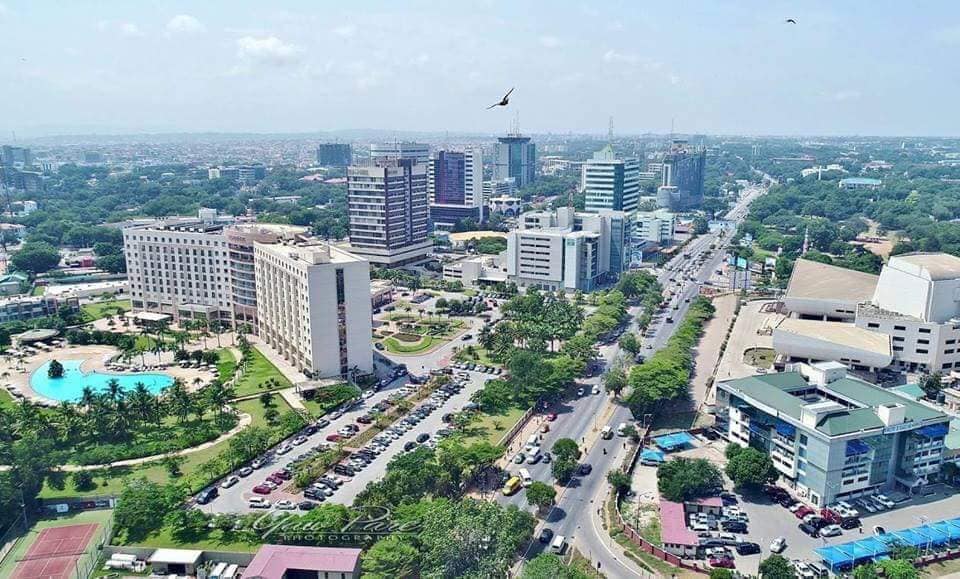

Ghana Set to Become Africa’s Eighth Largest Economy in 2026; GDP to Reach $113.5 Billion
Ghana is projected to become the eighth largest economy in Africa in 2026, with a nominal Gross Domestic Product (GDP) of $113.49 billion, up from an estimated $108.1 billion in 2025, reflecting a growth rate of 4.8 percent.
According to multilateral economic data, Ghana’s growth trajectory underscores its resilience amid challenges in public debt management and external vulnerabilities. The country continues to leverage its natural resource wealth while expanding services and industrial sectors, maintaining one of the continent’s most stable macroeconomic frameworks.
Gold and cocoa exports remain key contributors to the economy, but the oil and gas sector has increasingly boosted GDP and fiscal revenues, helping stabilize earnings amid volatile commodity prices. Infrastructure investments in roads, ports, and energy projects have further improved logistics and reduced operational costs for businesses.
Across the continent, South Africa is projected to retain its position as Africa’s largest economy, with a nominal GDP of $443.64 billion in 2026, followed by Egypt at $399.51 billion and Nigeria at $334.34 billion. Algeria, Morocco, Kenya, Ethiopia, and Ghana round out the top eight economies, reflecting a mix of industrial, resource-driven, and services-led growth.
The rankings highlight Ghana’s growing economic significance in West Africa, underpinned by diversification, macroeconomic stability, and strategic investment in infrastructure and industry.
Economy Grows 5.5% in Q3 2025
Ghana’s economy expanded by 5.5 percent in the third quarter of 2025, figures from the Ghana Statistical Service (GSS) show, underscoring sustained momentum across major sectors despite global economic uncertainty.
The non-oil economy recorded growth of 6.8 percent, reflecting continued improvement in domestic economic activity even though the outturn was marginally lower than last year’s performance.
Agriculture delivered one of the most notable growth surges, expanding by 8.6 percent compared to 2.5 percent in the same period of 2024. The crops sub-sector remained the primary driver of the sector’s gains, a development analysts attribute to rising productivity among small- and medium-scale farmers.
Industry returned to positive growth, recording 0.8 percent after contracting last year. Manufacturing and food processing supported the recovery, though overall performance was weighed down by a steep 14.1 percent contraction in the oil and gas sub-sector, a continuation of the decline seen in recent quarters.
The Services sector remained the largest contributor to GDP, expanding by 7.6 percent and accounting for roughly 40 percent of total output. Strong performances in ICT, trade, transport, storage and education-related services reinforced the sector’s dominant role in the economy.

