


- Ghana Spends US$20.00m Repairing Fibre Cuts as Galamsey and Construction Damage Telecom Networks
Ghana is spending about US$20.00 million this year repairing damaged fibre infrastructure as illegal mining, private construction, road works, flooding and power failures place growing pressure on the physical systems underpinning the country’s digital economy.
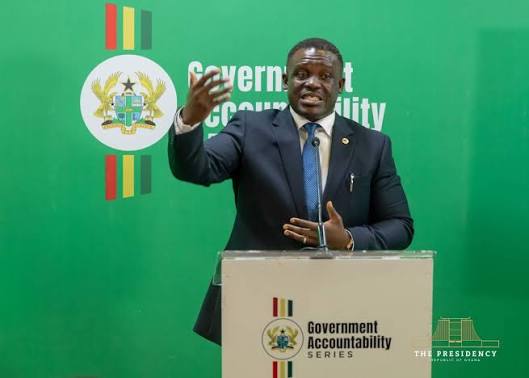
Communications, Digital Technology and Innovations Minister Samuel Nartey George says the persistent deterioration in network quality cannot be attributed solely to mobile network operators because much of the disruption originates outside the telecommunications industry. Fibre cuts caused by excavation, infrastructure projects and illegal mining have become a major source of service degradation and repair costs.
The economic consequences extend well beyond dropped calls or slow internet connections. Ghana’s telecommunications networks now support mobile money, banking, e-commerce, government services, remote work, education and emerging digital applications, meaning damage to a fibre cable can disrupt transactions and essential services across multiple sectors.
Mr George identified illegal mining, or galamsey, as one of the most damaging sources of fibre disruption, arguing that operators frequently receive no warning when mining activity cuts through underground infrastructure. He said about 25.00% of the fibre-related problems presented during the government briefing were associated with galamsey, while private and estate developers accounted for another 26.00%.
Road construction and other infrastructure works also contribute materially to the problem. Excavators can sever telecommunications cables where contractors are unaware of underground routes, creating outages that require emergency repairs and force operators to spend capital restoring infrastructure that was already functioning.
The financial cost is becoming increasingly significant. Mr George said Ghana is spending about US$20.00 million this year repairing fibre infrastructure, money he argued could otherwise have been invested in network expansion and improvements.
That distinction matters for the economics of digital infrastructure. Capital used to replace avoidably damaged fibre does not increase coverage, capacity or redundancy, meaning repeated repairs effectively crowd out investment that could have supported faster networks, improved reliability or expanded service into underserved communities.
Government is therefore proposing a “Dig Once” policy intended to integrate telecommunications infrastructure into road construction from the outset. Under the proposed approach, road projects would incorporate dedicated chambers for telecom infrastructure, reducing the need for operators to repeatedly excavate newly completed roads.
The policy has passed the relevant Cabinet committee stage and was expected to proceed to Cabinet plenary, according to the minister. The ministry is also working on a formal coordination mechanism involving the National Communications Authority, Ghana Highways Authority, road agencies and telecommunications operators, with contractors expected to consult operators before excavation.
Government has resisted calls to publish the complete national fibre map because it considers the network a national-security asset. Instead, contractors would be given institutional channels through which they can determine the location of critical infrastructure before works begin, balancing operational coordination with security concerns.
The success of that framework will depend largely on enforcement. A coordination mechanism that contractors can ignore would do little to reduce fibre cuts, while clear liability rules and effective sanctions could change the incentives surrounding excavation and infrastructure planning.
Fibre damage, however, is only one dimension of network resilience. Ghana’s mobile sites depend primarily on the national electricity grid, with batteries and generators providing backup, meaning the reliability of telecommunications infrastructure is closely linked to the performance of the electricity system.
The minister cited power disruptions and flooding in Greater Accra to illustrate that vulnerability. During floods, electricity supplies may need to be switched off to prevent electrocution, while backup generators can themselves become submerged, leaving operators without either the primary or secondary source of power needed to keep mobile sites functioning.
The financial consequences continue after service is restored because damaged generators and other equipment must be replaced and sites recommissioned. In another example of how exposed the network can be, Mr George said refuse was burned inside a fibre chamber around the Chado area, damaging cables and affecting service towards Chain Homes and Airport Hills.
Such incidents expose a less visible element of Ghana’s digital economy. Consumers interact with phones, mobile applications and network masts, but much of the critical infrastructure carrying data and financial transactions lies underground or in facilities that are easily overlooked until they fail.
Government is consequently considering penalties for parties that damage fibre infrastructure once the new coordination framework is operational. The broader strategy combines infrastructure design, inter-agency coordination and enforcement in an attempt to reduce avoidable disruption and lower the recurring cost of repairs.
The timing is important because Ghana is attempting to expand rural connectivity while preparing for more advanced mobile technologies. Government has separately signalled its intention to upgrade rural telephony infrastructure to at least 4G, even as the country prepares for 5G deployment and expands digital public services.
That leaves policymakers with a difficult investment equation: Ghana must spend more to increase capacity while simultaneously protecting the infrastructure already built. Every avoidable fibre cut, flooded generator or poorly coordinated excavation raises the cost of achieving both objectives.
The US$20.00 million repair bill therefore represents more than a maintenance expense. It illustrates the opportunity cost of weak infrastructure coordination, because resources repeatedly used to restore damaged networks cannot simultaneously finance additional towers, fibre redundancy or technology upgrades.
Ghana’s digital ambitions will ultimately depend not only on spectrum, 4G and 5G deployment or new digital services, but on whether the underlying infrastructure can be protected from predictable physical risks. As Mr George put it, government believes it now has “a coordinated path to network resilience”.
The more important test will be whether that coordination becomes enforceable practice. If it does, Ghana could redirect millions of dollars from repeated repairs towards new capacity; if it does not, the country risks continuing to spend heavily rebuilding digital infrastructure that should never have been damaged in the first place.

