

- Ghana targets preventive care shift under new free primary healthcare programme
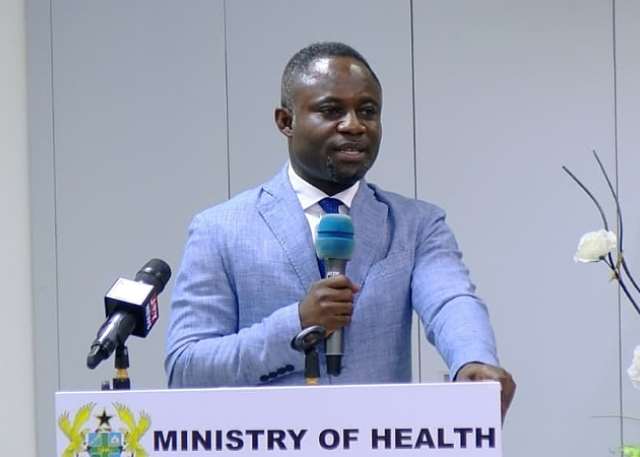
Ghana’s Health Minister, Hon. Kwabena Mintah Akandoh, has formally introduced the government’s Free Primary Health Care Policy, describing it as a major reset in the country’s health system aimed at making essential services easier to access, cheaper for households and more focused on prevention than crisis treatment.
Speaking at the Accountability Series Press Engagement, Hon. Akandoh said the policy is designed to ensure that every Ghanaian can access a defined package of essential services free at the primary care level, without worrying about the cost of seeking treatment. He said the programme will apply at CHPS compounds, health centres and polyclinics across the country and will also extend into communities through outreach and household-level engagement.
For the government, the policy is being presented not merely as another health intervention but as part of a broader attempt to close one of Ghana’s most persistent social gaps: the distance between the need for early care and the ability to pay for it. Mr. Minister said the policy is ultimately about whether a Ghanaian can access care “early, easily, and without worrying about cost.”
The backdrop is a health system that has expanded in important ways over the years but still leaves many households exposed. According to the minister, Ghana’s Universal Health Coverage service coverage index stands at about 56 per cent against a target of 80 per cent by 2030. He said only about two-thirds of the population is actively enrolled in the NHIS, while out-of-pocket payments still account for about one-third of total health expenditure, leaving many families vulnerable to financial hardship at the point of care.
That gap, he argued, has serious health consequences. When people must pay before they can receive care, they often delay seeking help, manage symptoms at home, or only appear at health facilities when conditions have significantly worsened. Akandoh said this is particularly dangerous in a country now facing what he described as a triple burden of disease: continued infectious disease pressures alongside a rising wave of non-communicable illnesses such as hypertension, diabetes, cancers, stroke and mental health conditions.
The minister pointed out that awareness of many of these conditions remains too low, meaning large numbers of Ghanaians are living with chronic diseases without knowing it until complications emerge. He cited data from a 2021 study indicating that only 35 percent of hypertensive patients in Ghana were aware of their condition, a pattern he said contributes to avoidable cases of stroke, kidney failure, advanced cancers, and other severe outcomes that become far more expensive and difficult to treat later.
The new policy aims to change that pattern by shifting the focus in healthcare away from late-stage treatment and towards routine screening, early detection, and preventive services. Under the programme, Ghanaians will be able to receive screening for hypertension, diabetes, obesity, mental health conditions, and some cancers, alongside maternal and child health services, immunisation, family planning support, health promotion, and treatment for common illnesses such as malaria, diarrhoea, and respiratory infections. Basic emergency care, counselling, and referral services are also included.
Hon. Akandoh said there would be no cost at the point of care for preventive, promotive, or curative services covered under the package, with patients only required to present a valid national ID. He added that uninsured patients would also be encouraged to enrol on the National Health Insurance Scheme, enabling them to access district, regional and tertiary services beyond the free primary-care package.
One of the more significant features of the plan is that it will not rely only on facility-based care. The minister said the policy is designed to bring healthcare into communities through home visits, school outreach, screening campaigns and wider public health engagement so that people who do not actively visit health centres can still be reached. He also disclosed plans to integrate school clinics and community pharmacies into the service-delivery model over time, though he said this would be done carefully and in phases.
In policy terms, this marks a deliberate shift. Rather than waiting for illness to become acute, the health system is being repositioned to begin engagement earlier, treat routine screening as standard practice, and pay health workers to carry out preventive work that has too often been left to chance. That, in essence, is the government’s attempt to make primary healthcare more proactive than reactive. This is an inference from the minister’s description of how the policy is designed to function.
Implementation will be phased. Hon. Akandoh said the programme will roll out between 2026 and 2028, beginning with 150 selected districts, particularly underserved areas, before expanding nationwide. He said the phased approach would allow the ministry to learn, adjust, and maintain quality as the system grows.
To support the rollout, the minister told the press that the government has already mapped service delivery points, defined referral systems, and procured 24,534 pieces of essential medical equipment for deployment across the country. These include incubators, glucometers, hospital beds, and ultrasound machines intended to strengthen frontline facilities and improve readiness for implementation. He added that, over the next two months, the government would distribute equipment to all 150 first-phase districts, intensify public sensitisation, deploy trained volunteers, and establish more than 350 container-based service delivery points in high-traffic locations such as markets and lorry parks.
The financing model, he noted, has been built into the 2026 allocation to the National Health Insurance Authority. Preventive and promotive services will be financed through population-based payments, while curative services will continue to be reimbursed through the NHIS. He linked the policy to broader financing reforms, including the uncapping of the NHIS and the creation of the Ghana Medical Trust Fund to support advanced care for chronic conditions.
The minister pitched the initiative as both a policy reform and a political commitment fulfilled. He said the government would back the programme with accountability mechanisms to track service delivery, monitor quality, measure patient satisfaction, and allow citizens to report problems. The aim, he suggested, is not only to announce the policy, but to make sure it is seen to work.
For the Mahama administration, the Free Primary Health Care Policy is being positioned as a foundational reform: one that aims to reduce avoidable illness, improve early diagnosis, and widen access to basic care without direct payment barriers. Whether it succeeds will depend on execution. But in design and ambition, it is clearly intended to reset the relationship between ordinary Ghanaians and the health system they depend on.

