


- Ghana Turns to Tokenisation to Unlock Billions in ‘Dead Capital’ – SEC
Ghana is testing whether tokenisation can turn some of its most valuable but illiquid assets from gold and property to trade receivables and infrastructure—into investible instruments capable of attracting capital from local and international investors.
The initiative reflects a growing conviction among regulators that Africa’s financing challenge is not simply a lack of wealth. It is also the inability to divide, trade and borrow against assets that already exist.
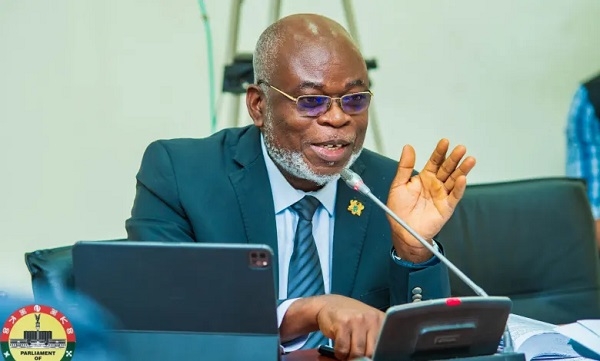
“Value on this continent is not scarce. What is scarce is the ability to turn what we own into capital we can use,” said Dr James Klutse Avedzi, Director-General of Ghana’s Securities and Exchange Commission.
Speaking at the launch of the Africa Virtual Assets Summit 2026 in Accra, Dr Avedzi argued that land, gold, cocoa inventories, trade receivables and interests in major infrastructure projects often remain economically dormant because they are difficult to transfer or convert into liquid financial instruments.
“That is not a shortage of assets. It is a shortage of the infrastructure that makes assets liquid,” he said.
Tokenisation seeks to close that gap by digitally representing ownership rights in an underlying asset. A building, gold holding or debt instrument can, in principle, be divided into smaller digital units and sold to multiple investors.
For Ghana, the attraction is clear. Conventional financing remains expensive, long-term capital is limited and many commercially viable projects struggle to attract funding. Across Africa, the infrastructure financing deficit is estimated at about $150bn.
Yet tokenisation’s promise extends beyond large projects. It could alter how ordinary investors gain exposure to assets that have traditionally required substantial capital.
Ghana’s housing market offers an obvious test. The country faces a housing deficit estimated at about 1.8mn units, but developers remain constrained by high borrowing costs and limited mortgage finance.
Under a fractional ownership model, investors could purchase small interests in a property while developers raise money from a wider pool of savers.
“Fractional ownership will make a citizen or a diaspora investor own a share of a building for the price of a few hundred cedis, and let developers raise capital from thousands of small investors rather than one bank,” Dr Avedzi said.
The proposition is potentially transformative. But dividing an asset into thousands of digital units does not automatically make it liquid. A functioning market still requires buyers, credible valuations, transparent ownership records and a reliable mechanism through which investors can sell their interests.
Gold presents another significant opportunity. Ghana earned about $21bn from gold exports in 2025, according to the SEC Director-General. Digitally represented tokens backed by physical gold could give smaller investors exposure to the commodity without requiring them to purchase, transport or store bullion.
Such instruments could also provide an alternative savings vehicle during periods of inflation and currency volatility. Their credibility, however, would depend on independently verified reserves, secure custody arrangements and confidence that every token is fully backed by the underlying metal.
The SEC has moved the discussion beyond broad policy statements. Its regulatory sandbox is hosting pilots involving the tokenisation of gold, securities, Treasury bills, bonds and trade-finance assets.
The controlled environment is intended to allow regulators and businesses to test new products while identifying risks before they are released to the wider market.
Those risks are considerable. Tokenisation cannot repair defective land titles, make an unprofitable infrastructure project viable or guarantee repayment on a weak debt instrument. It changes the form in which an asset is held and traded, but not its underlying economic quality.
Digital distribution could also allow unsuitable products to reach inexperienced investors more quickly. Weak custody systems, cyberattacks, misleading valuations, money laundering and outright fraud could erode confidence before the market develops sufficient depth.
Dr Avedzi acknowledged the dangers, citing “volatility, fraud, money laundering, exposure, and inclusion that shift risk onto those least able to bear it”.
The SEC’s response is to place investor protection, market integrity and financial stability at the centre of the emerging framework.
“Trust comes first, because without it, everything else is built in vain,” he said. “Inclusion comes second, because a system that serves only the already banked and the already wealthy has failed the many.”
The regulator is also presenting tokenisation as a potential feeder into Ghana’s established capital market rather than a competing system designed to bypass it.
“For businesses, the promise is access,” Dr Avedzi said, pointing to the potential for “smaller raises, lower cost, faster distribution, and a wider base of investors”.
Successful companies could begin with smaller tokenised capital raises before eventually qualifying for conventional listings.
“Ghana Stock Exchange tokenisation [should] be the feeder for our listings, not a rival with them,” he said.
That relationship will be important. Ghana’s capital market needs deeper participation, more listings and a broader range of instruments. A properly regulated tokenisation framework could help younger companies establish investor records and improve disclosure before entering the public market.
Ghana must demonstrate that tokenisation can lower financing costs, expand access to productive assets and create genuine secondary-market liquidity. It must also ensure that digital ownership corresponds to legally enforceable claims in the physical economy.
The technology can divide a gold holding, property or infrastructure project into thousands of pieces. It cannot, by itself, guarantee credible ownership, sound governance or willing buyers.
Ghana’s tokenisation bet will therefore succeed only if the country builds something less fashionable but more fundamental: a trusted market in which the digital claim is as secure as the asset it represents.

