

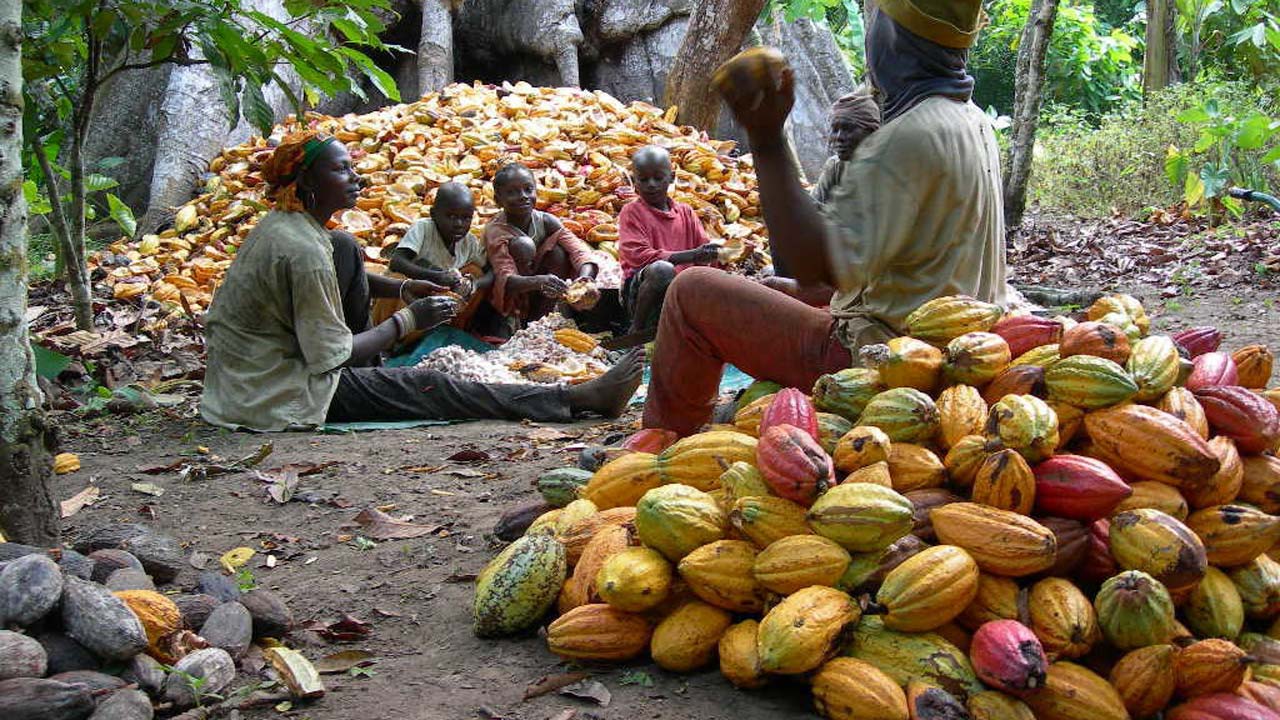

- Ghana Wants a Bigger Say in the Future of Cocoa
Ghana will host the 2027 Partnership Meeting of the World Cocoa Foundation in Accra, placing the country at the centre of global discussions on the future of cocoa as the industry confronts climate change, disease outbreaks, farmer income concerns and volatile commodity prices.
The three-day meeting, scheduled for March 16 to 18, 2027, will be held under the theme “From Origin to Global Resilience.” It is expected to bring together cocoa traders, chocolate manufacturers, development institutions, farmer groups and policymakers at a time of mounting concern over sustainability and long-term supply security.
Announcing the event, Deputy Finance Minister Thomas Nyarko Ampem described Ghana’s hosting rights as both symbolic and strategic, arguing that cocoa-producing countries must play a stronger role in shaping the future of the global cocoa economy.
“Cocoa remains a strategic national asset,” he said, noting that the crop continues to underpin rural livelihoods and export earnings in Ghana, the world’s second-largest cocoa producer.
His remarks reflect a wider frustration among producing countries over the structure of the global chocolate trade. Although the industry generates more than $100 billion annually, many cocoa farmers across West Africa continue to earn below living-income thresholds, raising fresh concerns over the sustainability of future production.
Mr Ampem described the imbalance as a structural contradiction within the industry and called for reforms that would ensure a fairer distribution of value across the cocoa supply chain.
The sector is also facing a convergence of risks. Climate-related disruptions, cocoa swollen shoot disease, environmental degradation, ageing farms and persistent price swings have all contributed to supply uncertainty in recent years.
Against that backdrop, Ghana is pursuing a reform agenda known as the “Cocoa Reset,” aimed at improving productivity, strengthening farmer support systems and expanding domestic processing capacity.
The initiative also seeks to improve governance and transparency within the cocoa sector while encouraging greater value retention through local industrialisation rather than continued dependence on raw bean exports.
“Ghana is determined to move beyond the export of raw cocoa beans and retain greater value within producing countries,” Mr Ampem said.
The reforms come as cocoa-producing countries face increasing pressure from international buyers and regulators to comply with stricter sustainability and traceability requirements tied to market access, particularly in Europe.
Mr Ampem said Ghana remained committed to climate adaptation, forest conservation and climate-smart cocoa production, arguing that sustainability could no longer be treated as peripheral to the industry’s commercial future.
He also called for deeper cooperation between governments, financial institutions, multinational cocoa companies and development agencies, saying the burden of building resilience could not rest solely on farmers and producing countries.
Chris Vincent, President of the World Cocoa Foundation, said Ghana was a natural choice to host the meeting given its longstanding role in the sector and reputation for high-quality cocoa production.
Speaking virtually during the announcement, he praised the leadership of the Government of Ghana and the Ghana Cocoa Board in advancing the country’s cocoa industry.
The 2027 meeting will also coincide with the 80th anniversary of the Ghana Cocoa Board, underscoring Ghana’s historic role in the development of the global cocoa trade.
For Ghana, the Accra meeting offers more than diplomatic visibility. It provides a platform to push for a new compact between origin countries and global buyers one that links farmer income, climate resilience, traceability, productivity and local processing into a more equitable cocoa economy.
The central question is whether the global chocolate industry is prepared to move beyond sustainability commitments and invest more directly in the farms, communities and institutions that sustain its supply chain.

