

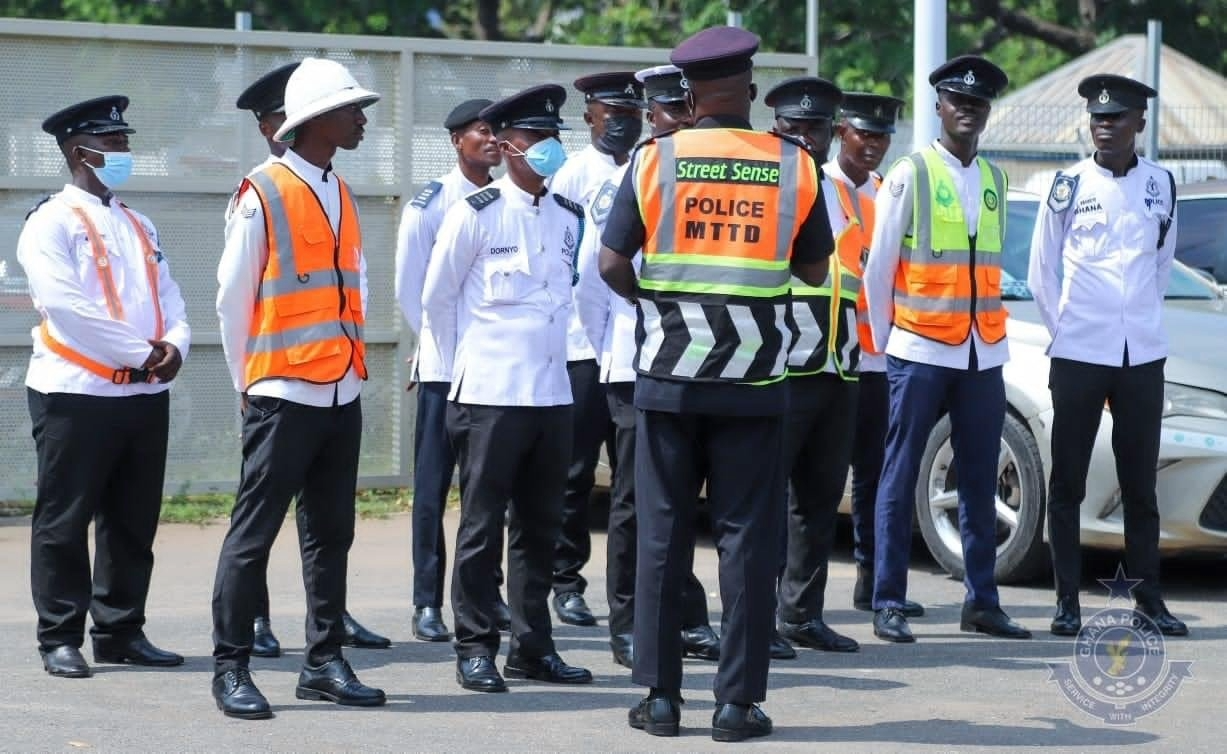

- Ghana’s Anti-Corruption Progress Stalls at Frontline as MTTD Leads Bribery Reports
Ghana’s progress on governance indicators is failing to translate into lower levels of everyday corruption, with motorists continuing to bear a disproportionate share of unofficial payments demanded by public officials, according to the latest Governance Series report by the Ghana Statistical Service.
The report identifies the Motor Traffic and Transport Department of the Ghana Police Service as the public institution most frequently associated with reported bribe payments, reinforcing concerns that petty corruption remains deeply embedded in routine interactions between citizens and frontline state institutions.
The findings expose a widening disconnect between improvements in formal governance structures and the actual experience of citizens.
While Ghana recorded progress across several governance indicators during 2025, corruption pressures intensified in the second half of the year, particularly in direct encounters with public officials.
Government Statistician Dr Alhassan Iddrisu said unofficial payments remained widespread among people exposed to bribery situations.
“Public officials demanded unofficial payments from nearly seven in every 10 Ghanaians who encountered bribery situations during the second half of 2025,” he said.
The figure is significant because it shifts the corruption debate away from legislation, national institutions and high-level scandals towards what happens when citizens interact directly with the state.
For many Ghanaians, those encounters occur not in ministries or Parliament but on roads, at checkpoints and during enforcement procedures.
Traffic policing creates particularly high exposure because officers exercise considerable discretion over vehicle inspections, documentation checks, roadworthiness enforcement and traffic offences.
Each interaction can involve legitimate regulatory authority, but it can also create opportunities for informal payments where procedures are unclear, enforcement is inconsistent or motorists believe payment will help them avoid sanctions.
The continued dominance of the MTTD in reported bribery therefore raises questions about whether broad institutional reforms have changed behaviour at the operational level.
Successive governments and police administrations have introduced ethics programmes, disciplinary measures, public complaint channels and anti-corruption campaigns. Yet the GSS findings suggest those interventions have not been sufficient to materially change the public’s experience of frontline policing.
The economic effects extend beyond the individual cost to motorists.
Unofficial payments increase transport and transaction costs, particularly for commercial operators whose vehicles frequently encounter enforcement officers. For logistics companies, passenger transport businesses and traders moving goods across the country, repeated informal payments can become an additional operating expense.
They also distort compliance.
A motorist who can avoid sanctions through payment has less incentive to comply with vehicle safety, licensing or traffic rules. Conversely, law-abiding road users may perceive the system as unfair if enforcement appears negotiable.
That weakens confidence in regulation itself.
Persistent roadside corruption also carries a broader institutional cost because police officers are among the most visible representatives of the state. Public trust can therefore be damaged even when improvements are taking place elsewhere in government.
This is the central paradox highlighted by the GSS findings.
Governance can improve through stronger institutions, administrative reforms and better policy frameworks while citizens simultaneously report poor experiences when dealing directly with public officials.
That suggests Ghana’s anti-corruption strategy may need to move beyond broad institutional reform towards more targeted interventions in agencies where discretionary interaction with the public remains high.
Technology could play a more important role.
Automated traffic enforcement, electronic fines, digital vehicle verification and cashless payment platforms could reduce opportunities for officers and motorists to negotiate unofficial settlements.
Body cameras and stronger digital audit trails could also make enforcement decisions more transparent and easier to review.
Such systems would not eliminate corruption automatically, but they could reduce the amount of discretion exercised in opaque environments.
The objective should be to redesign processes so that legitimate enforcement does not depend on informal negotiation.
There is also an important behavioural dimension.
Bribery does not exist solely because officials request payments. In some cases, motorists may offer money to avoid penalties, speed up procedures or circumvent legal requirements.
A durable response must therefore address both sides of the transaction.
Public education, predictable sanctions and simplified administrative processes could make it harder for either citizens or officials to treat bribery as a routine shortcut.
The data also raise questions about how anti-corruption performance should be measured.
National governance indices can capture improvements in institutional capacity, regulatory quality and policy effectiveness, but they may not fully reflect the daily experiences that shape public trust.
For citizens, governance is ultimately experienced through service delivery.
A country may strengthen laws and improve institutional architecture, but those gains have limited credibility if ordinary people continue to expect unofficial payments when dealing with public agencies.
The persistence of the MTTD at the top of reported bribery rankings therefore has implications beyond policing.
It suggests that Ghana’s next phase of governance reform must focus more strongly on implementation, frontline accountability and the redesign of high-risk public interactions.
That means identifying where discretionary power is concentrated, reducing unnecessary face-to-face transactions and making sanctions for misconduct credible.
The latest GSS Governance Series therefore delivers a more complicated picture of Ghana’s institutional progress.
The country may be improving on several formal measures, but those gains remain incomplete if citizens continue to encounter corruption in ordinary public services.
For motorists in particular, the road remains one of the places where the state is experienced most directly.
Until roadside enforcement becomes more transparent, predictable and resistant to unofficial payments, Ghana’s broader governance improvements risk being overshadowed by the daily reality of petty corruption.
The real test of reform, therefore, is not simply whether governance improves on paper, but whether citizens can feel the difference when they encounter the state.

