

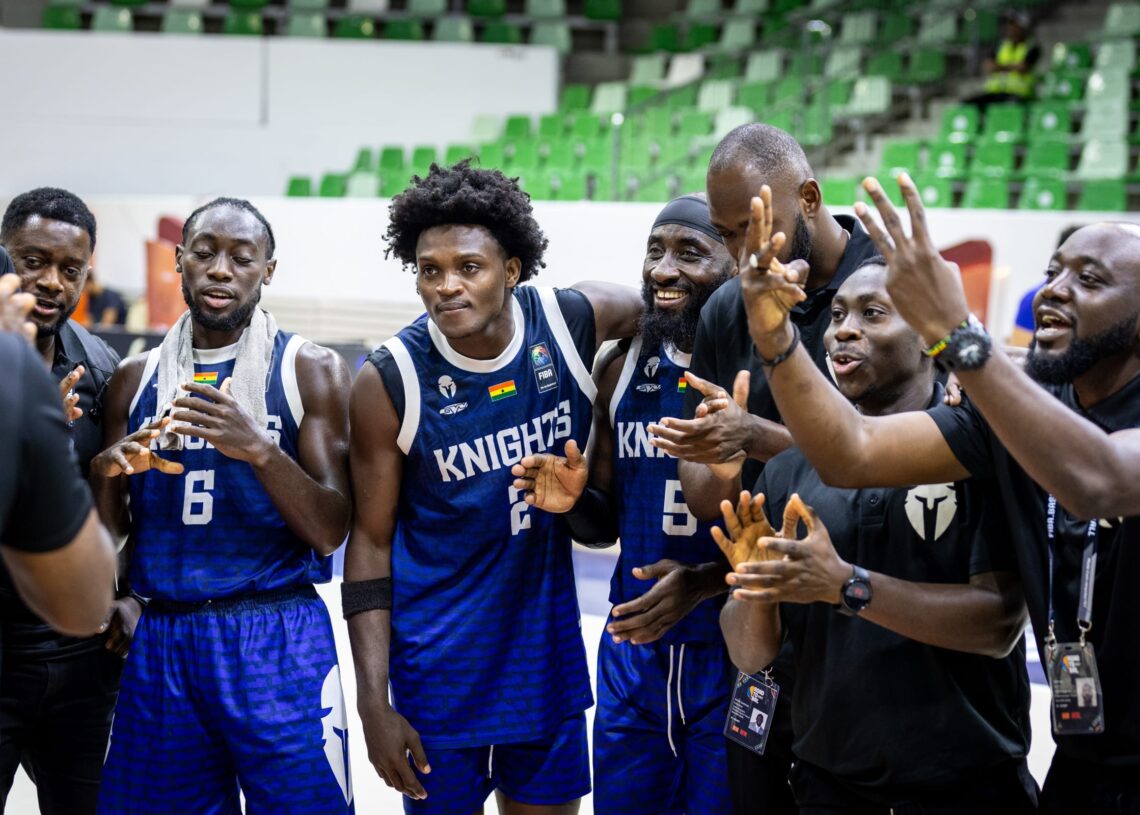

- Ghana’s BAL Ambition Faces Reality as Spintex Knights Struggle to Return Home
Spintex Knights should have been returning to Ghana as heroes. Instead, the country’s representatives in the Basketball Africa League qualifying competition are stranded in Libya, unable to travel home after an unbeaten campaign because they cannot settle expenses totalling approximately US$33,000.
The contradiction is difficult to ignore. On the court, the Accra Basketball League champions did everything expected of a national representative. They won all three matches in Group B of the West Division preliminary round and qualified for the Elite 16 for a second consecutive year. Away from the court, however, their achievement has been overshadowed by a financial emergency.
Club co-founder Dr Eric Opoku-Antwi said Spintex Knights require GH¢350,000, equivalent to approximately US$30,235, to purchase return flight tickets. A further US$3,000 is needed to meet visa-on-arrival charges. Until those obligations are settled, the players and officials cannot return to Ghana.
The episode is more than an unfortunate travel difficulty. It raises uncomfortable questions about how Ghana finances teams carrying its flag in continental competitions, the safeguards surrounding athlete welfare and whether sporting success can be sustained when clubs must improvise funding for basic international obligations.
Spintex Knights are not an unsuccessful team asking to be rescued from the consequences of poor performance. They have produced results. Their perfect preliminary record secured passage to the next stage, scheduled for Abidjan, Côte d’Ivoire, from November 10 to 15. The immediate crisis therefore threatens preparations for another assignment arriving within weeks.
Time spent searching for emergency funding is time lost to recovery, planning and training. Players who should be celebrating qualification are instead confronting uncertainty over accommodation, travel and the date of their return. Even if the money is raised quickly, the disruption could affect morale and preparation for the Elite 16.
Dr Opoku-Antwi said the club has faced serious financial difficulties throughout its participation in African competition over the past three years. That admission suggests the Libya episode is not an isolated administrative mistake but the visible breaking point of a deeper financing problem.
Continental basketball is expensive. Clubs must fund international flights, visas, accommodation, insurance, allowances, medical support and competition preparation. Foreign-exchange movements can increase those costs between planning and payment. For privately supported teams operating in a domestic market with limited broadcasting and sponsorship income, qualification can become financially punishing.
That creates a perverse incentive. Ghana wants clubs to compete internationally, improve standards and provide pathways for young players, yet the better a team performs, the more travel and operational expenditure it assumes. Success extends the campaign, but without dependable financing it can also deepen the club’s liabilities.
The Knights’ predicament demonstrates why continental participation cannot be funded through last-minute appeals alone. Public donations may help resolve the immediate emergency, and the club has opened a contribution platform, but crowdfunding should be a safety net rather than the principal financial model for an elite team.
A credible continental campaign requires a budget secured before departure, clearly assigned responsibilities and contingency reserves for unexpected costs. It also requires transparent understanding among clubs, national federations, competition organisers, sponsors and public authorities about who pays for travel, visas, accommodation and emergency assistance.
Responsibility cannot be transferred automatically to government whenever a private club encounters difficulty. Teams must demonstrate sound budgeting, governance and commercial planning. But when a club formally represents Ghana at a major African competition, the national sporting system has an interest in preventing its delegation from becoming stranded abroad.
At minimum, there should be an emergency protocol involving Ghana’s diplomatic mission, the Ghana Basketball Association and relevant state agencies. Such a mechanism need not guarantee unlimited public funding. It should ensure rapid verification, welfare support, negotiations with service providers and a structured route for mobilising assistance.
The case also presents a test for corporate Ghana. Basketball offers access to a young, urban and digitally engaged audience, yet sponsorship remains heavily concentrated in football. Companies frequently describe youth development and national pride as corporate priorities. Supporting a successful basketball organisation provides an opportunity to turn those declarations into measurable backing.
Sponsorship, however, must become more strategic than one-off donations made after a crisis becomes public. Multi-year partnerships could cover travel, player development, sports science, media production and community programmes. In return, sponsors would receive brand exposure across Ghana and continental markets while associating themselves with an emerging sporting success story.
Spintex Knights must equally use this moment to strengthen their commercial proposition. Their consecutive Elite 16 qualifications demonstrate sporting credibility. The club can package that record into sponsorship tiers, membership products, digital content, merchandise and partnerships with Ghanaian communities abroad. Competitive achievement should become an asset capable of generating revenue.
There is also a welfare dimension that cannot be reduced to accounting. Players representing their country should not carry the psychological burden of wondering whether their delegation can afford to bring them home. Administrators have a duty to ensure travel arrangements are confirmed, documentation is secured and emergency resources are available before athletes depart.
Competition organisers should examine whether participating clubs receive adequate travel support, whether visa arrangements can be coordinated earlier and whether emergency assistance mechanisms are sufficient. Qualification should test sporting quality, not merely a club’s ability to absorb unpredictable cross-border costs.
The immediate priority is straightforward: secure the money, protect the delegation and return the team to Ghana. Attention must then turn to financing the Abidjan campaign so that the same problem is not repeated at the next stage.
Yet resolving the bill will not answer the larger question. Ghana cannot celebrate continental qualification while leaving the qualifying team to negotiate its journey home through public appeals. Sporting ambition without financial architecture is fragile.
Spintex Knights have shown that Ghanaian basketball talent can compete successfully on the African stage. The US$33,000 crisis shows that talent alone cannot sustain that journey. The players have delivered their victory; administrators, businesses and the wider sporting system must now demonstrate that Ghana is capable of supporting success after the final whistle.

