



- Ghana’s Banks Are Too Profitable, UK Academic Says as He Backs Bank Levy
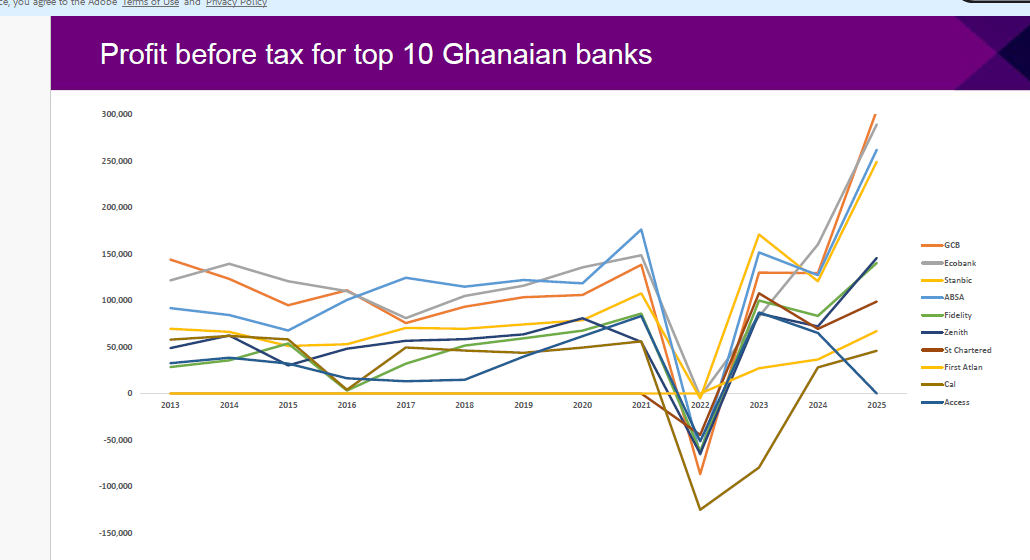
A UK-based banking expert has proposed the introduction of a new tax on banks operating in Ghana, arguing that the sector is generating unusually high profits, much of it from investments in government treasury securities rather than direct lending to the productive economy.
Dr. Sajid M. Chaudhry of Aston University said Ghana should consider a bank levy as part of a broader fiscal and development financing strategy, particularly at a time when the country is seeking new revenue streams to support social and green investment.
Speaking at an event organised by the Institute of Economic Affairs, Dr. Chaudhry argued that banks in Ghana are “too profitable” compared with other sectors of the economy and that part of those earnings should be channelled toward public development priorities. Joy Business reported that he said most of the sector’s profits are being generated from investment in treasury securities.
According to him, a bank levy would be especially useful for developing economies such as Ghana because it could provide a steady stream of public revenue to support the United Nations Sustainable Development Goals, including poverty reduction, food security, health, education and green infrastructure.
Dr. Chaudhry estimated that a 5 per cent tax on the profit before tax of 10 major banks could generate about GH¢264 million in revenue. He further argued that a 1 per cent tax on investment in treasury securities could yield GH¢577 million in the short term.
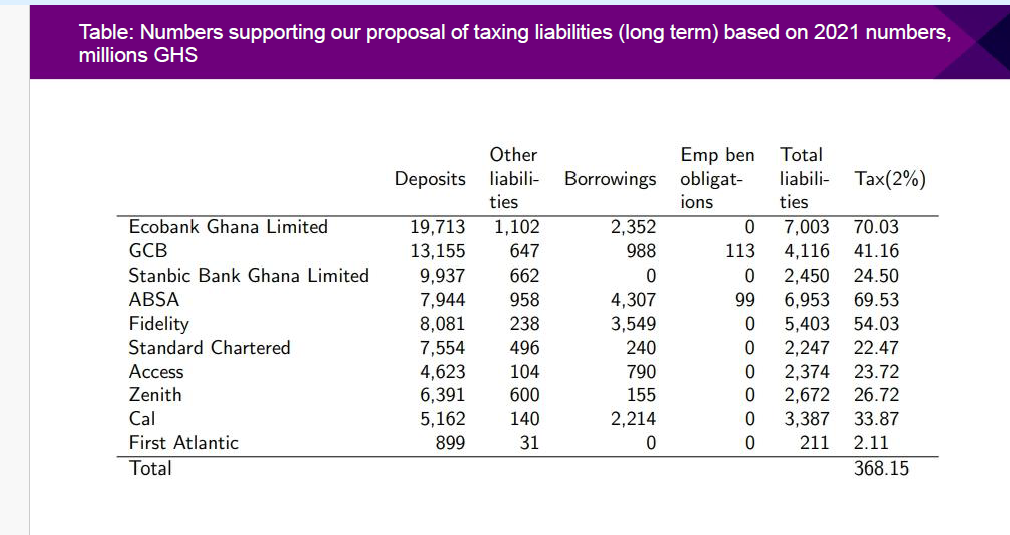
“I propose a tax of 2% of total liabilities net of equity and insured deposits for the long term or 10% of profit before tax, whichever is higher. For the short term, I propose a 1.0% tax on investment in treasury securities,” he said.
The proposal is likely to reopen debate over the structure of bank profitability in Ghana, where lenders have often been criticised for earning high returns from government securities while private sector credit remains costly for many businesses.
Supporters of such a levy may argue that banks, having benefited from high-yield government paper, should contribute more directly to national development financing. They may also see the proposal as a way to discourage excessive reliance on treasury securities and encourage more lending to the real economy.
But the proposal could face resistance from banks, which are still rebuilding balance sheets after Ghana’s domestic debt exchange programme and continue to operate in an environment of elevated credit risk, regulatory costs and capital adequacy requirements.
Dr. Chaudhry also proposed a tax on total liabilities net of equity and insured deposits, arguing that such a measure could encourage banks to reduce reliance on short-term funding sources and lower systemic risk over time.
He further noted that the risk profile of banks in Ghana appears consistent with the theoretical view that investment in treasury securities reduces bank riskiness, suggesting that lenders’ heavy exposure to government paper has helped lower their immediate risk levels.
The policy question for Ghana is whether a new bank tax would improve public revenue mobilisation without weakening financial sector stability or discouraging lending.
For now, Dr. Chaudhry’s proposal adds a fresh dimension to the debate over whether Ghana’s banking sector is doing enough to support productive investment or whether its profitability is being too heavily driven by the state’s own borrowing needs.

