

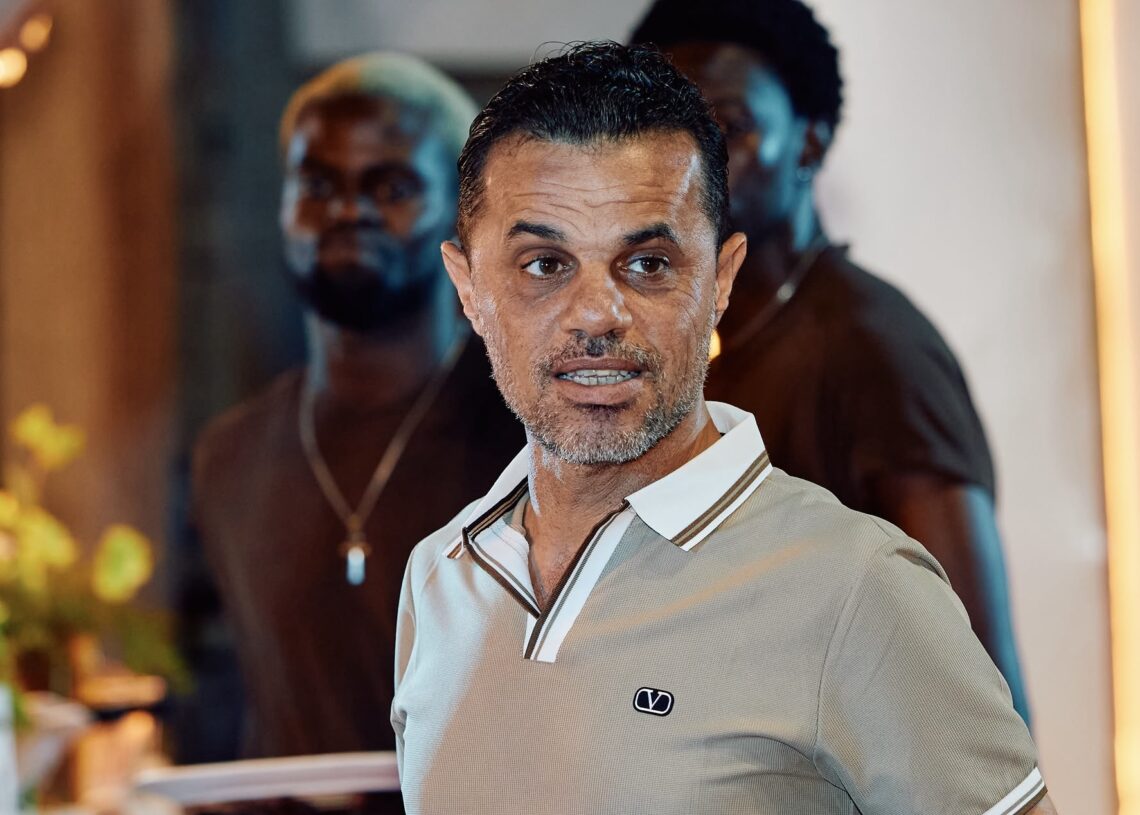

- Ghana’s Black Challenge Receives Cash Boost As US$8,000 World Cup Victory Bonus Beckons
Ghanaian entrepreneur and philanthropist Dr Mohammed Raii has fulfilled a US$2,000 payment commitment to each member of Ghana’s national amputee football team, the Black Challenge, and pledged an additional US$8,000 per player if the team defeats Morocco to win the 2026 Amputee Football World Cup in Mexico.
The financial intervention means each qualifying player stands to receive a total package of US$10,000 should Ghana secure its first world title, providing a significant incentive as the Black Challenge pursue another historic achievement in international amputee football.
Dr Raii, founder of the Eezzy Group Foundation, delivered the initial payments following Ghana’s qualification for the World Cup final, fulfilling an earlier commitment to reward the players for their performances.
His decision to make the initial payments before the tournament’s conclusion distinguishes the financial support already delivered from the additional incentives contingent on winning the championship.
The intervention comes after Ghana defeated defending champions Turkey in a dramatic semi-final encounter, advancing 4-3 on penalties following a 1-1 draw.
The victory secured Ghana’s place in the World Cup final against Morocco in San Juan de los Lagos, Mexico, and brought the national team within one match of achieving its most significant global success.
For the Black Challenge, qualification for the final represents another milestone in a remarkable period of international achievement that has included continental titles and success at the African Para Games.
For Dr Raii, however, the occasion presents an opportunity to draw attention to an issue extending beyond the outcome of a football tournament: the financial recognition and institutional support available to athletes representing Ghana in disability sports.
Speaking during the presentation, he emphasised the importance of linking Ghana’s international reputation to sporting excellence.
“When the world talks about Ghana, we want it to be associated with excellence.”
The message underscores the national significance of the team’s accomplishments and the need to recognise elite sporting performances regardless of the category in which athletes compete.
The latest cash incentive is particularly significant because promises of financial rewards to successful athletes do not always translate into immediate payments.
Dr Raii indicated that he wanted the Black Challenge players to have clarity about the financial rewards associated with their achievements rather than allow disagreements over outstanding commitments to overshadow their success.
That concern highlights a broader challenge in sports administration: maintaining confidence between athletes, administrators and sponsors over the funding arrangements supporting national representation.
For athletes competing internationally, financial commitments can influence preparations, personal welfare and confidence in the institutions responsible for their participation.
The delivery of US$2,000 to each player before the final therefore provides tangible support at an important stage of the tournament.
However, the additional US$8,000 remains conditional on Ghana winning the championship, meaning the full US$10,000 package is not yet a completed payment.
Reports surrounding the initiative indicate that the initial payments amount to US$30,000 across 15 beneficiaries, while the proposed victory bonus would increase the total commitment to US$150,000 if the same number of players qualify for the additional reward.
The US$120,000 contingent balance would represent a substantial financial incentive linked directly to the team’s performance in the final.
The Black Challenge’s journey to the final has demonstrated the team’s ability to compete against some of the strongest sides in international amputee football.
In the quarter-finals, Ghana defeated Egypt 2-0, with Mohammed Mubarik scoring both goals, including a stoppage-time effort that helped secure progression.
The result provided further evidence of the attacking quality and resilience that have characterised Ghana’s campaign.
The semi-final against Turkey presented an even greater test.
Facing the defending world champions, Ghana demonstrated composure and determination to force the match into a penalty shootout before securing victory.
Eliminating the defending champions gave the achievement added significance, particularly as Ghana sought to establish itself among the leading teams in global amputee football.
The final against Morocco also carries historical importance because the two nations have previously contested major continental honours.
At the 2023 African Para Games in Accra, Ghana overcame Morocco in a dramatic final, with Mubarik scoring a late equaliser before captain Richard Arthur Opentil netted the decisive goal in extra time.
That success formed part of a sustained period of achievement for the Black Challenge, who also won the African Amputee Football Championship in 2021 and 2024.
Their latest World Cup campaign represents an opportunity to translate that continental dominance into global recognition.
However, beyond the sporting achievements lies a more consequential discussion about the structure of financial support for Ghana’s para-athletes.
The Black Challenge’s performances have generated considerable national pride, yet their success raises questions about whether disability sports receive the level of investment, sponsorship and institutional recognition required to sustain international competitiveness.
Dr Raii has called on government, corporate institutions and sporting authorities to increase investment in amputee football and other para-sports disciplines.
His intervention suggests that private-sector philanthropy can play a meaningful role in recognising sporting excellence and supporting athletes whose achievements may otherwise attract limited commercial attention.
Nevertheless, relying on individual benefactors to provide financial rewards is not necessarily a sustainable long-term funding model.
Elite sporting success requires consistent investment in training facilities, equipment, medical services, international competition exposure, coaching and athlete welfare.
For amputee footballers, these requirements may include specialised mobility equipment and rehabilitation support, alongside the conventional costs associated with competitive sport.
Such expenditures must be addressed throughout the sporting calendar rather than only when teams reach major tournament finals.
The challenge for Ghana is therefore to convert the attention generated by the Black Challenge’s success into durable financing arrangements.
Corporate sponsorship, structured government funding and stronger commercial partnerships could help establish greater financial predictability for disability sports.
This would allow athletes and administrators to concentrate on preparation and performance without repeatedly confronting uncertainty about the resources needed for international participation.
The latest intervention also raises important questions about how Ghana recognises national sporting achievement.
Football remains the country’s most commercially prominent sport, with substantial public attention directed towards the Black Stars and other conventional national teams.
Yet the Black Challenge have demonstrated that athletes competing in disability sports can also deliver significant international achievements.
Their performances create opportunities for broader national conversations about inclusion, equal recognition and the economic value of investing in diverse sporting disciplines.
The recognition of athletes with disabilities should not be limited to symbolic celebrations after successful tournaments.
Instead, sustained sporting development requires policies that provide access to facilities, coaching, competitive opportunities and appropriate financial support.
For the private sector, the Black Challenge’s achievements could also create opportunities for partnerships that combine commercial visibility with meaningful social impact.
Companies seeking to support inclusive sporting development may find value in long-term sponsorship arrangements rather than isolated financial donations.
Such partnerships could provide greater certainty for athletes while helping businesses demonstrate practical commitments to inclusion and community development.
Dr Raii’s involvement reflects an established interest in supporting Ghanaian sporting activities.
His Eezzy Group Foundation committed GH¢800,000 towards Team Ghana’s preparations and participation in the 2026 Commonwealth Games in Glasgow.
That commitment, alongside the latest Black Challenge payments, demonstrates the foundation’s willingness to support athletes competing across different sporting disciplines.
However, the wider significance of the intervention will depend on whether other private-sector organisations and public institutions respond with sustained support.
For Ghana’s sporting authorities, the team’s success provides an opportunity to reassess funding priorities and develop more predictable support structures for para-sports.
For the players, attention remains firmly on the World Cup final and the opportunity to become global champions.
Their journey has already demonstrated resilience, competitive discipline and the capacity to overcome formidable opponents.
Victory against Morocco would represent a defining moment for Ghanaian amputee football and consolidate the country’s position among the world’s leading teams.
It would also activate Dr Raii’s additional US$8,000-per-player pledge, bringing the potential individual reward package to US$10,000.
The greater significance, however, extends beyond the financial incentive or the outcome of a single match. The Black Challenge’s achievements have demonstrated that Ghana’s sporting potential is considerably broader than the disciplines that traditionally dominate national attention.
The challenge is whether that recognition can translate into better investment, stronger sporting institutions and more consistent opportunities for athletes with disabilities.
Dr Raii’s payment provides immediate recognition for an exceptional team.
But the longer-term measure of progress will be whether Ghana can build a sporting environment in which such athletes receive the resources necessary to compete at the highest level without depending primarily on last-minute interventions.
As the Black Challenge pursue their first World Cup title, they carry not only Ghana’s hopes of international sporting success but also an opportunity to reshape the national conversation about investment, recognition and inclusion in sport.
Their place in the final is already a historic achievement. The question now is whether Ghana can match that achievement with the sustained institutional commitment it deserves.
NorvanReports | Sports

