


- Ghana’s Energy Sector Reset is a Pathway to Regional Power Trade and Industrialisation – Energy Minister
Ghana’s Minister for Energy and Green Transition, John Abdulai Jinapor, has said ongoing reforms in the country’s energy sector are already delivering positive results, including improved payments to utility service providers and stronger investor confidence.
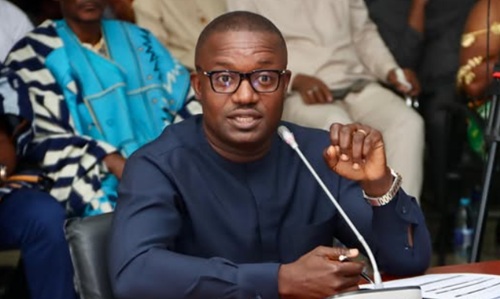
Speaking at a high-level Town Hall panel at the Africa Energy Forum, Mr Jinapor said the government’s reform programme was repositioning Ghana as a competitive hub for industrial production and regional trade.
The panel brought together African energy ministers, regional policymakers and international financiers to discuss how regional production hubs can be developed to accelerate continental industrialisation.
Mr Jinapor used the platform to present Ghana’s energy sector interventions as part of a broader economic reset aimed at strengthening commercial security, improving power-sector liquidity and supporting domestic value addition.
“I shared the reforms we are implementing in Ghana, which have made our country a competitive hub for industrial production and regional trade,” he said.
“These reforms are already yielding positive results. We have recorded significant improvements in payments to utility service providers, helping to strengthen the financial sustainability of the energy sector and enhance investor confidence.”
The minister’s comments come at a time when Ghana’s energy sector remains central to the country’s industrial ambitions, but also one of the most fiscally sensitive areas of the economy.
For years, the sector has faced persistent challenges linked to legacy debts, weak revenue collection, power purchase obligations, transmission bottlenecks, distribution losses and delayed payments to service providers.
These problems have affected the financial health of state utilities and independent power producers, while also creating uncertainty for investors seeking to finance generation, transmission and renewable energy projects.
Mr Jinapor’s argument is that the government’s current reforms are beginning to address those weaknesses.
According to the report, the reforms include aggressive restructuring measures aimed at resolving long-standing liquidity and distribution challenges in the power sector.
A major part of the improvement has been stronger collections and better financial settlements to utility service providers.
That development is significant because payment delays have historically been one of the biggest sources of risk in Ghana’s energy value chain.
When utilities are unable to collect enough revenue or settle obligations on time, the financial pressure moves through the entire sector.
Independent power producers, transmission companies, fuel suppliers and other service providers are all affected.
That, in turn, raises the perceived risk of investing in Ghana’s power market.
Improved payments therefore matter not only for current operations but also for future investment.
If investors believe that utilities can meet payment obligations more reliably, the risk premium attached to Ghana’s energy projects may decline.
This could help the country attract concessionary finance, private equity and long-term capital for new energy infrastructure.
At the Africa Energy Forum, Ghana’s presentation of improved utility revenue collections to international financiers was therefore more than a technical update.
It was an attempt to rebuild credibility in a sector where investor confidence depends heavily on predictable cash flows, transparent settlements and credible state support.
The reforms also fit into the government’s wider industrial policy agenda.
Under President John Dramani Mahama’s “Accra Reset Agenda,” Ghana is seeking to move away from excessive dependence on primary resource extraction and place greater emphasis on local processing, domestic value addition and integration into global supply chains.
Energy is central to that ambition.
Manufacturing, agro-processing, mineral refining, industrial parks and export-oriented production all require reliable and competitively priced power.
Without stable electricity supply, Ghana’s ambition to become a regional production hub will remain difficult to achieve.
The government’s focus on generation capacity, transmission infrastructure and renewable grid solutions is therefore tied directly to industrial policy.
The report noted that targeted capital expenditure is being directed toward expanding generation capacity, strengthening transmission infrastructure and improving clean, renewable grid solutions.
These investments are expected to stabilise power delivery to critical manufacturing enclaves across the country.
That is important because Ghana’s industrial competitiveness depends not only on the availability of power, but also on the reliability and cost of that power.
Frequent outages, unstable voltage and high tariffs can undermine manufacturing output and make local firms less competitive against regional and global rivals.
A stronger energy system could therefore support downstream processing in sectors such as gold, bauxite and agriculture.
Rather than exporting raw materials with limited domestic value capture, Ghana could use reliable energy to support refining, processing and higher-value production.
That could create jobs, increase export earnings and reduce exposure to volatile commodity cycles.
The minister’s comments also point to Ghana’s ambition to play a larger role in regional power trade.
Investments in transmission architecture and utility-scale solar projects are expected to support Ghana’s ability to trade power under the West African Power Pool.
Regional electricity trade could allow Ghana to monetise excess generation capacity, support neighbouring countries and earn foreign exchange.
It could also strengthen Ghana’s role in West Africa’s energy market if transmission bottlenecks are addressed and cross-border grid synchronisation improves.
The idea is to turn domestic generation capacity from a fiscal burden into a commercial asset.
In the past, Ghana’s power sector has struggled with the cost of excess capacity and take-or-pay obligations.
If surplus generation can be sold regionally, the country may be able to reduce inefficiencies and improve the economics of its power system.
However, regional power trade requires more than available generation.
It also requires reliable transmission infrastructure, regulatory coordination, payment assurance mechanisms and commercial agreements with neighbouring countries.
Ghana’s ability to become a regional power exporter will therefore depend on how quickly these institutional and infrastructure issues are resolved.
The energy transition also adds another layer to the reform agenda.
As global capital shifts toward low-carbon investment, countries that can present credible renewable energy strategies may attract more favourable financing.
By linking power sector reform to green transition goals, Ghana is attempting to position itself as a destination for energy infrastructure funding.
The challenge is execution.
Ghana’s energy sector has seen many reform promises over the years, but implementation has often been slowed by political cycles, tariff pressures, weak collection discipline and institutional fragmentation.
For the current reforms to deliver lasting results, improved payments to utilities must be sustained, losses must be reduced, and the financial positions of ECG, GRIDCo and other sector entities must continue to improve.
Investor confidence will also depend on transparency.
International financiers will want clear data on arrears, collection rates, regulatory commitments, tariff adjustments, sector debt and the government’s payment discipline.
Without transparency, improved settlements may be viewed as temporary rather than structural.
Mr Jinapor’s message at the Africa Energy Forum was therefore both promotional and strategic.
Ghana is telling investors that its energy sector is being reset, that payments are improving, and that power infrastructure is now being aligned with industrial development and regional trade.
That is a powerful message if backed by consistent performance.
The country’s opportunity lies in using energy reform to support a broader economic transformation.
Reliable power can anchor industrial parks, processing zones, mining value addition, agro-processing and regional exports.
Improved utility finances can reduce fiscal risks and unlock private capital.
Renewable energy investments can support climate goals while reducing long-term exposure to fuel price shocks.
Regional power trade can turn Ghana’s generation capacity into a source of foreign exchange.
But the risks remain equally clear.
If collections weaken, arrears return or transmission constraints persist, investor confidence could fade quickly.
If power remains expensive or unreliable, Ghana’s industrial ambitions will be undermined.
The key test will be whether the reforms highlighted by Mr Jinapor can move beyond early gains into durable institutional change.
For now, the government is presenting Ghana’s energy sector as a platform for industrialisation, regional trade and green investment.
At the Africa Energy Forum, Mr Jinapor’s message was that the reforms are beginning to work.
The next challenge is to prove that the results can be sustained long enough to transform Ghana’s power sector from a fiscal pressure point into a driver of industrial growth.

