

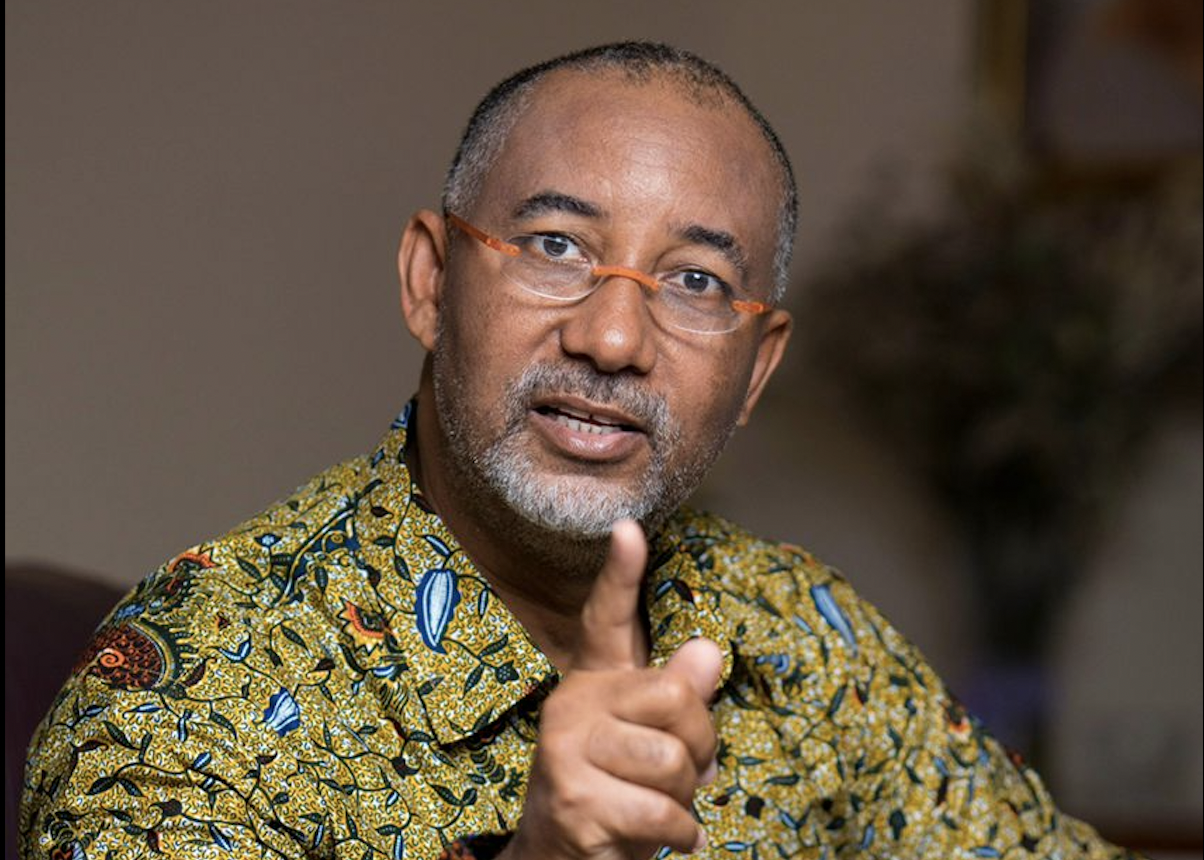

- Ghana’s Future Depends More on Skilled Youth Than Natural Resources — Alex Mould
Ghana’s ability to deliver lasting economic transformation will depend less on its natural resource endowment than on the skills, discipline and problem-solving capacity of its young population, according to Alexander Kofi-Mensah Mould, acting chief executive of the Millennium Development Authority.
Mr Mould said the country must move beyond treating young people as “leaders of tomorrow” and recognise them as central actors in economic growth, innovation and institution-building today.
Delivering the keynote address at the University of Education, Winneba’s Seminar on Conflict and Nation Building, he argued that the foundations of national prosperity are created through the daily development of human capability rather than through speeches or distant policy promises.
“The future is not built tomorrow. It is built today; in classrooms, laboratories, workshops, businesses, communities and universities,” Mr Mould told students, academics and policymakers.
His remarks placed human capital at the heart of Ghana’s development debate at a time when the country is seeking to translate improving macroeconomic stability into stronger productivity, employment and private-sector expansion.
Ghana remains richly endowed with gold, oil, gas, cocoa and other natural resources. But Mr Mould argued that resources alone could not guarantee prosperity unless the country possessed the institutional and technical capacity to convert them into higher-value economic activity.
“Resources create potential. Capability converts potential into prosperity,” he said.
He pointed to the experiences of countries such as Singapore, South Korea, Finland and Botswana, where economic progress has been supported by sustained investment in education, public institutions, technology and disciplined implementation.
The comparison, he suggested, showed that countries without vast natural resource wealth could still achieve high levels of development if they built the capabilities required to solve domestic problems, compete internationally and execute policy effectively.
For Ghana, the challenge is not necessarily a shortage of ideas or development plans, but the gap between policy formulation and implementation.
Mr Mould described execution as one of the missing elements in many national development strategies, arguing that economic progress ultimately depends on whether institutions, businesses and individuals can translate plans into measurable outcomes.
That places particular responsibility on universities, which he said must redefine their role in national development.
Higher education institutions should produce graduates with more than academic qualifications, he argued. They should equip students with practical competencies that allow them to create value, improve institutions and respond to real economic and social problems.
Mr Mould identified analytical thinking, effective execution, collaboration, value creation and personal integrity as among the capabilities required to build a competitive economy.
The emphasis reflects growing concern across Ghana that formal education does not always provide graduates with the practical and technical skills demanded by employers or needed to establish sustainable enterprises.
Youth unemployment and underemployment remain significant policy challenges, while many businesses continue to report difficulty finding workers with the specialised skills required for expanding sectors.
Mr Mould urged young people to shift their attention from the narrow pursuit of employment towards identifying problems that could be turned into economic opportunities.
“Capability creates opportunity. Capability creates enterprises. Capability creates industries. Capability creates prosperity,” he said.
The argument suggests that Ghana’s employment challenge cannot be addressed solely by expanding public-sector recruitment or waiting for existing companies to absorb new graduates.
A more durable response would require young people to develop commercially relevant skills, build enterprises and create products and services capable of generating jobs for others.
That transition would also require a stronger ecosystem around innovation, including access to finance, mentorship, research infrastructure and markets.
Although Mr Mould focused heavily on individual responsibility, his remarks also carried implications for government and educational institutions.
Young people can only convert ideas into viable enterprises where the wider policy environment supports experimentation, investment and business growth. Weak infrastructure, regulatory uncertainty and limited access to capital can prevent even capable entrepreneurs from expanding.
Universities, meanwhile, would need to deepen their relationships with industry and public institutions to ensure that teaching and research respond to Ghana’s development priorities.
Practical training, enterprise incubation, technical research and partnerships with businesses could help reduce the gap between academic knowledge and the capabilities required in the economy.
Mr Mould also called for greater youth participation in national leadership, arguing that age should not be treated as a barrier to public service or responsibility.
He cited National Petroleum Authority chief executive Edudzi Tamakloe as an example of a relatively young Ghanaian contributing to national development at a senior level.
The reference was intended to challenge the assumption that young people must wait until later in life before they can be trusted with significant leadership responsibilities.
Mr Mould’s message, however, was not based solely on expanding opportunities for the youth. He also placed responsibility on young people to reject mediocrity, entitlement and what he described as a culture of blame.
He urged them to embrace discipline, integrity and a commitment to execution, warning that national progress would not be achieved through criticism alone.
That appeal reflects a broader tension in Ghana’s development debate between the responsibilities of the state and those of citizens.
Government must create the conditions for education, enterprise and employment, but individuals must also build the skills and attitudes needed to take advantage of those opportunities.
For Mr Mould, the country’s long-term success will be judged not by the number of policy announcements made, but by the quality of its institutions, the economic opportunities created and the ability of its citizens to convert ideas into visible improvements in national life.
His address offered a development model in which youth are not treated primarily as beneficiaries of government programmes, but as producers, innovators and institutional leaders.
That shift would require Ghana to invest more deliberately in the capabilities of its young population while holding educational institutions and public agencies accountable for the quality of opportunities they provide.
The central test will be whether the country can turn its youthful population into a productive advantage.
Without stronger skills, effective institutions and a culture of implementation, Ghana’s natural resources may continue to create wealth without delivering broad-based prosperity.
With them, Mr Mould argued, the country’s young people could become the principal force behind its economic transformation.

