

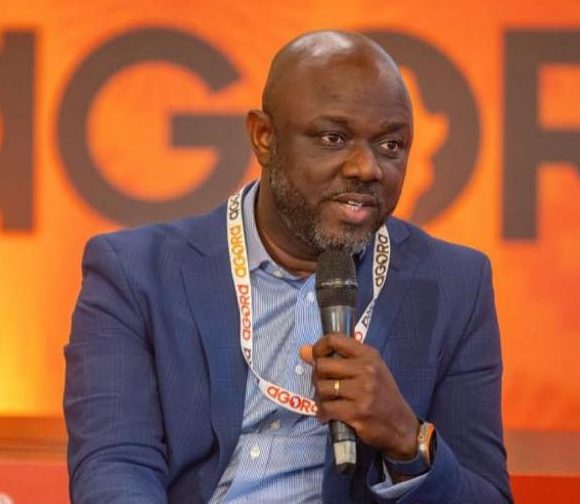

Ghana’s Power Problem Is Not Take-or-Pay, It Is Contracting Electricity the System Cannot Use – ACEP Warns
Ghana should use the bribery conviction connected to the AKSA Enerji power project as the starting point for a comprehensive examination of how the country procures electricity, values generation assets and commits taxpayers to long-term Independent Power Producer contracts, according to Benjamin Boakye, Executive Director of the Africa Centre for Energy Policy.
For Mr Boakye, the most consequential question arising from the Asante Kwaku Berko case is not simply whether individuals involved in securing a particular project committed criminal offences. It is whether contracts emerging from a procurement environment now subjected to serious corruption concerns delivered commercially defensible terms for Ghana and whether similar weaknesses may exist elsewhere in the country’s generation portfolio.
Mr Berko, a former Goldman Sachs banker and former Managing Director of Tema Oil Refinery, was convicted by a US federal jury over a bribery scheme connected to securing approvals for a power project involving Turkish energy company AKSA Enerji. Mr Boakye argues that a development of that magnitude should compel Ghanaian authorities to pause and scrutinise the underlying agreements rather than treating the criminal case as something detached from the economics of the contracts themselves.
His argument is that Ghana now has an opportunity to examine a question the country has repeatedly avoided: what exactly did the state agree to buy, what did the generating assets actually cost, how were the prices and contractual obligations determined, and did Ghana receive value commensurate with the liabilities it accepted?
Mr Boakye wants the Ministry of Energy, Attorney-General and Office of the Special Prosecutor to interrogate the agreements and establish whether they were properly negotiated and structured. His position is not that the conviction automatically proves every provision of the AKSA contract was improperly obtained, but that the seriousness of the circumstances now makes rigorous examination unavoidable.
“Any sensible approach requires that you pause and investigate,” he said, arguing that the scale of the concerns surrounding power-sector procurement justifies reopening the commercial arrangements.
That investigation, in Mr Boakye’s conception, should reach beyond AKSA. ACEP has for years questioned the terms and procurement processes surrounding some of Ghana’s IPP agreements, and he argues that the present controversy provides a rare opportunity to revisit the broader architecture under which the country accumulated long-term generation commitments.
The urgency is heightened by the fact that Ghana is already attempting to negotiate relief from some IPPs because the financial obligations embedded within the electricity sector have become difficult to sustain. If government is seeking concessions from producers today, Mr Boakye argues, it should simultaneously interrogate how those obligations were created and whether better contractual outcomes could reasonably have been secured from the outset.
His argument cuts directly into one of the most misunderstood parts of Ghana’s energy debate: take-or-pay contracts.
Mr Boakye rejects the proposition that take-or-pay arrangements are inherently the problem. “Take-or-pay for me has never been a problem,” he said, placing responsibility instead on Ghana’s inability to plan sufficiently well to use the generation capacity it contracts.
That is an important distinction. An investor financing a power plant requires sufficient certainty that the asset will earn revenue over time, particularly where hundreds of millions of dollars may be committed upfront before a single unit of electricity is sold.
A take-or-pay structure can provide that certainty by requiring the purchaser to pay for agreed capacity whether or not every unit is ultimately consumed. The commercial logic is understandable: without some form of guaranteed revenue, investors may be unwilling or unable to finance capital-intensive generation infrastructure.
The problem, according to Mr Boakye, begins when Ghana contracts that capacity without ensuring that its electricity system is capable of economically absorbing it.
Generation is only the first link in the chain. Electricity must be evacuated through transmission infrastructure, delivered through distribution networks, consumed by customers, properly metered, billed and ultimately converted into cash that can be returned through the value chain to pay generators.
If one part of that chain fails, Ghana can technically have electricity available while being economically unable to use it. That is the contradiction Mr Boakye believes has been allowed to develop within the sector. Ghana can sign a contract for generation capacity, guarantee payment to the producer and then encounter transmission, distribution, demand or revenue constraints that prevent the full commercial utilisation of the electricity.
When that happens, the contractual obligation does not necessarily disappear simply because the electricity was not consumed.
“When you have excess power or there’s a problem somewhere that we can’t use the power, and you still have to pay, that becomes a problem,” Mr Boakye said.
That diagnosis moves the discussion away from the politically attractive claim that Ghana merely contracted “too much power”. Mr Boakye’s deeper criticism is that the country has not sufficiently planned generation, transmission, distribution and revenue collection as one integrated economic system.
A country may, for example, require additional generating capacity based on projected demand. But if transmission upgrades are not completed, industrial demand fails to materialise, distribution losses remain elevated or utilities cannot collect enough revenue from consumers, an apparently sensible generation decision can become financially burdensome.
The central mistake is therefore contracting megawatts without simultaneously answering the question: how exactly will those megawatts become economically productive electricity?
Mr Boakye’s argument suggests Ghana has too often approached electricity planning from the generation side. During periods of shortage, governments have understandably concentrated on acquiring new plants quickly because the politically visible problem is that consumers do not have enough power.
But solving a shortage by signing generation contracts can simply move the problem elsewhere if the rest of the electricity system is not expanded and financially strengthened at the same pace.
The consequences can survive long after the emergency that justified the original contract has disappeared.
A power purchase agreement can bind the state for years, crossing several governments and economic cycles. What begins as an emergency solution can therefore become a recurring fiscal obligation long after the political circumstances that produced it have changed.
That is one reason Mr Boakye believes the Berko case should trigger scrutiny of emergency power procurement more generally. He has specifically raised questions around the valuation of power plants introduced under such arrangements and wants authorities to establish where particular assets were sourced, what they actually cost and how those costs were ultimately reflected in the agreements signed with Ghana.
The question of valuation is critical.
If Ghana contracted a generating plant at a particular tariff based partly on its capital cost, then understanding the underlying value of that plant becomes essential to determining whether consumers and taxpayers received a reasonable commercial bargain.
Authorities should therefore be capable of reconstructing the economics of the transaction: the acquisition price of the equipment, financing costs, expected returns, fuel assumptions, operating costs, contract duration and the methodology through which those components translated into the price Ghana agreed to pay.
Mr Boakye’s position is essentially that emergency conditions cannot become a permanent defence against commercial scrutiny.
A country facing electricity shortages may have less negotiating time and fewer options. But urgency does not eliminate the obligation to obtain value for money, particularly when the resulting contract commits future governments and electricity consumers to payments that can continue for years.
The Berko conviction therefore creates a moment, in Mr Boakye’s assessment, when Ghana can revisit not only who participated in particular transactions but the financial consequences of the decisions they produced.
That distinction is fundamental. A corruption investigation can determine whether somebody accepted or facilitated an improper payment, but it does not automatically answer whether the country overpaid, accepted disproportionate risks or contracted electricity under terms that weakened the sector’s long-term financial sustainability.
For Mr Boakye, both questions must now be asked. ACEP’s concern also predates the current criminal case. Mr Boakye says the organisation has raised questions about some IPP contracts since 2015 and has long been uncomfortable with how certain agreements were executed. The Berko case, in his view, strengthens the justification for converting those historical concerns into a structured review.
Such a review would not necessarily mean cancelling every agreement or declaring every IPP contract illegitimate. That would create its own legal, financial and investor-confidence risks.
Instead, the argument is for optimisation based on evidence. Where contracts remain commercially reasonable and the generating capacity is required, they should be treated accordingly. Where pricing, procurement, valuation or capacity assumptions cannot withstand scrutiny, government would have a stronger factual basis for renegotiation.
This is particularly relevant because Ghana is already engaging IPPs in an attempt to reduce financial pressure on the sector. Mr Boakye argues that the present environment gives government an opportunity to examine whether deeper restructuring is possible rather than negotiating concessions without confronting the historical reasons the obligations became unsustainable.
There is also a more uncomfortable question inside his analysis: why does Ghana repeatedly wait until electricity-sector obligations become financially unbearable before interrogating the contracts that created them?
Good power planning should operate in the opposite direction. Before a government signs for additional capacity, it should know what electricity demand will reasonably be over the life of the agreement, which existing plants will remain available, what transmission investment is required, how distribution constraints will be corrected and whether customers can generate sufficient revenue to sustain the new obligations.
Without those answers, electricity procurement becomes an exercise in accumulating capacity rather than building a functioning power market. Mr Boakye’s diagnosis therefore goes beyond AKSA. The company and the Berko case provide the immediate trigger, but the underlying subject is the institutional quality of Ghana’s electricity planning.
His position implies that the country should stop judging energy security primarily by installed megawatts. A megawatt that cannot be transmitted, distributed, economically consumed or paid for is not equivalent to a megawatt operating inside a financially coherent electricity system.
The difference is crucial because the public eventually carries the cost of poor planning.
When electricity revenues are insufficient to meet contractual obligations, the problem does not vanish. It can reappear through arrears, government support, sector debts, tariff pressures or negotiations with producers over unpaid obligations.
The original procurement decision can therefore migrate from the power sector into the national budget.
That is why Mr Boakye sees the current moment as potentially transformative if Ghana chooses to use it properly. The Berko case could remain an individual corruption scandal, generating headlines, prosecutions and political arguments before eventually fading.
Or it could become the event that forces Ghana to reconsider how it buys electricity. A serious review would ask not only whether procurement rules were followed but whether the resulting projects were economically justified. It would test valuations, capacity assumptions, tariffs, risk allocation and the ability of the wider electricity system to utilise what government purchased.
Most importantly, it would require Ghana to recognise that the expensive part of poor power-sector planning is not necessarily the day a contract is signed. The real cost can emerge over the following decade as consumers and taxpayers continue paying for assumptions that proved wrong.
Mr Boakye’s argument is ultimately not that Ghana should avoid Independent Power Producers, nor that take-or-pay agreements should disappear. Private capital can remain necessary for a country that needs substantial investment in electricity infrastructure, while credible payment structures are necessary to attract that capital.
His warning is against contracting power without constructing the economic system required to use it. That means generation planning cannot be separated from transmission investment. Transmission cannot be separated from distribution efficiency. Distribution cannot be separated from metering and revenue collection, and none of those decisions can be separated from what households and businesses ultimately require and can afford.
If Ghana fixes only one part of that chain, the financial problem simply migrates to another. The opportunity created by the AKSA controversy is therefore bigger than one contract. Mr Boakye is effectively asking Ghana to place its entire power-procurement philosophy under examination and determine whether the state has been buying electricity based on coherent system planning or repeatedly contracting generation first and confronting the consequences later.
The distinction will determine whether the next generation of power contracts solves Ghana’s electricity needs or merely creates another generation of liabilities.
For Mr Boakye, the lesson is stark: take-or-pay becomes dangerous when planning fails. Ghana’s real problem is not that investors expect to be paid for capacity they were contracted to provide; it is that the country has sometimes undertaken those payment obligations without ensuring that the power can be fully utilised.
That is why the Berko case cannot end with the conviction itself. It should, in Mr Boakye’s argument, open the contracts, reconstruct the economics, test the valuations and force Ghana to answer a question that goes to the heart of its electricity-sector crisis: how did a country that desperately needs reliable and affordable power end up contracting electricity that it cannot always afford to use?

