


Ghana’s Resilient Recovery Faces Fresh Test from Global Energy Prices – Governor
Bank of Ghana Governor Dr Johnson Pandit Asiama has said Ghana’s economic recovery remains resilient but faces a fresh test from rising global energy prices, as the protracted conflict in the Middle East feeds into fuel costs, import bills and inflation expectations.
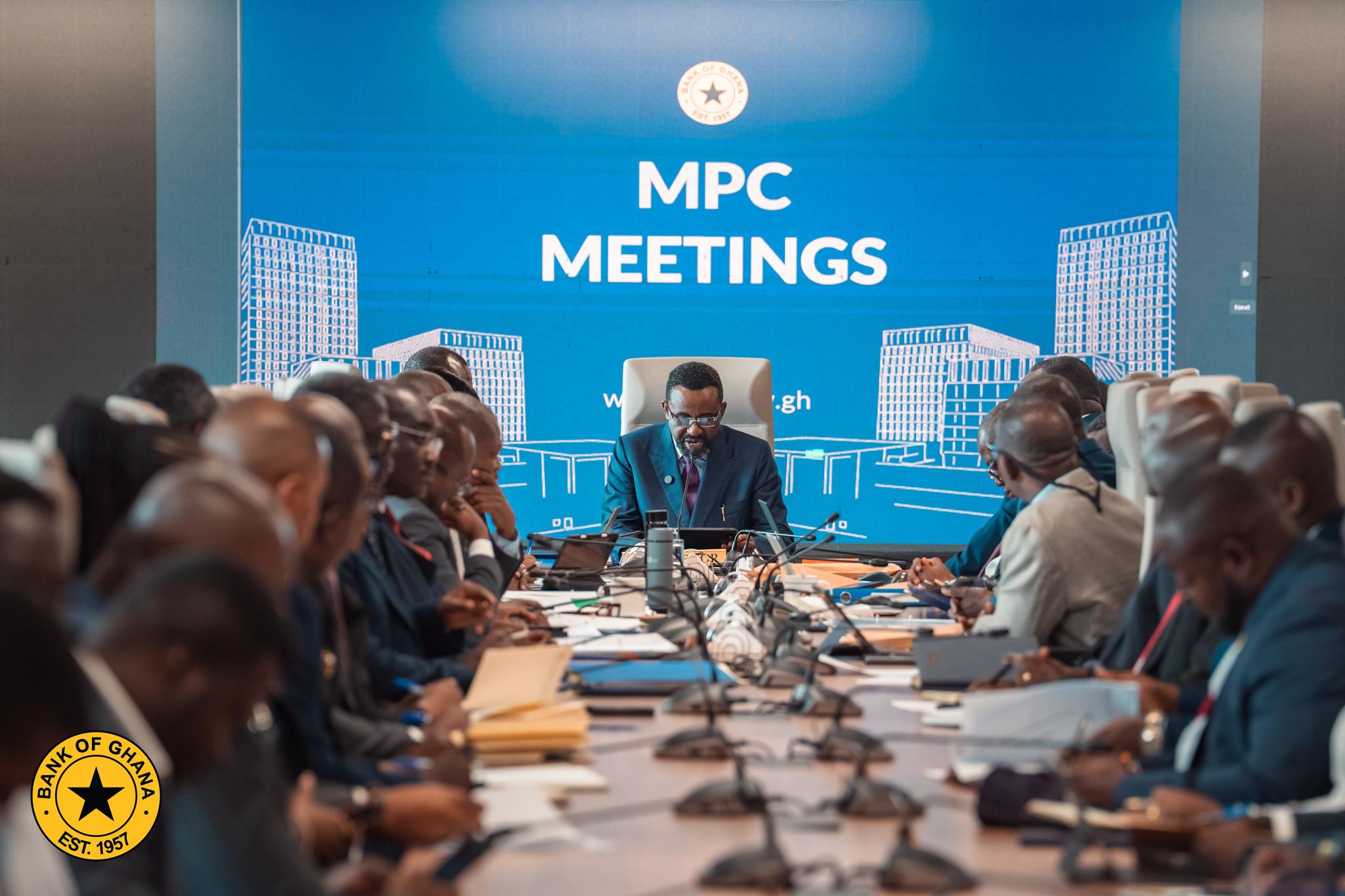
Opening the 130th Monetary Policy Committee meeting at Bank Square on Monday, May 18, 2026, Dr Asiama said the initial conditions of the Ghanaian economy had improved meaningfully since the last MPC meeting in March, reflecting sustained reform efforts and stronger domestic fundamentals.
But he warned that the external environment had deteriorated, with the ongoing Middle East conflict and its effects on global energy and commodity prices introducing new headwinds that must be carefully weighed by the Committee.
“We are meeting at a moment of heightened policy complexity,” the Governor said, noting that the MPC would over three days examine domestic progress, external risks and the policy steps needed to sustain Ghana’s recent gains.
At the previous MPC meeting, the Bank of Ghana had assessed whether hostilities in the Middle East would be short-lived or prolonged. At the time, policy scenarios ranged from a swift resolution, with Brent crude prices returning to about US$75 per barrel, to a protracted conflict that could keep prices around US$100 per barrel through year-end.
Dr Asiama said the picture had since become clearer, with the conflict showing no sign of abating and its economic consequences now visible in global data.
According to him, the closure of the Strait of Hormuz has triggered a sustained surge in global energy prices, while the International Monetary Fund has revised its 2026 global growth forecast down to 3.1%, from an earlier estimate of 3.3%, citing the conflict’s demand and supply effects.
He said early indicators now point to a renewed acceleration of headline inflation in several advanced and emerging market economies, prompting some central banks that had started easing monetary policy to pause or reverse course.
For Ghana, the risk is direct.
The Governor said Ghana’s position as a commodity-exporting but energy-importing economy means the shock could pass through several channels, including fuel prices, transport costs, import bills and consumer prices.
That warning comes at a sensitive moment for monetary policy.
Ghana has recorded significant stabilisation gains over the past year, including sharply lower inflation, rebuilt external buffers, improved confidence in the cedi and stronger fiscal performance. But the Governor indicated that the inflation path may no longer be as straightforward as it appeared earlier in the year.
He disclosed that inflation had “ticked up”, marking the first increase since December 2024, even as other indicators showed continued domestic resilience.
Other positive developments include an expansion in Ghana’s economy reported in the April 2026 IMF World Economic Outlook, a first-quarter current account surplus that exceeded the first-quarter 2025 outturn by about US$652 million, and government’s successful return to the domestic Treasury bond market through a seven-year bond issue.
Dr Asiama said the successful resumption of domestic Treasury bond issuance earlier this year signalled a return of investor confidence, while steps were being taken to lengthen the maturity profile of existing Government of Ghana instruments.
He also pointed to government’s plan to raise US$1 billion through local-currency bonds to fund cocoa purchases for the 2026/27 crop season, describing it as a significant shift aimed at reducing reliance on dollar funding and foreign lenders.
To moderate the direct impact of rising crude oil prices on domestic inflation, government has also announced a temporary reduction in regulatory margins on petroleum products.
He said the overall picture since end-March is that of “a domestically resilient economy navigating an increasingly difficult external environment”, with the energy price shock from the Middle East now the central risk shaping the near-term outlook.
The MPC, he noted, will have to consider several difficult policy issues, including the realignment of the interest rate structure in the economy at a time when inflation remains low, while also ensuring that inflation expectations do not become dislodged.
Dr Asiama warned that the combination of domestic energy supply disruptions and external commodity price pressures could create what he described as a “dual-channel inflation expectations problem.”
That point is important. Ghana’s recent disinflation has helped rebuild confidence, lower interest-rate expectations and support the broader recovery narrative. But if consumers and businesses begin to expect higher fuel, transport, electricity and food costs, inflation expectations could rise even before the full impact of the shock is reflected in official data.
The Governor also said Ghana would need a strong banking sector to support the next phase of recovery, adding that steps would be needed to protect financial stability and ensure the banking system supports credit expansion.
Among the key risks facing the outlook, Dr Asiama listed the protracted Middle East conflict, sustained energy price elevation, the convergence of domestic energy disruptions and external cost-push pressures, current account and reserve vulnerabilities, fiscal risks from external revenue compression and the domestic power crisis.
Although he said the domestic power crisis was showing signs of abatement, he noted that it had already elevated business costs and consumer inflation expectations.
The Governor also used his opening remarks to frame Ghana’s next phase of IMF engagement after the conclusion of the Extended Credit Facility programme.
He said the IMF staff team had concluded the Article IV Consultation and the sixth and final ECF review in Accra on May 15, 2026, while also reaching staff-level agreement on a 36-month non-financing Policy Coordination Instrument.
Dr Asiama described the PCI as a credible next step in Ghana’s institutional engagement with the international financial architecture, saying it preserves the signalling benefits of IMF engagement while asserting Ghana’s reform ownership and reducing financial dependence on IMF resources.
The PCI, he said, will be organised around six pillars: sustaining growth-friendly fiscal adjustment, safeguarding debt sustainability, strengthening fiscal transparency and governance, enhancing the monetary and exchange-rate policy framework, reinforcing financial-sector stability, and supporting economic diversification and inclusive growth.
Of particular relevance to the Bank of Ghana, the Governor said the PCI would include commitments relating to the monetary policy framework, the transmission mechanism, liquidity forecasting, inflation targeting, and the anchoring of inflation expectations.
He also said the PCI will focus on strengthening the Bank of Ghana’s balance sheet over the medium term by limiting quasi-fiscal activities and improving transparency and oversight of the Domestic Gold Purchase Programme.
The country has made important gains from fiscal adjustment, debt restructuring and monetary discipline. But the next phase of recovery will be tested by forces largely outside the country’s control: oil prices, global inflation, geopolitical disruptions and external financing conditions.
The MPC’s task this week is therefore not merely to decide whether to ease, pause or tighten. It must judge whether Ghana’s disinflation gains are strong enough to withstand a global energy shock without allowing inflation expectations to loosen again.
Dr Asiama’s message was measured but unmistakable: Ghana’s recovery is real, but it is not risk-free.
The economy has regained resilience. The cedi has benefited from improved confidence. External buffers have strengthened. Investor confidence has begun to return.
But in a world of elevated energy prices and renewed global uncertainty, Ghana’s stabilisation gains will have to be defended carefully.

