

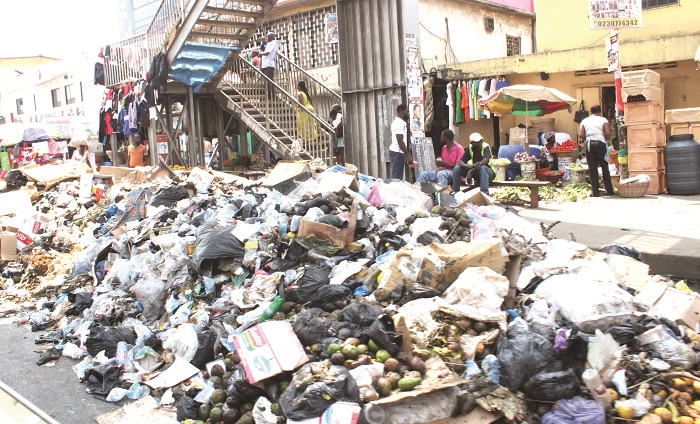

Ghana’s Sanitation Crisis Drains GH¢6.2bn From Economy Annually, ISSER Warns
Ghana is losing more than GH¢6.2 billion every year to diseases, deaths and productivity losses linked to poor sanitation and waste management, according to a new study by the Institute of Statistical, Social and Economic Research, ISSER.
The findings have intensified calls for government to treat sanitation spending as a strategic economic investment rather than a routine social service obligation.
The study, presented at a high-level stakeholder engagement in Accra, found that sanitation-related illnesses, including malaria, cholera, typhoid, pneumonia and diarrhoea, account for nearly 31.9 million lost workdays annually.
It also estimated that poor sanitation contributes to more than 177,000 deaths nationwide, highlighting the scale of the public health and economic burden associated with Ghana’s waste management challenges.
Researchers put direct healthcare costs linked to poor sanitation at approximately GH¢5.8 billion annually, with an additional GH¢650 million lost through reduced productivity and absenteeism.
The report, led by Professor Peter Quartey and Dr Kwame Adjei-Mantey, argues that Ghana’s current sanitation expenditure remains disproportionately low compared with the economic damage caused by poor waste management.
According to the study, Ghana spends an average of only GH¢38 per tonne of waste generated, a level researchers say is inadequate to address the growing sanitation pressures facing urban and peri-urban communities.
ISSER’s modelling suggests that stronger public investment in sanitation and waste management could yield significant economic returns.
Under current spending levels, every GH¢1 invested in sanitation generates roughly GH¢180 in benefits. However, investment aligned with lower-middle-income country benchmarks could raise the return to about GH¢556 for every GH¢1 spent.
The projected national gains under an enhanced sanitation investment strategy could rise from about GH¢58 billion in 2025 to GH¢67.2 billion by 2032.
The expected gains would come mainly from lower healthcare costs, reduced mortality, improved labour productivity and fewer workdays lost to preventable diseases.
The findings come at a time when Ghana continues to face recurrent flooding, poor drainage, mounting urban waste and pressure on metropolitan, municipal and district assemblies struggling to finance sanitation infrastructure.
Rapid urbanisation has worsened the challenge, with population growth in major cities outpacing investment in waste collection, drainage systems, landfill management and recycling infrastructure.
For businesses, the sanitation crisis also carries hidden costs. Flooding, poor waste disposal and disease outbreaks disrupt transport, reduce working hours, raise healthcare expenditure and weaken productivity across both formal and informal sectors.
The ISSER study therefore reframes sanitation as an economic competitiveness issue, not merely a public health concern.
Analysts say the findings provide a strong basis for government to increase budgetary allocations to sanitation, improve local assembly financing, expand private-sector participation and strengthen accountability in waste management contracts.
The study also raises questions about the sustainability of Ghana’s current sanitation financing model, particularly as assemblies continue to depend heavily on limited internally generated funds and central government transfers.
With the economic cost of poor sanitation now estimated in billions of cedis, ISSER argues that underinvestment in waste management is no longer fiscally prudent.
Rather, the report suggests that every year of delayed investment imposes a larger cost on the economy through avoidable disease, lost productivity and preventable deaths.
The researchers are therefore urging policymakers to move sanitation higher on the national development agenda and treat it as a core component of economic planning, urban resilience and public health security.
For Ghana, the policy choice is becoming increasingly clear: either invest more deliberately in sanitation infrastructure now or continue to absorb billions of cedis in economic losses every year.

