

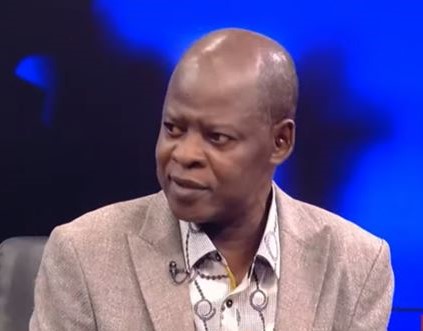

Gold Fields Lease Should Be Renewed If Obligations Are Met — Dr Manteaw
Mining governance expert Dr Steve Manteaw has said the government should renew Gold Fields’ mining lease if the company has fulfilled all its statutory and contractual obligations, warning that Ghana’s debate over localisation must be grounded in strategy rather than emotion.
Speaking in an interview with NorvanReports, Dr Manteaw argued that while Ghana must deepen local participation in the mining industry, the country must also confront the financial, technical and governance realities that determine whether local firms can sustain large-scale production.
Asked whether the government should grant Gold Fields another 20-year lease, Dr Manteaw responded: “Gold Fields have fulfilled all obligations.”
His comments come amid renewed national debate over whether Ghana is getting enough from its mineral resources and whether the mining sector should be further localised to ensure greater national value capture.
Dr Manteaw, however, cautioned against placing the blame for underdevelopment in mining communities solely on mining companies. He said mining firms already pay several statutory obligations, including corporate tax, mineral royalties and other taxes required by law.
“It is up to the government to apply revenues in ways that address equity in development across the country, focusing much more attention on mining communities,” he said.
He noted that Ghana’s fiscal framework already provides for a portion of mineral royalties to be disbursed to mining communities, including allocations to district assemblies and traditional councils. But according to him, the use of these revenues has often failed to support the development outcomes expected in mining areas.
Dr Manteaw criticised what he described as a poor pattern in the utilisation of mineral royalty revenues, saying some assemblies spend substantial portions on recurrent expenditure rather than economic development projects that can mitigate the negative impact of mining.
He cited examples of mineral royalty funds allegedly being used for items such as funeral donations, hiring equipment for electoral registration, garbage collection, painting assembly buildings and paying allowances.
“If you continue spending your share of the mineral royalties this way, how dare you turn around to blame the company for lack of development?” he asked.
The former Public Interest and Accountability Committee Chair also pointed to Gold Fields’ community development and corporate social responsibility interventions, including contributions to community development funds and infrastructure support. He cited the company’s construction of a major road between Tarkwa and Damang as part of its corporate social responsibility after meeting statutory obligations.
For Dr Manteaw, the issue is not whether Ghanaian ownership should increase. It should. But the country must first build the capacity, financing structures and industrial linkages required to support meaningful Ghanaian participation in mining.
“I think the discussion should be about a national strategy for putting Ghanaians in the driver’s seat in the mining industry,” he said.
He argued that the need to increase Ghanaian content in mining has long been recognised, noting that Ghana already has a list of mining inputs reserved for local suppliers. However, he questioned how far the country has gone in turning those reserved opportunities into real domestic manufacturing capacity.
According to him, some Ghanaian suppliers secure contracts only to import inputs from countries such as China, rather than build local production capabilities. That practice, he suggested, undermines the purpose of local content policy, which should be to deepen domestic industrial capacity and reduce dependence on imported mining inputs.
Dr Manteaw proposed that Ghana should focus on “low-hanging fruits” in the sector, including reforms to the state’s existing free-carried interest in mining companies.
He argued that Ghana’s current 10% free-carried interest has delivered limited benefits because it is tied to dividends, which may not be declared for several years even when companies remain in operation.
“There are times when companies operate for 10 years or so without declaring dividends,” he said.
His proposal is for Ghana to convert its free-carried interest into a more meaningful form of equity or production-linked entitlement that provides the state with a more predictable share of mining output.
“My principle is that let’s convert our 10% free-carried interest into equity,” he said, adding that the structure should entitle Ghana to a share of production.
He also called for profitable mining companies operating in Ghana to list on the Ghana Stock Exchange, arguing that this would allow ordinary Ghanaians to become part-owners of those companies.
That proposal speaks directly to one of the central weaknesses in Ghana’s extractive economy: citizens often see the environmental and social costs of mining more visibly than they see opportunities for ownership and wealth participation.
Dr Manteaw further urged government to promote joint ventures between foreign mining companies and Ghanaian firms as a more realistic path to deeper localisation.
He warned that the balance sheets of many Ghanaian mining companies are not strong enough to raise the minimum capital required to operate large-scale mines at world-class production levels.
For that reason, he argued, joint ventures, mentorship and gradual capacity building may offer a more sustainable path than abrupt localisation.
The broader implication of Dr Manteaw’s position is that Ghana must avoid reducing the mining debate to a simple choice between foreign control and local ownership.
The real issue is whether Ghana can design a mining ownership model that combines investor confidence, local capital formation, manufacturing linkages, transparent royalty use and stronger community development outcomes.
His intervention also places pressure on district assemblies and traditional authorities in mining areas. If mineral royalty allocations are not being applied to transformative local development, then the accountability question cannot stop at the door of mining companies.
It must also extend to local government, traditional authorities and the state institutions responsible for supervising how mineral revenues are used.
For Gold Fields and other mining companies, the message is equally clear. Meeting statutory obligations may justify lease renewal, but corporate legitimacy will increasingly depend on visible community development, local procurement, transparent operations and deeper Ghanaian participation.
For government, the policy challenge is sharper: Ghana must increase local value capture without undermining the investor confidence and financing capacity required to keep large-scale mining productive.
Dr Manteaw’s position is therefore not a rejection of localisation. It is a warning that localisation without strategy could become slogan-driven policy.
The harder task is to build Ghanaian mining capacity deliberately through equity participation, stock market listings, joint ventures, local manufacturing, stronger royalty governance and a transparent development compact with mining communities.

