


- Government Deposits GH¢400 million as Women’s Development Bank Set For End of 2026 Launch
Government has deposited GH¢400 million into an escrow account at the Bank of Ghana as the required capital for the proposed Women’s Development Bank, moving the flagship financial-inclusion initiative closer to operationalisation before the end of 2026.
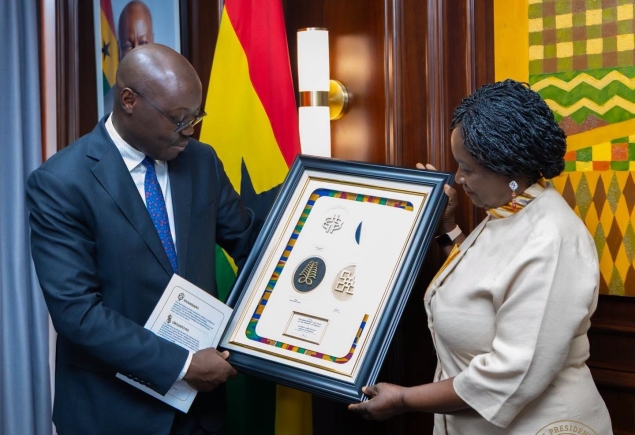
Finance Minister Dr Cassiel Ato Forson disclosed that the payment had been made into the central bank account to enable the Bank of Ghana to begin the regulatory assessment and licensing process for the new institution. The announcement was made during a working visit by Vice President Professor Naana Jane Opoku-Agyemang to the Ministry of Finance.
“We will do whatever it takes to make sure that the bank is operationalised this year,” Dr Forson said, signalling government’s determination to meet its 2026 launch timeline.
The GH¢400 million deposit represents one of the most concrete steps yet towards establishing the specialised bank, which is expected to expand access to affordable finance for women-owned businesses, women-led micro, small and medium-sized enterprises, traders and entrepreneurs who have historically struggled to access credit from traditional financial institutions.
According to Dr Forson, the Bank of Ghana is now expected to assess the proposed bank before granting the licence required for commencement of operations. The next phase will include the appointment of a governing board and management team, which form part of the regulatory requirements for licensing.
The bank is being positioned as a major economic empowerment vehicle, not merely a social intervention. Government officials have argued that women remain central to Ghana’s informal economy, trade, agriculture, processing and services, yet they continue to face barriers related to collateral, high interest rates, documentation requirements and limited access to long-term business support.
Earlier updates to Parliament indicated that WDB Ghana Limited had already been incorporated on January 26 and that government had submitted an application to the Bank of Ghana for an operating licence. Deputy Finance Minister Thomas Ampem Nyarko also confirmed that GH¢51.3 million had been allocated in 2025 to support the intervention.
The 2026 Budget also provided a fresh GH¢401 million capital injection into the Women’s Development Bank, in addition to the earlier GH¢51.3 million seed fund, as part of government’s strategy to crowd in finance for women-owned MSMEs.
Trade, Agribusiness and Industry Minister Elizabeth Ofosu-Adjare has previously said the bank will provide low-interest financing, flexible collateral requirements and tailored business support for women-led enterprises, describing it as a response to the persistent financing gap facing female entrepreneurs.
The promise of flexible collateral is particularly important. Many women-led businesses in Ghana operate with strong cash flows but limited formal collateral. Market women, agro-processors, small traders, food vendors, fashion entrepreneurs and informal-sector operators often struggle to meet the security requirements of commercial banks, even when their businesses are viable.
A development-focused women’s bank could therefore fill a critical gap if it is designed around the realities of women entrepreneurs. That means products must be accessible, documentation must be practical, interest rates must be affordable, and repayment structures must reflect the cash-flow cycles of small businesses.
But the success of the Women’s Development Bank will depend on governance as much as capital.
The GH¢400 million deposit may clear the capital hurdle, but capital alone does not guarantee development impact. The bank will need a strong board, competent management, transparent lending policies, effective risk controls and insulation from political interference. Without those safeguards, a well-intentioned empowerment institution could become vulnerable to poor credit decisions and weak repayment discipline.
The Bank of Ghana’s licensing review will therefore be a credibility test. It must ensure that the proposed bank has a viable business model, sound governance arrangements and adequate systems to protect public funds while delivering its development mandate.
Vice President Prof Opoku-Agyemang has previously cautioned that the rollout must be handled carefully rather than rushed, warning that poor implementation could undermine the bank’s stability and mission.
That caution remains relevant. A bank created to support women cannot succeed if it is launched merely for political optics. It must be built to last, lend prudently and reach the women who need support most.
For government, the project carries significant political weight. The Women’s Development Bank was a major campaign promise and has become a visible marker of the administration’s inclusive-growth agenda. Its launch would allow the government to argue that it is moving beyond macroeconomic stabilisation to targeted interventions that support enterprise, jobs and household incomes.
For women entrepreneurs, the expectations are more practical. They will judge the bank by whether it provides cheaper credit, faster access, fairer collateral rules, business advisory services and financing that reaches beyond Accra into markets, districts, farming communities and regional enterprise hubs.
The institution may also need to work through rural and community banks, fintech platforms, savings groups and existing financial institutions to expand reach quickly without incurring excessive operating costs. A centralised bank with limited access points would struggle to meet the scale of Ghana’s women-led enterprise sector.
If properly structured, the Women’s Development Bank could help formalise more women-owned enterprises, expand working capital, support job creation and strengthen women’s participation in Ghana’s private-sector recovery. It could also complement other inclusive-finance initiatives, including women-focused lending programmes being pursued by development finance institutions.
The risk, however, is that the bank becomes another state-backed credit channel without sufficient discipline. Ghana’s financial history shows that public capital must be protected by professional lending standards, transparency and accountability.
The GH¢400 million escrow deposit is therefore an important milestone, but it is only the beginning. The real test will come when the bank begins lending.
If the Women’s Development Bank can combine affordable credit with strong governance, it could become one of Ghana’s most consequential inclusive-finance institutions. If it is poorly managed, it could become another costly public-sector experiment.

