
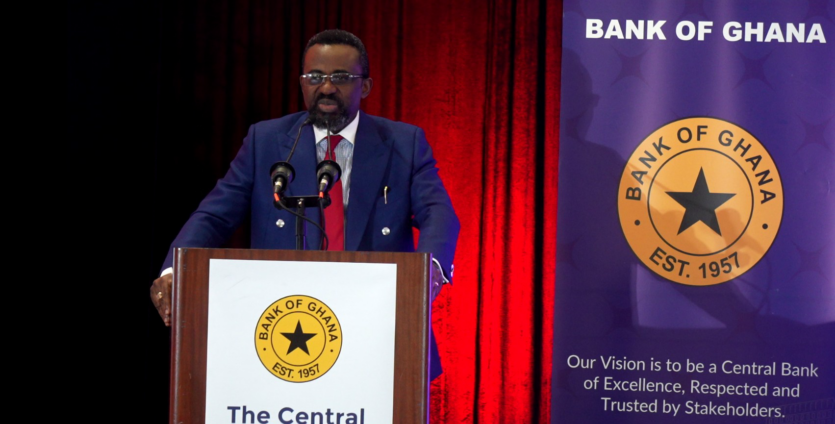

- Governor Courts Ghanaian Diaspora as BoG Pushes Investment-Led Remittance Strategy
The Bank of Ghana is stepping up efforts to turn remittances from the Ghanaian diaspora into a more deliberate source of long-term investment capital, with Governor Dr Johnson Pandit Asiama using a roundtable in the Washington, D.C., Maryland and Virginia, also known as the DMV area, to make the case for a deeper economic partnership with Ghanaians abroad.
The governor delivered a simple but significant message: the diaspora should no longer be seen mainly as a source of household support money. It should be treated as a strategic force for Ghana’s external stability, investment planning, and economic transformation.
“Let me be clear. The Ghanaian Diaspora is a strategic asset indeed,” he said. “The Diaspora represents first, a critical source of foreign exchange inflows, second, a powerful channel for technology transfer and innovation and third, an important bridge to global capital markets.”
That framing matters because it shifts the conversation from remittances as family support to remittances as national capital. For years, diaspora inflows have helped many households manage daily life, education, healthcare, and emergencies. But the Bank of Ghana now wants to move the debate to a harder question: how can those same flows be better organised to support investment and long-term growth?
According to the governor, that transition has become necessary. “Unlocking this full potential requires a deliberate transition,” he said, “a transition from consumption remittances to investment orientated diaspora capital flow.”
The location of the roundtable was also part of the strategy. The DMV area was described as one of the most economically vibrant Ghanaian diaspora centers in the United States, home to entrepreneurs, financiers, technologists, healthcare professionals, and policy actors. For the central bank, it is a natural starting point for a more institutional and sustained relationship with the diaspora.
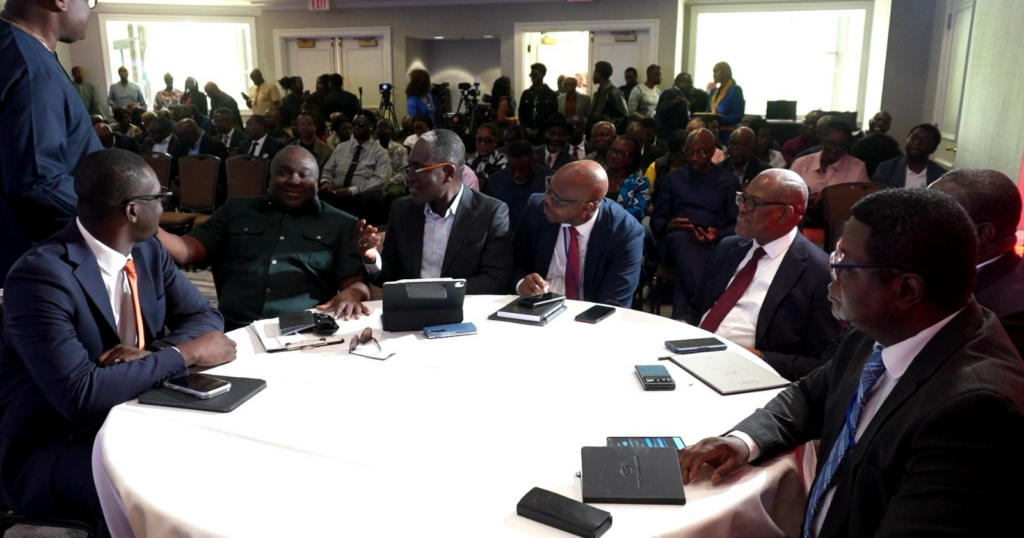
The governor said the Bank of Ghana sees this community not as a symbolic constituency, but as an economic one with real influence. “You are not merely participants in the global economy,” he told the gathering. “You are shapers of it.”
Behind that argument is a broader macroeconomic goal. The central bank wants to capture more remittance flows formally, deepen foreign exchange stability and channel more of that money through Ghana’s financial system into investable assets.
“My objective this evening, colleagues, is to set out with clarity the role of the Bank of Ghana and to engage you on how we get transformation from our remittance flows into formal foreign exchange and channel them into investable capital through the financial system in Ghana,” he said.
The numbers help explain why the bank is paying closer attention. The governor said Ghana recorded about US$4.6bn in remittances in 2024, rising to nearly US$7.8bn by the end of 2025. At about 6 per cent of GDP, he noted, remittances now exceed foreign direct investment in real terms.
“Remittance inflows remain a cornerstone of Ghana’s external sector,” he said. That is a striking point. Foreign direct investment is often treated as the classic sign of investor confidence, yet the governor is effectively arguing that diaspora remittances have become even more systemically important. The challenge now is how to make those inflows work harder for the wider economy.
The Bank of Ghana’s answer appears to be a mix of formalisation, product design, and technology. The governor said Ghana already has a broad remittance ecosystem, including bank-based products, mobile money options, fintech apps, cross-border payment platforms, aggregators, and agent networks. But he suggested that the next phase must go beyond simple transfer channels.
Recent policy action, he said, has focused on improving the formal capture of remittance flows, strengthening transparency in the foreign exchange market, supporting digital cross-border payment systems, and improving the quality and reporting of remittance data.
At the same time, the central bank is exploring new instruments to attract diaspora capital more intentionally. These include diaspora bonds, structured investment vehicles, and foreign currency-denominated investment products offered through supervised market players.
“We are exploring diaspora bonds, structured investment vehicles in collaboration with the designated MDAs, promoting foreign currency-denominated investment products through supervised industry players, strengthening regulatory frameworks for cross-border flows and establishing more structured and continuous diaspora engagement platforms,” he said.
The governor also said the central bank is looking at fintech partnerships, including distributed ledger and tokenisation-based models, to reduce costs and make remittance and investment flows faster and easier to track.
“We are leveraging fintech partnerships to reduce remittance costs and settlement frictions, including the responsible digital ledger and tokenisation-based model to improve speed, to improve visibility and to improve efficiency in cross-border remittance and investment flows,” he said.
Still, the real issue is not only technology. It is trust. Many diaspora investors may be interested in Ghana, but interest alone does not move capital. Confidence in the process matters just as much as confidence in the opportunity.
That is why one of the governor’s clearest promises was about access and credibility. “We are working to ensure that when a Ghanaian in Washington or elsewhere decides to invest in Ghana, whether in government securities, SMEs, fintechs, real estate, or infrastructure, the pathway to doing this is seamless, credible, and rewarding,” he said.
In effect, the central bank is saying that diaspora investment should not feel difficult, vague or risky to navigate. It should feel structured. The governor also placed Ghana’s approach in an international context, saying the country is studying examples such as Mexico, the Philippines and India, which have used targeted instruments and digital systems to better connect diaspora incomes to investment and development finance.
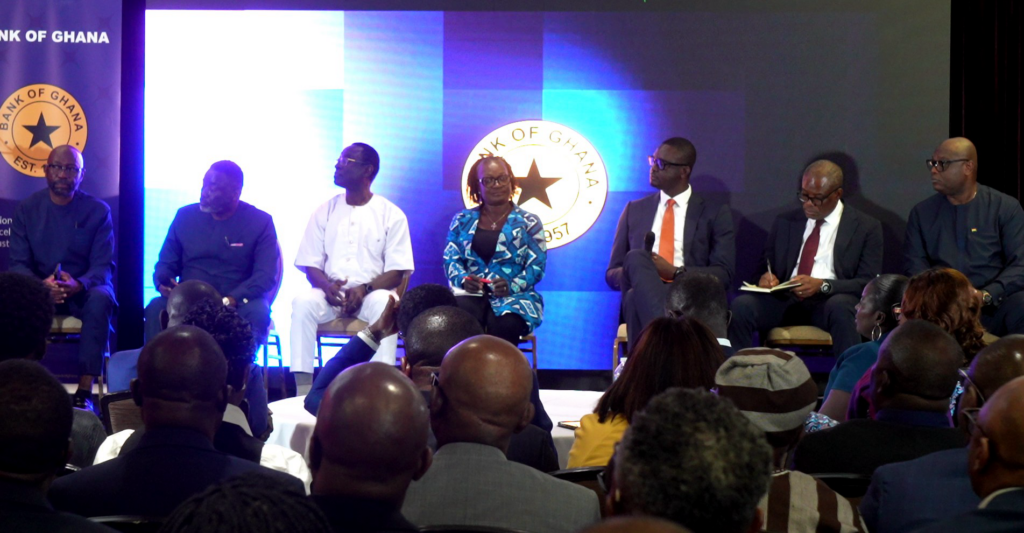
“Mexico, for example, shows how to scale diaspora engagement, Philippines shows how to change financial behaviour and India shows us how to mobilise large capital from remittances,” he said. “So Ghana intends to adapt and to scale these lessons in a manner that is consistent with our domestic financial architecture.”
He said the roundtable was meant to produce practical outcomes, such as bankable diaspora investment opportunities, co-created financial solutions, clearer engagement on regulatory constraints, and a stronger shift from consumption-driven remittances to investment-led models.
The expected results include greater formalisation of remittance flows, increased diaspora participation in Ghana’s capital markets, stronger links between the diaspora, financial institutions, and policymakers, and more actionable policy reform.
But perhaps the most thought-provoking part of the governor’s remarks was not about products or platforms. It was about how Ghana should fundamentally think about its diaspora.
“The Ghanaian Diaspora is not peripheral to our economy,” he said. “It is actually central to our external stability, our investment strategy, and our economic transformation.”
He then pushed the idea further: “We must treat the Diaspora as domestic investment abroad, not in external sending of money.” That may be the most important line in the entire strategy. It suggests a change not just in financial policy but in national economic thinking. If the diaspora is treated as “domestic investment abroad,” then remittances stop being seen as emotional transfers from family members overseas and start being viewed as part of Ghana’s capital formation story.
That is an ambitious shift. It also raises a deeper challenge. Ghana cannot simply ask the diaspora to invest more. It must build the systems, products, and policy credibility that make such investments sensible, trusted, and worthwhile.
The governor appears to understand that point. “Our next phase is not just about remittances,” he said. “It is about turning the Diaspora incomes into long-term investment capital.”
That line captures the real test ahead. Ghana already receives diaspora money. What it is now trying to build is diaspora confidence at scale. If that works, the country could gain not just more inflows, but a more reliable form of long-term capital. If it fails, remittances may continue to come, but mostly as support money rather than as a deeper engine of economic transformation.

