

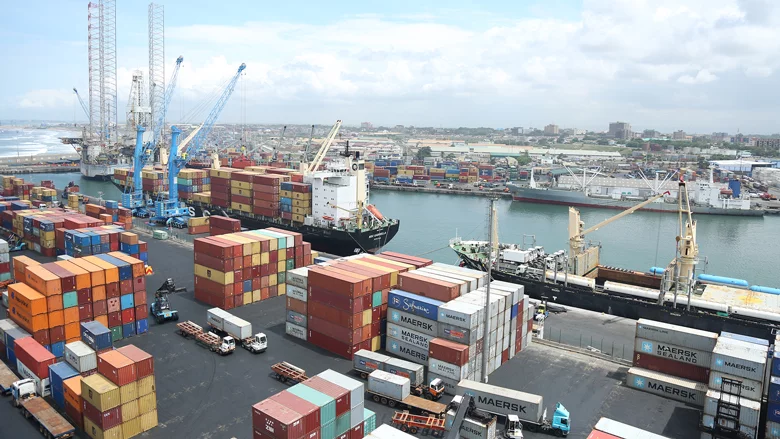

GRA Uncovers $31bn Trade Discrepancy, Flags Systemic Weaknesses in Import Regime
The Commissioner-General of the Ghana Revenue Authority (GRA), Anthony Sarpong, has disclosed that approximately US$31 billion was transferred out of Ghana over a five-year period without corresponding imports, exposing significant gaps in the country’s import control systems.
The revelation, made during an interview on Joy FM’s Super Morning Show on April 10 and monitored by NorvanReports, follows a comprehensive review of historical trade data undertaken by the Authority after he assumed office.
Mr Sarpong described the outcome of the assessment as “very revealing,” noting that it highlights structural weaknesses in the way imports have been declared and supervised at the country’s ports.
“When we took office, we did a study of the past data about five years back, and the results were very revealing… we were able to show… close to about US$31 billion has been transferred out of the country without goods coming in,” he said.
He warned that the issue goes beyond inconsistencies in trade records, stressing that it has serious implications for Ghana’s foreign exchange stability, as substantial amounts of forex leave the country without matching inflows of goods.
Further findings from the review pointed to widespread irregular practices, including incorrect classification of imports, under-valuation, and falsification of country-of-origin information—actions that weaken revenue mobilisation and compromise trade data integrity.
The GRA boss also revealed evidence of coordinated misconduct involving some shipping line officials, customs officers, and importers, which enabled the revenue leakages.
“We then also found out that there was some collusion among shipping line staff, customs officers, and some importers. And this is how the scheme was being run,” he indicated.
In response to the findings, the Authority has begun implementing reforms aimed at strengthening oversight and reducing the level of human discretion in the import clearance process, which he identified as a key source of vulnerability.
“So, we said we need to tackle this… using the same human beings and the extensive discretion… was not going to help us at all,” he added.
As part of these reforms, the GRA has introduced automation and artificial intelligence to enhance monitoring across critical risk areas, including classification, valuation, and verification of country of origin.
This has led to the deployment of the Publican system, an AI-powered platform launched on March 12, 2026, to improve real-time scrutiny of import declarations.
The system benchmarks declared values against global pricing data and historical trade patterns, allowing authorities to detect discrepancies and flag suspicious transactions before clearance—marking a departure from the previously manual and largely reactive system.
Revenue losses at Ghana’s ports have long been a concern for policymakers, often driven by practices such as under-declaration, misclassification, and transit diversion, where goods meant for neighbouring countries are diverted into the local market.
The issue came into sharper focus following a GH¢1.6 billion shortfall in customs revenue recorded in 2025, as well as sanctions imposed on officials linked to irregular transit activities.
Mr Sarpong expressed confidence that the adoption of technology-driven solutions will help plug revenue leakages and strengthen the integrity of the import system.
“And the use of AI or automation… will give us the opportunity to see ahead of time,” he stated.

