

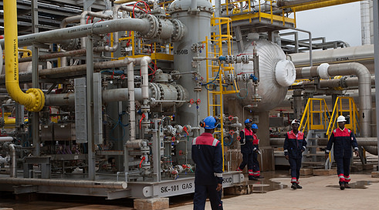

- Ghana’s Gas Future: ASEC Says Strategic Assets Must Not Be Handed to Private Operators
The Africa Sustainable Energy Centre has opened a fresh front in Ghana’s long-running debate over state ownership, private capital and strategic control of the energy sector, warning the government against handing the planned second gas processing plant of the Ghana National Gas Company to a private operator.
The energy policy think tank argues that the proposed Ghana Gas Processing Plant Train 2 should remain fully owned by the state, describing it not merely as an infrastructure project but as a strategic national asset central to power generation, industrial policy and long-term energy security.
In a strongly worded statement issued on Wednesday, ASEC cautioned that any move to transfer control of the planned facility to a private operator would “undermine Ghana’s energy security, increase electricity generation costs and dilute state control over a strategic national asset.”
That warning goes to the heart of a difficult policy question facing Ghana: when does private sector participation improve efficiency, and when does it create a new layer of cost in a sector already under financial pressure?
ASEC’s position is clear. The organisation believes Ghana Gas should retain 100% ownership of the planned GPP Train 2. It argues that introducing a private operator into the domestic gas processing chain would add a profit-seeking intermediary to a system where the government already carries much of the financial burden.
This is not a small concern. Ghana’s electricity sector is built around a complicated structure in which the state, through various agencies, carries obligations linked to fuel supply, power generation, transmission, distribution and payments to Independent Power Producers.
Under the existing tolling arrangement with IPPs, the government is responsible for supplying fuel to thermal power plants through Ghana Gas. ASEC argues that if a private company controls the gas processing facility, the state may still carry the financial risk while a private operator extracts commercial returns from the processing stage.
If the private operator demands higher processing fees, tariff adjustments or dollar-linked payments, the cost could eventually find its way into power generation charges. From there, it could affect electricity tariffs, government arrears, industrial production costs or the financial position of power sector utilities.
In simple terms, ASEC is asking whether Ghana should insert private profit into a part of the energy value chain that directly affects the cost of electricity.
According to the think tank, private ownership could lead to “higher gas processing charges, tariff adjustment demands and operational decisions driven primarily by shareholder returns rather than national development priorities”.
That argument will resonate with those who believe Ghana’s power sector is already too exposed to costly private contracts. The country’s experience with some power purchase agreements has left a long shadow over energy policy. Capacity charges, take-or-pay obligations and foreign currency exposure have all contributed to the financial stress in the sector.
The fear now is that a poorly structured gas processing arrangement could create another long-term cost centre.
ASEC is also pushing back against the idea that privatisation is necessary to improve Ghana Gas’ performance. The centre argues that Ghana Gas has already demonstrated operational competence through the management of the Atuabo Gas Processing Plant.
That point is important because supporters of private participation often argue that state-owned enterprises are inefficient, politically exposed and financially weak. ASEC is challenging that assumption in this specific case. Its position is that Ghana Gas is not a failing institution that needs to be rescued by private operators, but a strategic public company that has already delivered value.
The think tank credits Ghana Gas with helping the country substitute imported light crude oil with domestically produced natural gas. This, it argues, has saved foreign exchange, supported domestic energy resilience and reduced dependence on imported fuels.
That claim fits into a broader national concern. Ghana’s economy remains vulnerable to foreign exchange pressure. Any policy that reduces demand for imported fuel can support the cedi, lower external payment pressure and improve energy security. Domestic gas processing therefore carries macroeconomic value beyond the immediate energy sector.
If Ghana controls its gas processing infrastructure, the government can align gas supply with electricity planning, industrial expansion, fertiliser production, petrochemicals, mining, manufacturing and other strategic uses. If private commercial control becomes dominant, decisions may be shaped more by returns to investors than national planning priorities.
ASEC’s argument is not anti-private sector in every respect. The centre says private participation should be directed to areas where it can solve real operational problems, especially within the Electricity Company of Ghana.
The think tank is effectively saying that if government wants private capital and private management discipline in the energy sector, ECG is the more urgent target. ECG continues to face persistent challenges around revenue collection, system losses, operational inefficiencies, payment arrears and financial sustainability.
In ASEC’s view, Ghana Gas is not the weak link. ECG is. This framing turns the debate on its head. Instead of asking whether Ghana Gas should be privatised, ASEC is asking why the government would consider private control over a strategic gas asset when the more serious financial leakages in the power sector lie elsewhere.
Ghana’s power sector problem is not only about generation. It is also about distribution, billing, collection, losses, tariffs, arrears and governance. If electricity produced from processed gas is not paid for efficiently at the distribution end, privatising upstream gas processing will not solve the sector’s deeper financial problem.
It may even worsen it if it increases fixed obligations in the value chain.
Natural gas infrastructure is different from ordinary commercial infrastructure. It sits at the intersection of energy security, fiscal policy and industrial strategy. Whoever controls gas processing capacity influences fuel availability, power generation economics and the cost structure of industrial activity.
For Ghana, this is particularly sensitive because gas is central to the country’s transition from expensive liquid fuels to more reliable and potentially cheaper domestic energy sources. The success of that transition depends on whether the state can manage gas infrastructure efficiently while keeping costs under control.
ASEC is therefore warning that Ghana should not treat GPP Train 2 as a simple investment opportunity. It sees the plant as part of the country’s energy sovereignty architecture.
The phrase may sound broad, but the issue is practical. If Ghana loses control over pricing, processing priorities and operational decisions in a strategic gas facility, it may also lose flexibility in managing power generation costs during periods of economic stress.
Currency volatility makes this even more important. If private arrangements are priced in foreign currency or linked to dollar-based returns, the cost burden could rise when the cedi weakens. This has been one of the recurring challenges in Ghana’s energy contracts.
ASEC’s warning should therefore be read not only as a defence of public ownership, but as a call for careful contract design.
Government must answer several questions before any private participation is considered.
What problem is privatisation supposed to solve? Is Ghana Gas unable to finance the plant? Is it unable to operate it? What would the private operator bring that the state cannot secure through borrowing, joint technical support or management reform? How would processing charges be determined? Would the contract be cedi-based or dollar-linked? Who would carry demand risk? How would consumers be protected from higher costs?
These questions matter because strategic infrastructure decisions can lock a country into obligations for decades.
Ghana has learnt, sometimes painfully, that energy contracts signed in the name of urgency can later become fiscal burdens. That does not mean all private participation is bad. It means the structure matters.
There is also a governance issue. Full public ownership does not automatically guarantee efficiency. State-owned enterprises can suffer from political interference, weak procurement, poor financial discipline and opaque decision-making. If Ghana Gas is to retain full ownership of GPP Train 2, it must also be held to high standards of transparency, operational efficiency and commercial discipline.
ASEC’s argument for state ownership will be stronger if it is matched by an argument for stronger public sector governance.
The choice should not be between inefficient public ownership and costly private control. Ghana needs a third path: strategic public ownership with professional management, transparent financing, strong oversight and clear performance targets.
The planned GPP Train 2 comes at a time when Ghana is seeking to expand industrial production, stabilise power supply and improve the financial health of the energy sector. Gas will be central to that agenda. It can lower fuel import dependence, support thermal generation and provide feedstock for future industrial uses.
But the benefits will depend on who controls the infrastructure, how costs are recovered and whether the system serves national priorities.
ASEC has now placed a warning before government: strategic gas infrastructure should remain under public control and not be driven primarily by commercial interests.
Government may have its own reasons for considering private participation. Financing constraints are real. Public debt pressures are real. Technical and operational needs may also be real. But if the state decides to bring in private capital, it must show that the arrangement will reduce costs, not increase them; strengthen energy security, not weaken it; and protect the public interest, not transfer value quietly to private intermediaries.
The debate over Ghana Gas’ second processing plant is therefore bigger than one facility. It is about how Ghana defines control over critical energy infrastructure in an era of fiscal constraint, industrial ambition and rising power sector costs.

