

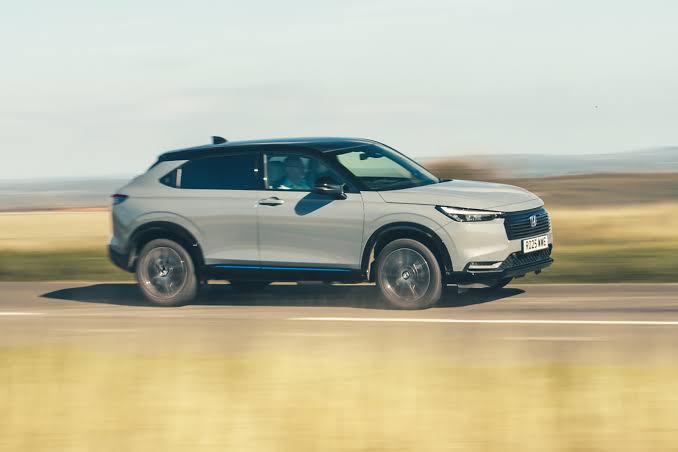

- Honda HR-V Leads Affordable Cars Most Likely to Surpass 200,000 Miles — Study
The Honda HR-V has emerged as the affordable vehicle most likely to remain on the road beyond 200,000 miles, underlining the continued dominance of Japanese manufacturers in the market for relatively inexpensive and durable cars.
A vehicle-longevity study commissioned by Bagen Law estimated that 54.7% of Honda HR-V vehicles could cross the 200,000-mile threshold, the highest probability among the models examined.
The compact sport utility vehicle has a manufacturer’s suggested retail price of $28,050, delivers an estimated combined fuel economy of 28 miles per gallon and received a five-star overall safety rating from the US National Highway Traffic Safety Administration.
It was also designated a Top Safety Pick+ for 2026 by the Insurance Institute for Highway Safety, according to the report.
The findings arrive as households are keeping vehicles for longer, partly because of rising new-car prices, higher financing costs and improvements in mechanical reliability. Modern vehicles are now commonly kept for 12 to 13 years, making durability an increasingly important consideration alongside purchase price and fuel consumption.
The report compared vehicles on their estimated probability of exceeding 200,000 miles, recommended retail prices, fuel efficiency and safety performance. It drew on information from the NHTSA, IIHS and Consumer Reports.
However, the probability assigned to each vehicle should be interpreted as an estimate rather than a guarantee. Maintenance history, climate, road quality, driving habits and access to replacement parts can materially affect how long an individual vehicle remains operational.
The Honda CR-V placed second, with an estimated 40.3% chance of reaching more than 200,000 miles. It has a starting price of $29,324 and combined fuel economy of 30 miles per gallon.
Although slightly more expensive than the HR-V, the CR-V offers better fuel efficiency and a five-star NHTSA safety rating. It did not, however, receive an IIHS safety award in the dataset used for the study.
Toyota’s Camry ranked third, with a 31.8% likelihood of exceeding 200,000 miles. The model was priced at $29,715 and recorded combined fuel efficiency of 51 miles per gallon.
The Toyota Prius followed closely with a 31.3% estimated chance of passing the same mileage threshold. At $29,745, it was the most expensive vehicle among the top five but also the most fuel-efficient car in the ranking, delivering an estimated 54 miles per gallon.
That distinction is important because the study’s headline findings included a claim that the Camry offered the best fuel efficiency. The detailed data, however, show that the Prius leads at 54 miles per gallon, compared with the Camry’s 51 miles per gallon.
Honda’s Civic completed the top five. It had a starting price of $25,990, combined fuel economy of 36 miles per gallon and a 29.7% estimated chance of travelling more than 200,000 miles.
The Civic received a five-star NHTSA rating, while its hatchback variant was designated an IIHS Top Safety Pick.
Six of the 10 highest-ranked models came from Honda and Toyota, reinforcing the two Japanese manufacturers’ longstanding reputation for combining mechanical durability with relatively moderate ownership costs.
The Toyota Corolla was the cheapest vehicle in the top 10, with a starting price of $24,320. It ranked eighth overall, with a 24.7% estimated chance of crossing 200,000 miles and combined fuel efficiency of 35 miles per gallon.
The Chevrolet Trailblazer was the only non-Japanese model in the ranking. It placed tenth with a starting price of $25,095 and an estimated 12.4% chance of exceeding 200,000 miles.
Mazda’s CX-30 ranked ninth, with a 24% probability of reaching the milestone. It carried a price of $27,870 and received both a five-star NHTSA rating and an IIHS Top Safety Pick+ designation.
The broader ranking suggests that the cheapest car is not necessarily the one offering the lowest long-term ownership cost. A slightly more expensive vehicle that lasts longer, consumes less fuel and experiences fewer major breakdowns may prove more economical over its full life.
That calculation becomes even more important for buyers using credit, because replacing a vehicle before its financing has been fully repaid can place additional pressure on household finances.
While engines and transmissions have traditionally shaped perceptions of vehicle reliability, the increasing dependence of modern cars on electronic systems is changing the nature of breakdown risks.
Steve Bagen, a legal expert at Bagen Law, said software and infotainment problems were becoming a greater source of complaints across the automotive industry.
“Infotainment and software issues, not engines or transmissions, are now the single biggest source of dependability complaints across the industry,” he said.
“Both Toyota and Honda have been affected by this, with Toyota issuing a recall for blank instrument panel displays affecting over 590K vehicles in 2026.”
Mr Bagen said the ability of manufacturers to develop and maintain reliable software was becoming an important variable in any assessment of long-term ownership.
“The variable that introduces uncertainty into any long-term ownership calculation is increasingly how well a manufacturer handles software development, and Japanese automakers, despite their mechanical strengths, are still working it out,” he said.
The warning introduces a new dimension to the idea of vehicle longevity. A car may retain a reliable engine and structurally sound transmission while becoming costly or inconvenient to operate because of failures involving displays, sensors, driver-assistance systems or digitally controlled components.
The report therefore points to a changing reliability contest. Honda and Toyota retain a clear advantage in expected mechanical longevity, but the longest-lasting vehicles of the future will also need software systems capable of remaining dependable — and supportable — for more than a decade.

