

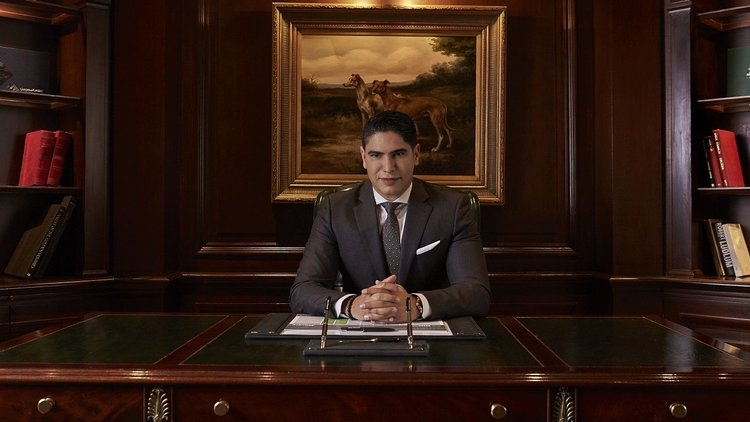

- How Egyptian Steel Turned Ahmed Abou Hashima Into One of Egypt’s Top Industrialists
Ahmed Abou Hashima’s rise from steel trader to one of Egypt’s most recognised industrial entrepreneurs was shaped by a single high-conviction bet: a more than US$1 billion investment in the country’s steel industry at a time when many investors were cautious about committing large sums to capital-intensive manufacturing.
At 35, Abou Hashima backed the creation of Egyptian Steel in 2010, a venture that would later grow into one of Egypt’s largest steel producers and provide the foundation for a wider business empire spanning cement, media, industrial investments and agriculture.
The company expanded rapidly, building four major production facilities across Port Said, Alexandria, Ain Sokhna and Beni Suef. The plants gave Egyptian Steel annual production capacity of about 2.3 million tonnes, positioning the company as a major supplier to Egypt’s construction, infrastructure, real estate and industrial sectors.
At its peak, Egyptian Steel accounted for an estimated 20.00% to 25.00% of Egypt’s steel output, underscoring the scale of the company’s contribution to the country’s manufacturing base.
The investment was significant not only because of its size, but because of the risk profile of steel production.
Building a steel manufacturing business requires heavy capital expenditure, long-term financing, exposure to commodity cycles, strong logistics, reliable energy supply and confidence in future demand. For a private entrepreneur, such a move represented a major wager on Egypt’s long-term infrastructure and housing needs.
Abou Hashima’s bet was that steel demand would continue to rise as Egypt expanded its urban housing stock, infrastructure pipeline and industrial economy.
That gamble paid off.
Within a few years, Egyptian Steel had become one of the country’s most visible industrial businesses, helping transform Abou Hashima from a trader into a major manufacturing investor.
The success of the company also gave him a platform to diversify beyond steel. His later ventures included Egyptian Cement, Egyptian Media, the Egyptian Industrial Investment Group and MAFI for Agricultural Produce Industries.
The pattern reflects a broader strategy of investing in sectors tied closely to Egypt’s domestic development agenda: construction materials, industrial production, media and agriculture.
Egyptian Steel’s influence continued to be felt long after its early growth phase. In 2022, Ezz Steel acquired an 18.00% stake in Egyptian Steel in a transaction valued at about EGP 2.5 billion, highlighting the company’s continuing strategic value within Egypt’s industrial landscape.
For investors, Abou Hashima’s story offers a clear lesson in the role of patient, high-risk capital in building industrial capacity.
Many emerging markets struggle to attract long-term investment into manufacturing because the sector requires scale, infrastructure, energy access and tolerance for economic cycles. Abou Hashima’s steel venture showed that private capital could still build large industrial platforms when backed by conviction, timing and execution.
His rise also reflects the importance of domestic champions in Africa and the Middle East, where infrastructure expansion, urbanisation and industrialisation continue to create demand for basic materials such as steel, cement and processed agricultural products.
The transformation from steel trader to industrial heavyweight was therefore not just a personal business success. It also mirrored Egypt’s wider push to deepen local manufacturing capacity and reduce dependence on imported industrial inputs.
Today, Abou Hashima’s name remains closely associated with one of the most ambitious private-sector industrial investments in modern Egypt.
What began as a US$1 billion wager on steel became the cornerstone of a broader business empire and a case study in how one calculated investment can reshape both an entrepreneur’s career and a country’s industrial landscape.

