



- Hyundai to Establish West Africa Assembly Plant in Ghana
Ghana is set to host a Hyundai automotive manufacturing plant as South Korea expands its economic footprint in Africa, in a development expected to strengthen Ghana’s industrialisation agenda and position the country as a regional vehicle assembly hub.
The announcement was made by Ghana’s Minister for Foreign Affairs, Samuel Okudzeto Ablakwa, after the 2026 Korea–Africa Foreign Ministers’ Meeting in Seoul, which he co-chaired with South Korea’s Foreign Minister Cho Hyun.
According to Mr Ablakwa, the planned Hyundai facility will serve the wider West African market and is expected to boost local vehicle production, create jobs and attract further investment into Ghana’s manufacturing sector.
“This year, our two countries will open a new university in Ghana; establish a West Africa Hyundai Automotive Manufacturing Plant in Ghana, and launch new solar irrigation systems,” he said after the meeting.
The proposed assembly plant adds to Ghana’s effort to deepen value-added manufacturing and reduce dependence on raw commodity exports.
For years, Ghana has sought to position itself as a preferred destination for vehicle assembly in West Africa, using its political stability, access to the African Continental Free Trade Area market and improving industrial policy environment to attract global manufacturers.
The Hyundai project, if delivered as planned, could strengthen Ghana’s automotive ecosystem by creating demand for local suppliers, technical skills, logistics services, maintenance networks and related industrial jobs.
It could also enhance the country’s ambition to become a gateway into the West African auto market, especially as regional economies seek more affordable vehicles, local assembly capacity and stronger industrial linkages.
Beyond the automotive project, Ghana and South Korea also agreed to deepen cooperation in artificial intelligence, energy and critical minerals, sectors increasingly central to global industrial competitiveness and green technology supply chains.
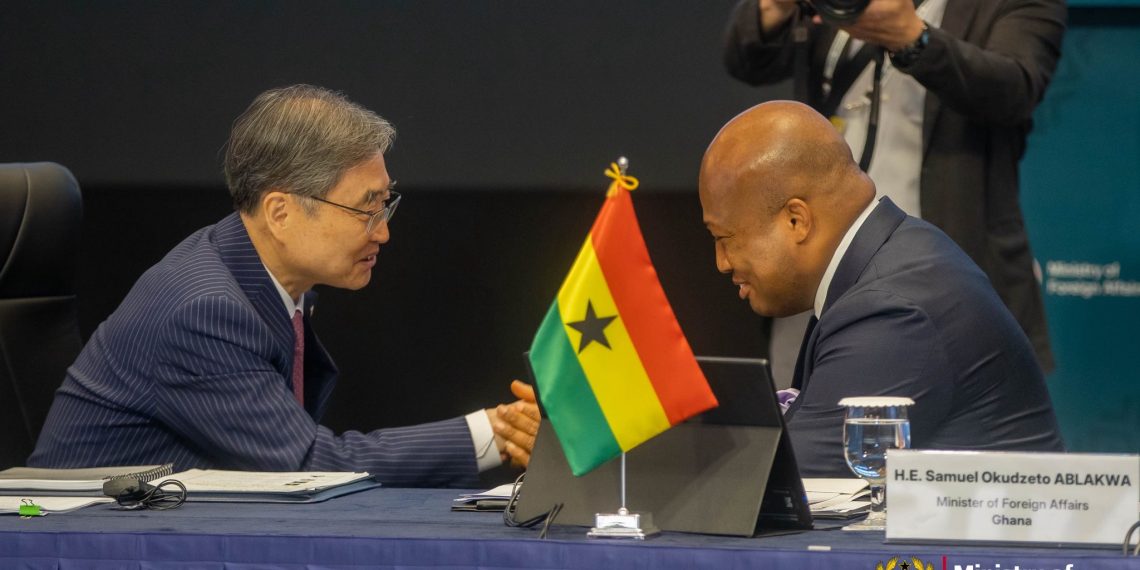
Mr Ablakwa said the discussions focused on a partnership anchored on industrialisation, value addition, job creation and improving Africa’s returns from global economic engagement.
The announcement comes at a time when government is seeking to use manufacturing, agro-processing, technology and export-oriented production as key pillars of its economic transformation agenda.
For Ghana, the Hyundai plant could become more than an assembly project. It could test whether the country can move from attracting brand names to building deeper local industrial capacity around parts, skills, servicing, financing and exports.
Ghana has previously attracted global auto brands, but the long-term success of the sector will depend on policy consistency, power reliability, port efficiency, tax clarity, local supplier development and regional market access.
If those conditions are met, the Hyundai facility could become a significant addition to Ghana’s industrial base and a signal that the country is gaining ground in the competition to host regional manufacturing platforms.

