

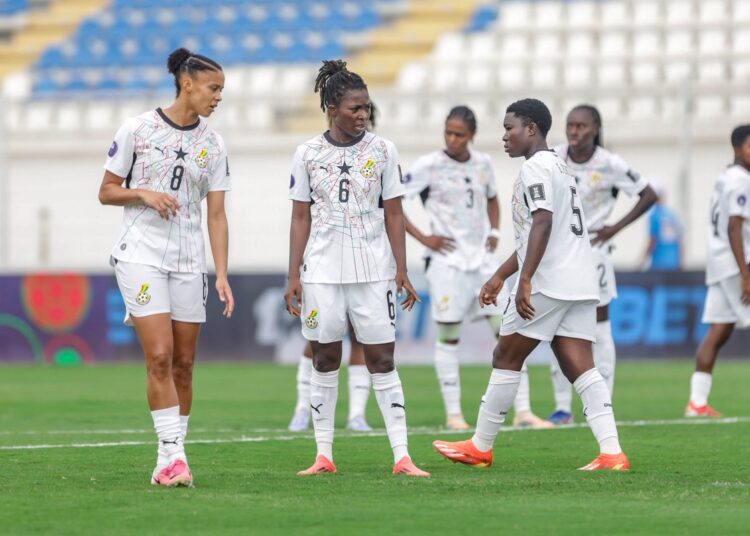

- Black Queens Show Resilience in 2-1 Comeback Win Over Côte d’Ivoire
Ghana’s Black Queens kept alive their hopes of returning to the FIFA Women’s World Cup after producing a spirited comeback to beat Côte d’Ivoire 2-1, extending a tournament campaign that has increasingly become a test of the team’s resilience under pressure.
The victory was particularly significant because Ghana entered the contest knowing that another setback would seriously damage their route towards the 2027 Women’s World Cup in Brazil. Instead, the Black Queens recovered from falling behind to overturn the game and remain in contention.
The result also reinforced a characteristic that has become increasingly visible under head coach Kim Lars Björkegren: Ghana’s ability to respond after difficult moments rather than allow matches to drift away.
That mentality has been central to the Black Queens’ recent resurgence. Ghana entered the 2026 Women’s Africa Cup of Nations with qualification for the World Cup as one of its principal objectives. CAF’s expanded tournament brought together 16 teams in Morocco, with the competition also serving as an important pathway towards Brazil 2027.
The Black Queens began their campaign strongly, defeating Cape Verde 2-0 through a Doris Boaduwaa strike and an own goal created from sustained Ghanaian pressure. The performance provided an early indication of a side capable of controlling games while maintaining defensive discipline.
But tournament football rarely follows a straight line. Ghana’s route has required the team to navigate setbacks and high-pressure matches, making the victory over Côte d’Ivoire more important than simply adding another win to the record.
The Ivorians presented a familiar challenge. Ghana had beaten Côte d’Ivoire 1-0 in a pre-WAFCON friendly in July, with Sharon Sampson scoring the decisive goal in the 75th minute, meaning both teams already had a recent understanding of each other’s strengths before their latest encounter.
This time, Ghana had to do it the harder way. After going behind, the Black Queens were forced to chase the game and find a response capable of preventing their World Cup ambitions from slipping away.
The 2-1 turnaround therefore carried significance beyond the scoreline. It demonstrated the ability to manage tournament pressure, recover emotionally after conceding and maintain attacking belief when the consequences of defeat were considerable.
That quality has been a central part of Björkegren’s work with the team.
The Swedish coach has built a squad combining experienced internationals including Grace Asantewaa, Evelyn Badu, Jennifer Cudjoe, Alice Kusi and captain Portia Boakye with a younger attacking generation featuring Doris Boaduwaa, Princess Marfo, Stella Nyamekye and others.
The balance has given Ghana both tournament experience and greater tactical flexibility.
Björkegren has previously emphasised structure, collective pressing, intensity and stronger connections in the final third, while players have increasingly shown an ability to remain composed when games become difficult.
That psychological resilience may prove as important as technical quality in the remaining qualification pathway.
The Black Queens are attempting to return to the Women’s World Cup after a lengthy absence from the global tournament, meaning each surviving opportunity carries considerable significance for a generation of players seeking to restore Ghana’s historical standing in African women’s football.
Ghana were once regular participants at the World Cup, but the national team subsequently lost ground as competition across the continent strengthened.
The Black Queens have climbed the FIFA rankings, improved their performances against leading African opposition and built a squad dominated by players with professional experience outside Ghana. Citi Sports reported earlier in 2026 that the team had risen to 59th in the world, up from 62nd, while remaining among Africa’s highest-ranked sides.
The improvement makes qualification for Brazil 2027 more than a symbolic ambition.
A return to the World Cup would provide Ghanaian women’s football with greater international exposure, potentially strengthen commercial interest in the Black Queens and create a clearer pathway for younger players coming through the domestic game.
That makes the timing of the victory particularly important given the financial and welfare controversy surrounding the team during the tournament.
Black Queens players recently publicly raised concerns over bonuses, per diems and wider welfare support, while the Ministry of Sports subsequently produced records disputing part of those claims and said some earned payments were still being processed.
The players have nevertheless continued competing amid the disagreement.
Against Côte d’Ivoire, the immediate sporting objective took precedence.
The victory keeps Ghana’s campaign alive and shifts attention back towards what happens on the pitch, although resolving off-field concerns remains important if the team is to operate in the professional environment expected of a national side pursuing World Cup qualification.
The win also provides another indication of the competitiveness of African women’s football.
Côte d’Ivoire arrived at the tournament after qualifying as one of 16 teams in an expanded WAFCON and remains part of a growing group of African sides capable of placing established nations under sustained pressure.
For Ghana, that means reputation offers little protection. Every stage of the qualification pathway requires execution, particularly in matches where a single defensive mistake or missed opportunity can determine whether a World Cup campaign continues.
The Black Queens have now survived one of those moments.
Their 2-1 comeback does not complete the journey to Brazil 2027, but it ensures that the journey continues.
For a Ghana side trying to re-establish itself among Africa’s elite, that may be the most important outcome of all: when elimination threatened, the Black Queens found a way to stay alive.

