


- IFC Backs Ghana’s Volta Growth Plan With US$100m Project and US$50m Rail Proposal
The International Finance Corporation is moving to commit as much as US$150m to projects linked to Ghana’s Volta corridor, including a US$100m investment and a further US$50m initiative intended to help connect rail infrastructure to the Volta River and ultimately strengthen trade links with Burkina Faso and other Sahelian markets.
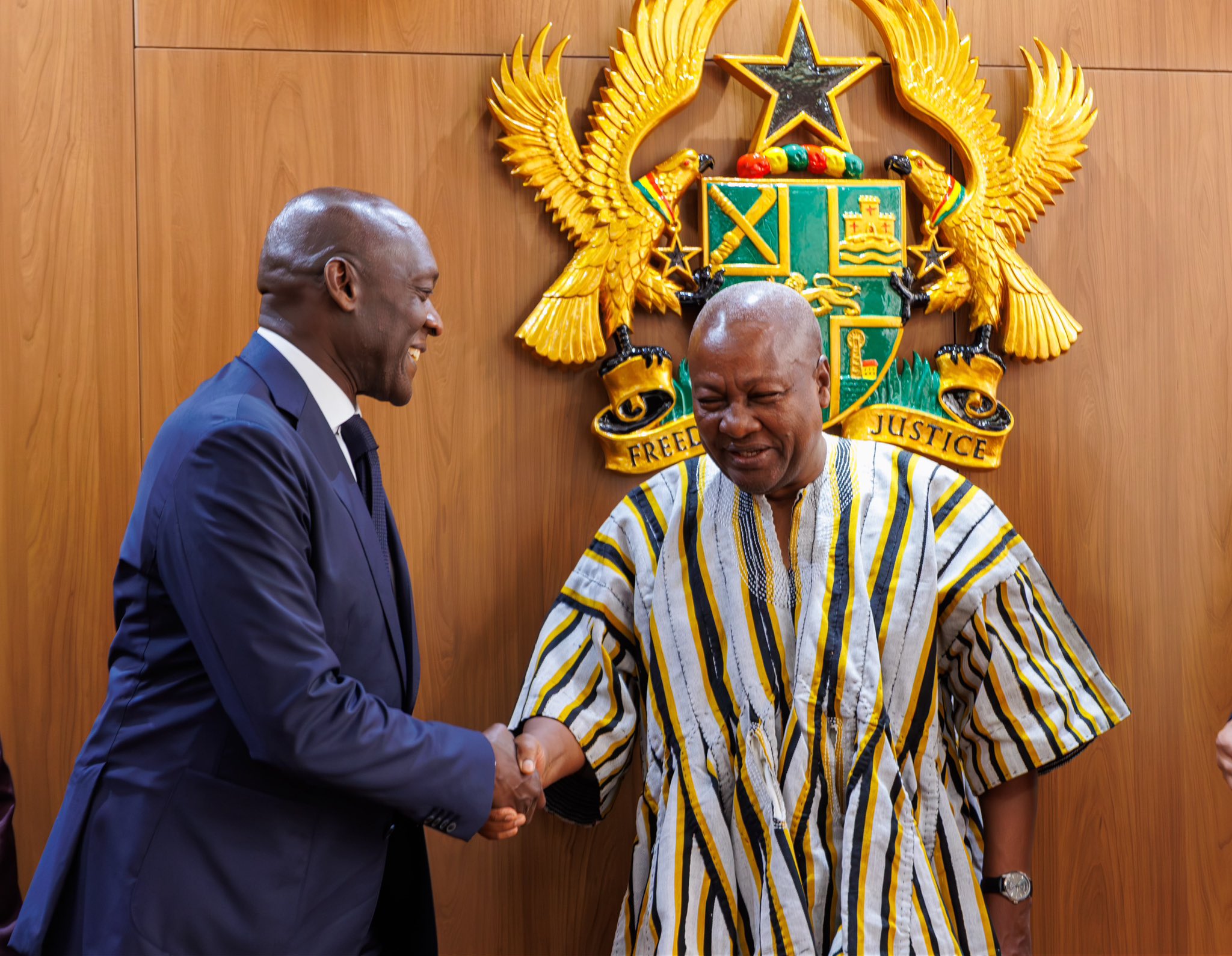
IFC Managing Director Makhtar Diop disclosed the projects on the sidelines of the 81st United Nations General Assembly in New York, saying discussions with President John Dramani Mahama had focused on closing a missing transport link that could allow goods to move north through the Volta system.
The announcement adds a potentially significant logistics component to Ghana’s wider effort to attract private capital into infrastructure, agriculture and industrial production.
Mr Diop said President Mahama had drawn his attention to a missing seven-kilometre rail connection needed to link existing rail infrastructure to the shore of the Volta River, creating the possibility of moving goods through the river system towards northern Ghana and onwards to Burkina Faso.
He said private investors were already interested in the opportunity and that one company involved was an existing IFC client. “We were just signing US$100m, and we are about to sign another US$50m project,” Mr Diop said, according to remarks delivered in New York.
The precise structure of the two investments has not yet been fully disclosed, including whether the US$100mn financing relates directly to the Volta Ecological Zone, the identity of the private-sector sponsors, financing terms or the implementation timetable for the proposed rail connection.
The additional US$50m project appears to be linked to the logistics infrastructure needed to improve access to the Volta River and the northern transport corridor, but detailed project documentation has yet to be published.
That means the announcement should at this stage be treated as an emerging investment programme rather than a fully specified public infrastructure package.
The proposal nevertheless fits closely with the government’s broader infrastructure strategy. During an earlier meeting with Mr Diop in Accra, President Mahama discussed expanding Ghana’s transport network through railways, roads and aviation while strengthening digital connectivity under the government’s Big Push infrastructure programme.
The talks also covered commercial agriculture, cocoa processing, oil palm and poultry, alongside the government’s ambition to process a greater share of Ghana’s commodities domestically before export.
The Volta corridor could become strategically important because Ghana’s long-standing ambition to serve landlocked Sahelian economies depends not only on efficient ports but also on reliable inland transport. Burkina Faso, Mali and Niger rely heavily on coastal neighbours for access to seaports, creating competition among Ghana, Côte d’Ivoire, Togo and Benin for transit trade.
A functioning multimodal system combining rail, road and water transport could potentially lower logistics costs and give Tema and other Ghanaian trade infrastructure a stronger position in that regional contest.
For Ghana, the commercial opportunity extends beyond moving imported goods northwards. Better links between the coast, the Volta Basin and the northern frontier could support exports of agricultural products, manufactured goods and processed commodities while opening inland production zones to larger markets.
The economic return will depend on traffic volumes, freight pricing and integration with existing road and port systems rather than infrastructure construction alone.
The IFC’s interest also comes after Ghana’s recent macroeconomic stabilisation efforts, which Mr Diop said had improved the conditions for private investment. During a September 16 meeting with Finance Minister Cassiel Ato Forson, the IFC chief commended the reduction in inflation and the progress made in restoring economic stability, while discussions focused on commercial agriculture, value addition and job creation.
The Finance Ministry separately identified sugar, cocoa processing, palm oil and poultry as sectors where government wants substantially greater private-sector participation.
Mr Diop said Ghana had “turned the tide” after several difficult years, arguing that debt adjustment and reforms had created a stronger foundation for domestic and international investors.
The government has similarly argued that falling Treasury bill rates and improving macroeconomic indicators are lowering the cost of capital and creating space for businesses to invest again. Finance Minister Dr Forson said this month that reducing financing costs was deliberately intended to support private-sector expansion after the country’s recent economic crisis.
IFC’s current exposure and prospective pipeline could make it an increasingly important source of private-sector financing for Ghana. Mr Diop said the institution was working across energy, infrastructure and agriculture and referred to a pipeline of about US$1.20bn, although the precise composition and stage of individual projects have not been publicly detailed.
The direction is consistent with the government’s effort to shift the next phase of economic recovery from macroeconomic stabilisation towards investment, production and employment.
Agriculture is emerging as another important component of that strategy. Mr Diop singled out poultry as an industry where Ghana should be capable of replacing a significant share of imported products with domestic production, provided local producers can operate competitively. The Finance Ministry has also identified cocoa processing, palm oil and sugar among sectors where increased private investment could reduce imports or retain more value domestically.
That approach reflects a broader IFC emphasis on strengthening locally based businesses rather than relying entirely on foreign investors. Mr Diop highlighted the institution’s Local Champions initiative as a mechanism for helping African companies grow, invest across borders and build greater resilience against external shocks.
The underlying proposition is that macroeconomic recovery becomes more durable when domestic businesses are capable of producing goods that would otherwise absorb scarce foreign exchange through imports.
The Volta proposal could bring those industrial and logistics ambitions together. Infrastructure capable of moving agricultural and manufactured goods between production areas, river transport, rail corridors and regional markets would provide a physical backbone for the government’s value-addition strategy.
But that outcome would require coordination among private investors, railway authorities, port operators, road agencies and neighbouring countries rather than treating the seven-kilometre connection as an isolated construction project.
There will also be questions about commercial viability. Rail infrastructure requires sufficient and predictable freight volumes to justify capital expenditure, while inland-water transport must compete on cost, reliability and speed with established road corridors.
Before the project proceeds to full implementation, investors will need confidence that the corridor can generate enough cargo traffic to support financing and maintenance over the long term.
For Ghana, however, the strategic attraction is clear. The country has spent years seeking to position itself as a gateway to West Africa, yet that ambition depends on infrastructure capable of moving goods beyond Tema and Takoradi efficiently into landlocked markets.
A Volta-to-Sahel corridor backed by private capital could help turn geographic location into a more valuable trade asset if it reduces transport costs and creates dependable regional supply chains.
The IFC announcement therefore carries significance beyond the headline US$150m. It points towards a model in which Ghana’s transport infrastructure, domestic production agenda and regional trade ambitions are financed and developed together rather than as disconnected projects.
The real test will come when the financing is fully signed, the seven-kilometre missing link is translated into construction and goods begin moving through the corridor because only then will the Volta investment become an economic route rather than an investment promise.

