

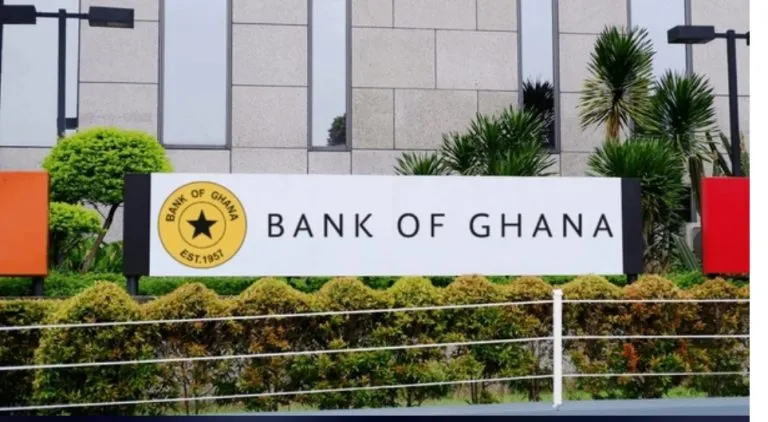

- BoG Places Banks and Customers on Notice Over Rising Digital Fraud Risks
The Bank of Ghana has warned that the expansion of digital financial services could leave consumers increasingly exposed to fraud unless access to technology is matched by stronger financial literacy, cybersecurity awareness and institutional safeguards.
In a public notice titled Digital Fraud and the Cost of Ignorance, the central bank cautioned customers against sharing Mobile Money PINs, ATM codes, internet banking passwords, one-time passwords and other verification information with third parties.
“No legitimate bank, mobile money operator, payment service provider, or financial institution will request your PIN, password, or OTP via phone calls, text messages, emails, or social media,” the BoG said.
The warning reflects the changing nature of financial fraud in Ghana. As banking, payments and investment services move onto mobile phones and online platforms, criminals increasingly rely on social engineering rather than physically breaching financial institutions.
Fraudsters may impersonate bank employees, mobile network operators or regulatory officials and create a sense of urgency intended to pressure customers into disclosing confidential information.
The central bank advised consumers not to share financial information with unknown individuals, even when those individuals claim to represent legitimate institutions.
Customers were also asked to exercise caution when responding to unsolicited telephone calls, emails, text messages, social-media communications and online links seeking personal or financial information.
The BoG singled out fraudulent investment platforms and schemes that promise unusually high returns with little or no risk.
“Customers are advised to verify all investment opportunities before making payments or transfers,” it said. “Investment schemes promising unusually high returns with little or no risk should be treated with extreme caution.”
Consumers were urged to avoid “double-your-money” schemes, online Ponzi operations and suspicious digital investment platforms that could result in financial losses.
Such schemes often exploit the speed and convenience of digital payments. Victims can transfer funds instantly to mobile wallets, bank accounts or other digital channels before discovering that the investment platform, agent or promised returns were fictitious.
The challenge extends beyond recognising a fraudulent offer. Digital consumers must also know whether an institution is licensed, understand the product being offered and identify the appropriate authority to contact when problems arise.
The Bank said customers should seek clarification in any language of their choice when they do not fully understand a digital financial product, transaction or communication.
That recommendation is particularly important as financial-service providers expand into communities with differing levels of formal education, technological familiarity and financial literacy.
“Financial consumers should always remember that financial inclusion without financial literacy may expose individuals to increased financial vulnerability,” the BoG said.
Beyond avoiding suspicious communications, the central bank advised customers to monitor transaction alerts, bank statements and Mobile Money notifications regularly.
Prompt monitoring could enable customers to identify unauthorised transfers before additional funds are withdrawn or moved through several accounts.
Consumers should use strong passwords, update them regularly and activate available security features such as biometric verification, transaction notifications and two-factor authentication.
The BoG also warned customers against disclosing Ghana Card details, account numbers and verification codes to unauthorised individuals.
Any suspected fraud, unauthorised transaction, SIM-swap incident or account compromise should be reported immediately to the relevant bank, electronic-money issuer, telecommunications company or payment service provider.
The emphasis on rapid reporting is significant because delays can make stolen funds more difficult to trace and recover. Criminals frequently move money through several accounts or withdraw it shortly after gaining access.
Customers were further advised to avoid and report fake websites, fraudulent links and impersonation accounts on social-media platforms.
While much of the advisory focused on consumer behaviour, the central bank stressed that responsibility for digital financial security does not rest solely with customers.
Under the Payment Systems and Services Act, 2019 (Act 987), financial institutions and electronic-money issuers are required to maintain fraud-monitoring systems, cybersecurity controls and customer-protection mechanisms.
They must also provide clear procedures for resolving complaints and protecting people who use digital financial services.
The distinction is important. Public education can reduce avoidable losses, but financial institutions remain responsible for designing secure systems, detecting unusual transactions and responding promptly when consumers report suspected fraud.
A customer’s mistake does not remove the obligation of a regulated institution to maintain effective controls and fair complaint-resolution processes.
The central bank called on parents, schools, financial institutions, telecommunications operators, regulators and the media to support continuous financial education and digital-security awareness.
“Public awareness and financial literacy remain important tools in combating digital financial fraud and protecting personal finances,” it said.
The notice concluded that addressing digital fraud would require “collective responsibility through awareness, education, responsible financial behaviour, and adherence to cybersecurity practices”.
The central bank’s warning captures the tension at the heart of Ghana’s digital-finance expansion: technology is making financial services faster and more accessible, but the same convenience is giving criminals new opportunities to exploit people who do not understand the risks.
The cost of that knowledge gap is no longer theoretical. For an individual who discloses an OTP, follows a fraudulent investment link or responds to an impersonation account, it can mean the immediate loss of savings accumulated over several years.

