

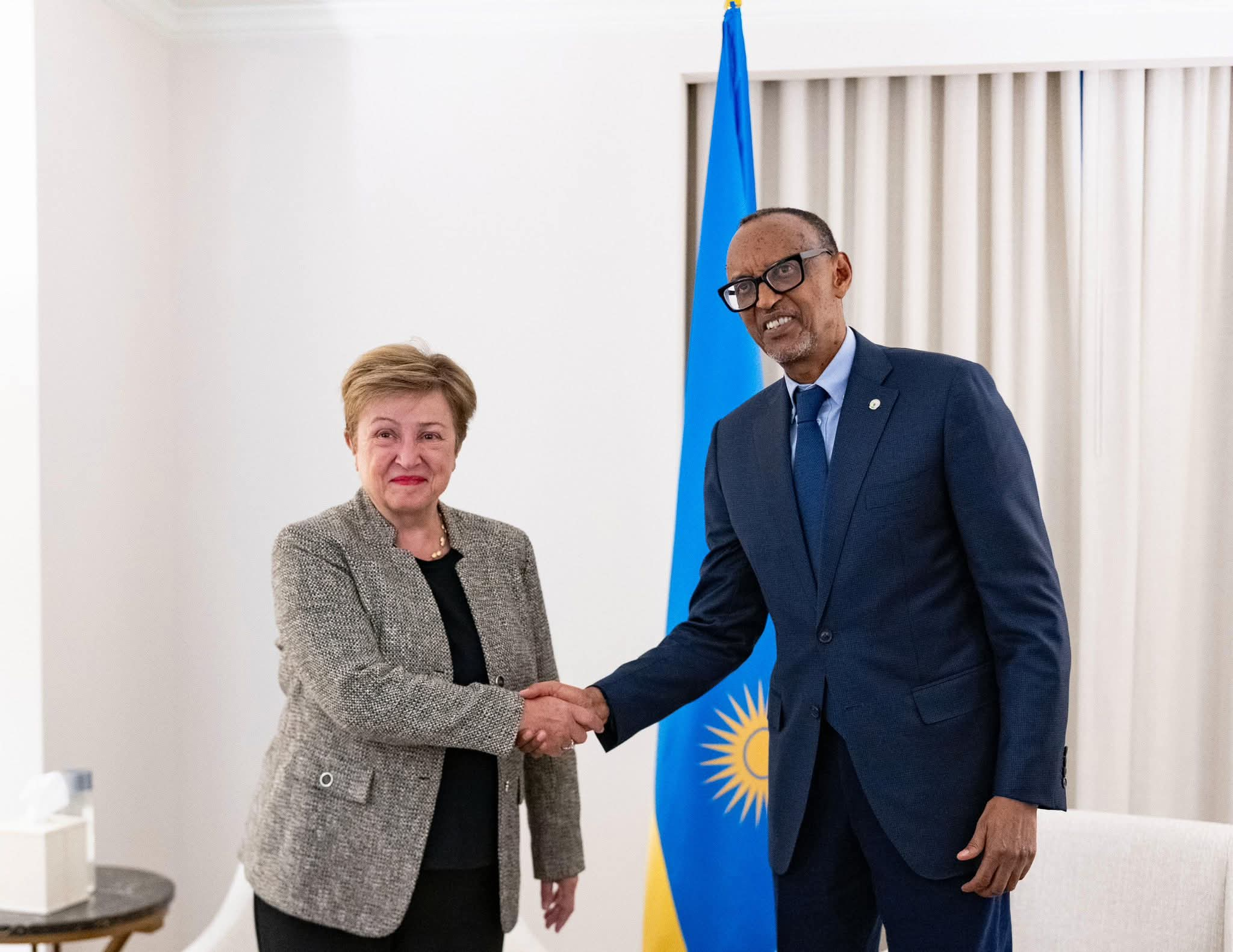

- IMF Backs Rwanda’s Reform Drive With 38-Month US$250 Million Facility
The Executive Board of the International Monetary Fund has approved Rwanda’s request for a 38-month arrangement under the Extended Credit Facility, giving the country access to about US$250 million to support macroeconomic adjustment, policy reforms and growth.
The approval, announced on June 8, 2026, provides Rwanda with access to SDR 185.031 million, equivalent to 115.5 percent of its quota. The IMF also authorised an immediate disbursement of SDR 26.433 million, or about US$35.7 million.
The ECF-supported programme is intended to help Rwanda adapt to tighter global financing conditions while sustaining growth, protecting priority social and development spending, and rebuilding policy buffers.
According to the IMF, Rwanda’s economy has remained resilient despite successive shocks, with growth reaching 9.4 percent in 2025, well above expectations.
The Fund said the external position improved last year, supported by strong exports of coffee and minerals, although imports remained high, especially for equipment and materials needed by local businesses.
Foreign exchange reserves also remained at a comfortable level, covering just over four months of imports.
But the IMF warned that risks to the outlook have increased.
Inflation rose in early 2026, exceeding the central bank’s target range and climbing further to 13.2 percent year-on-year in April 2026. The Fund said the war in the Middle East is also weighing on Rwanda’s economic outlook through higher international oil and fertiliser prices.
Growth is now expected to moderate to below 6.8 percent in 2026, as inflation, fiscal and current account pressures persist alongside the financing of large strategic investments.
The IMF said the new programme will be anchored on three main pillars: strengthening a coherent macroeconomic policy mix, managing fiscal and debt risks to sustain growth, and promoting private-sector-led growth with transparent fiscal oversight of state-owned enterprises.
Following the Board’s discussion, IMF Deputy Managing Director and Acting Chair, Bo Li, said Rwanda had shown strong reform ownership and agile policymaking in the face of repeated shocks.
“Rwanda’s economy has remained resilient amid successive shocks, reflecting strong reform ownership and agile policymaking,” he said.
He noted that growth had been robust despite a more challenging global environment, tighter financing conditions, declining official development assistance and heightened uncertainty.
However, he warned that inflationary pressures had intensified and external imbalances remained elevated.
“Notwithstanding a favourable outlook, risks are tilted to the downside,” he said.
The IMF said advancing Rwanda’s development objectives while rebuilding buffers will require a carefully calibrated policy mix and greater exchange rate flexibility to support external adjustment.
“In the absence of the newly approved ECF-supported program, the required adjustment would be more severe,” Mr Li said.
A credible medium-term fiscal consolidation path, the Fund added, will be critical to reducing external imbalances and safeguarding Rwanda’s moderate risk of debt distress while protecting social objectives.
The IMF said consolidation should be built around stronger revenue mobilisation, improved public investment management and enhanced monitoring of capital spending and other fiscal risks.
It also cautioned that any support measures introduced in response to global shocks, including the Middle East war, should remain targeted, temporary and consistent with the fiscal framework.
On monetary policy, the Fund said Rwanda will need an appropriately tight and forward-looking stance to address elevated inflationary pressures.
“Strengthening policy communication, reinforcing the credibility of the inflation target, and improving transmission will be essential to better anchor inflation expectations,” Mr Li said.
The IMF also warned that rapid credit growth and concentrated exposures require close monitoring, although it said Rwanda’s financial sector remains stable.
Structural reforms will also be important under the programme.
The Fund said priorities include improving public investment efficiency, strengthening institutional frameworks and accelerating reforms of state-owned enterprises to contain fiscal risks and support a more dynamic private sector-led economy.
The approval of the ECF comes at a delicate time for Rwanda. The country has maintained one of Africa’s stronger growth records, supported by public investment, services, tourism, minerals and reforms. But its development model also depends heavily on external financing, imports and large state-linked investment projects.
The IMF programme therefore signals both confidence and caution.
It recognises Rwanda’s track record of reform and macroeconomic management, but also points to the pressure created by inflation, debt, external imbalances and a more difficult global financing environment.
The Fund projects Rwanda’s real GDP growth at 6.8 percent in 2026 before rising to 7.2 percent in 2027 and settling around 7 percent between 2028 and 2030. Average inflation is projected at 10.4 percent in 2026 before easing to 6.5 percent in 2027 and 5 percent thereafter.
Public debt is projected to remain elevated, declining only gradually from 73.6 percent of GDP in 2025 to 73.1 percent in 2026 and 69.1 percent by 2030.
The current account deficit is projected to widen to 14.1 percent of GDP in 2026 before narrowing to 12 percent in 2027, 8.4 percent in 2028 and 6.7 percent by 2029 and 2030.
For Rwanda, the ECF provides a policy anchor at a time when external conditions are becoming more difficult.
For the IMF, the programme is a bet that Rwanda can preserve growth while tightening policy, rebuilding buffers and reducing vulnerabilities.
The harder task for Kigali will be to balance adjustment with development ambition: protecting social spending, maintaining investor confidence and shifting growth more firmly toward the private sector without losing the momentum that has made Rwanda one of Africa’s most closely watched reform economies.

