


- IMF says smarter public spending could unlock growth without deeper borrowing
The International Monetary Fund is making a pointed argument to governments facing tighter budgets and heavier debt burdens: the next wave of economic growth may depend less on spending more and more on spending better. In a new blog tied to its latest Fiscal Monitor, IMF staff said countries could extract significantly greater value from existing public resources through more efficient spending and better budget allocation.
The Fund’s framing will resonate strongly in Ghana and across much of Africa, where governments are trying to preserve macroeconomic stability while facing pressure to fund infrastructure, education, healthcare, defence, and social protection. The IMF argues that “spending smarter is more than a fiscal tactic; it’s a growth strategy,” especially at a time when slow growth, rising debt and tightening fiscal space are forcing difficult trade-offs.
To make the case, the IMF points to Rwanda, where it says major gains in electricity access, education, sanitation, and life expectancy were achieved with only modest increases in per capita spending. What made the difference, the blog argues, was not simply the amount spent but the efficiency with which public money was used.
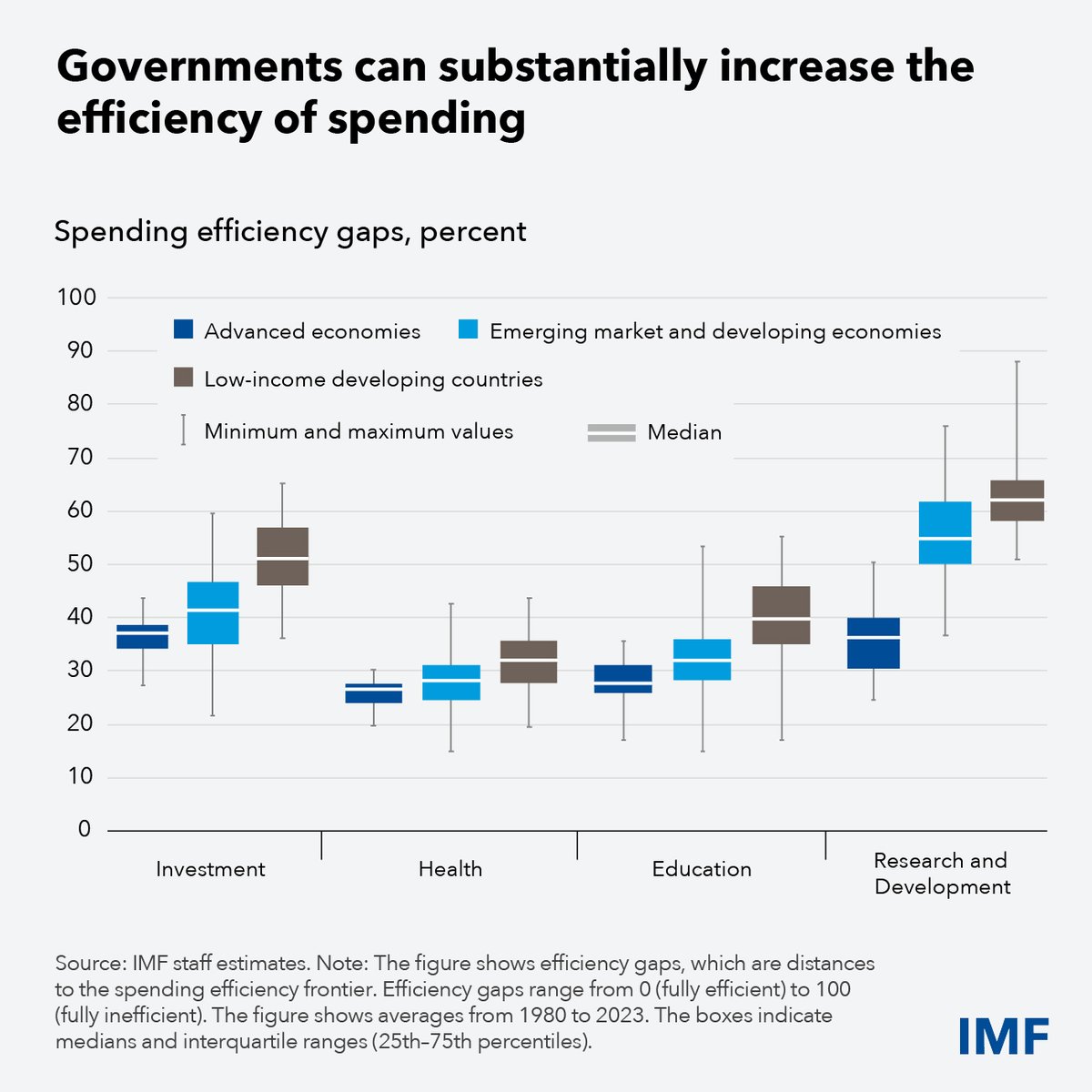
That point is central to the Fund’s broader message. Based on analysis covering 174 economies, the IMF says governments could gain “one-third more value” from their spending on average by adopting best practices. It adds that by spending more efficiently and reallocating existing resources, emerging markets and developing economies could raise long-term output by 11 per cent, while advanced economies could lift output by 4 per cent.
The proposed shift is not abstract. The IMF says many countries have gradually reduced the share of spending going to public investment, even though infrastructure can be strongly growth-enhancing. It notes that public investment has fallen by 2 percentage points of total expenditure over the past two decades, while education spending has remained modest at around 11 per cent of total spending. At the same time, public wage bills absorb roughly a quarter of total expenditure on average.
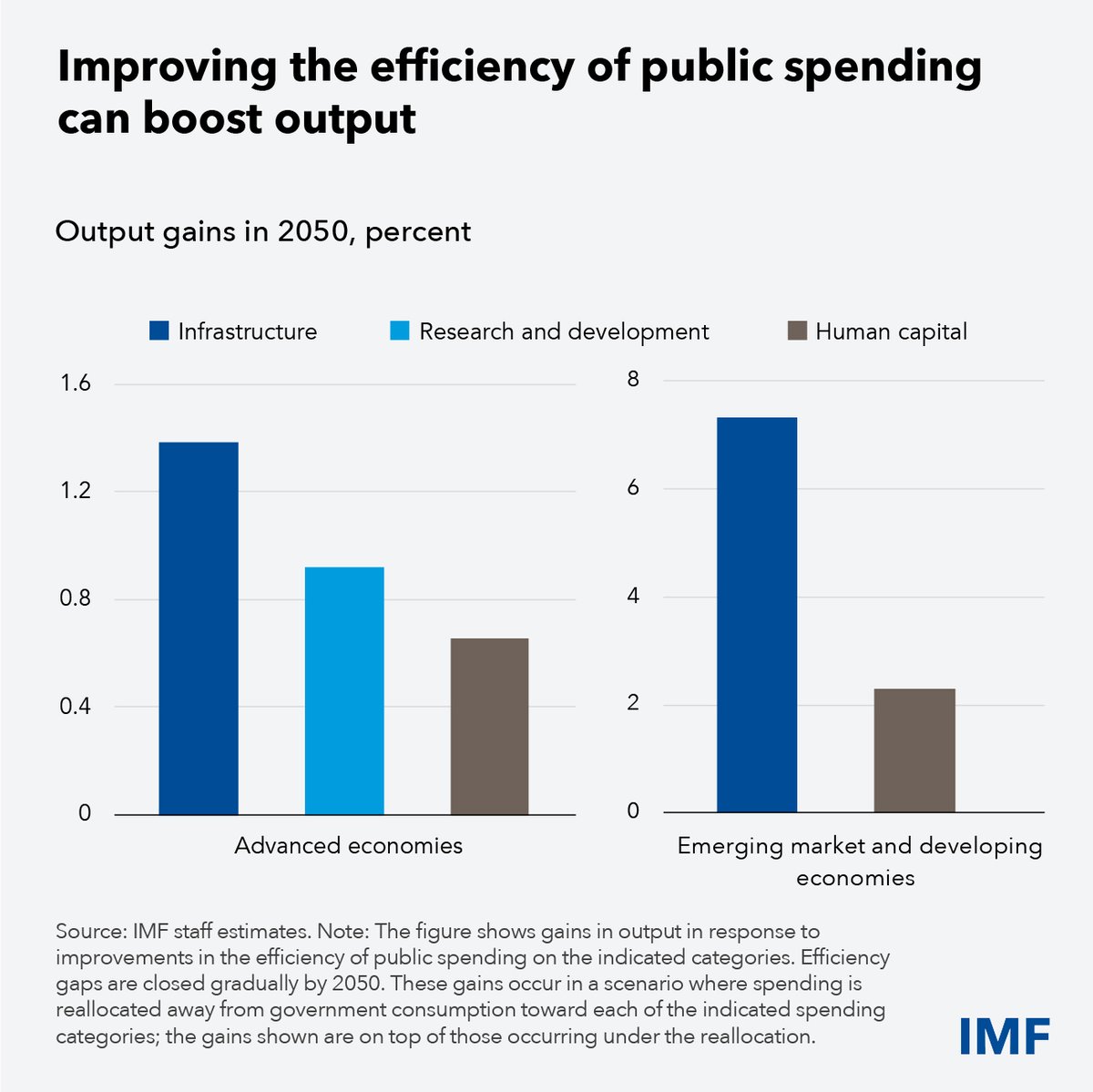
For policymakers, the implication is clear: budget composition matters as much as budget size. The IMF estimates that shifting 1 per cent of GDP away from lower-impact government consumption and into infrastructure investment could raise long-term output by about 3.5 per cent in emerging market and developing economies, compared with 1.5 per cent in advanced economies, over roughly 25 years. Redirecting the same amount toward human capital investment, such as better education, could generate gains of around 6 per cent in emerging and developing economies and about 3 per cent in advanced economies.
The Fund also argues that efficiency improvements magnify those returns. It says that improving investment efficiency by 10 percentage points can further raise output gains by 1.4 per cent. In effect, better project selection, execution, and budget control can make existing fiscal resources work harder without immediately requiring larger deficits or new debt.
There is also a social angle to the argument. The IMF says reallocating spending toward higher-impact uses can reduce income inequality, suggesting that smarter fiscal choices need not come at the expense of inclusion. That is an important political point for governments that worry that fiscal reform is often viewed only through the lens of austerity.
Still, the Fund acknowledges that such reforms are difficult. It notes that large parts of government spending are effectively rigid, with legal minimums for education, health, and social protection, alongside public salaries and pensions that are politically and administratively hard to change. According to the IMF, about one-third of public spending globally is effectively “locked in,” with rigidity highest in advanced economies.
That is why the IMF places heavy emphasis on institutions, not just arithmetic. It highlights multiyear fiscal planning, tighter links between budget allocation and performance, stronger procurement systems, better public investment management, greater transparency, and digitalised public finances as practical ways to raise efficiency. The blog cites Estonia and Sweden as examples of countries that reduced spending rigidity through multiyear planning and performance-linked budgeting, while Togo is highlighted for improving investment efficiency after introducing mandatory cost-benefit analysis and multiyear planning in 2016.
The Fund also points to structural reforms that can protect long-term fiscal sustainability, including linking retirement ages to life expectancy, emphasising disease prevention to reduce future health costs, aligning public pay more closely with market benchmarks, and tightening payroll controls. It says these steps are especially relevant in developing economies, where public-sector wages often exceed private-sector pay by 10 per cent or more.
For Ghanaian readers, the message is particularly timely. The country often frames its fiscal debate around how much government spends, how much it borrows, and how quickly it can reduce debt. The IMF’s intervention suggests a sharper question may be emerging beneath that debate: whether Ghana can re-engineer the quality of public spending so that limited fiscal space produces stronger growth, better services, and fewer leakages. That is ultimately a governance challenge as much as a budget one. The IMF’s bottom line is that “by stepping up spending efficiency and better channelling existing resources, countries can strengthen public finances, build resilience, and increase their long-term economic growth.”

