
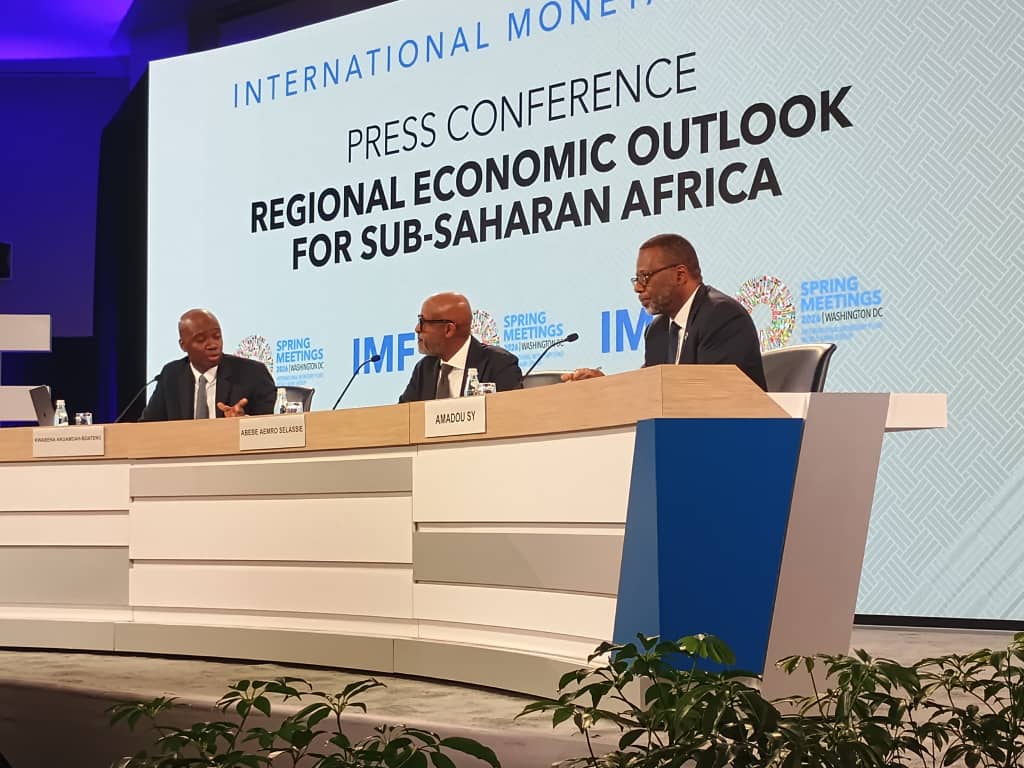

- IMF sees Ghana growing “from strength to strength” beyond programme exit
The International Monetary Fund is increasingly optimistic about Ghana’s economic trajectory, with Abebe Aemro Selassie, the outgoing Director of the Fund’s African Department, expressing confidence that the country can sustain its recovery and continue to grow “from strength to strength” after the current programme ends, provided policymakers resist the temptation to loosen discipline.
Speaking on Ghana’s performance under its ongoing IMF-supported programme, Mr Abebe pointed to what he described as a “continued improvement in macroeconomic outcomes” over the past 18 to 24 months, marking a notable turnaround from the depths of the 2022-2023 crisis.
That recovery, he suggested, is not accidental. “It has been underpinned by the continued implementation of revenue measures, tighter policy discipline, and efforts to confront inefficiencies in state-owned enterprises, particularly in the energy sector, an area long seen as a fiscal drag on the economy,” he noted.
Growth projections for Ghana, now seen in the region of 4.6% to 4.8%, reinforce the sense that the country has moved out of emergency mode and into a more stable, if still fragile, phase of recovery. But for the IMF, the more consequential question is not where Ghana is today, but whether it can avoid slipping back once the programme expires in August.
That concern hangs heavily over the current moment. Ghana’s repeated returns to the Fund estimated at roughly 17 engagements, have made the issue of post-programme credibility as important as near-term macroeconomic gains. Investors, development partners, and domestic businesses are all watching to see whether this recovery proves durable or whether it becomes another temporary stabilisation before renewed policy drift.
But Mr Abebe’s message was clear: the progress achieved so far must now be protected. “The primary goal is to sustain current progress,” he indicated, stressing the need to ensure that “fiscal balance remains contained” even after the formal programme period ends. For Ghana, that means maintaining a delicate equilibrium between legitimate development needs and the equally urgent requirement to avoid falling back into debt sustainability problems.
The IMF’s view is that the commitments embedded in the programme are not merely technical benchmarks for a Fund review cycle but part of a broader discipline framework that Ghana must internalise if it is to break its long dependency on external stabilisation support. In that sense, the reforms are not for Washington but, as Abebe framed it, “for the people of Ghana”.
Even so, the IMF’s tone also appears to be shifting from guarded approval to cautious confidence.
Mr Abebe said he was optimistic that Ghana “can continue to grow steadily,” but attached that optimism to a firm condition: that fiscal discipline and structural reforms are maintained beyond the life of the programme.
That may ultimately be the real test of Ghana’s latest IMF chapter. The country has shown that, under pressure, it can stabilise. For now, the Fund believes that Ghana may finally have a chance to turn crisis recovery into something more durable.

