

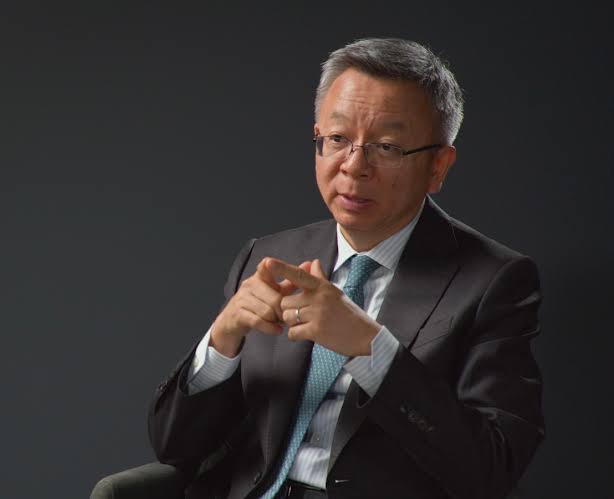

- IMF’s Bo Li to Step Down as Min Liao Is Proposed as Successor
The International Monetary Fund has announced that Deputy Managing Director Bo Li will leave the institution on November 30, 2026, at the end of his term, with China’s Vice Minister of Finance, Min Liao, proposed to succeed him.
Subject to the IMF’s appointment process, Mr Liao would assume office on December 1, 2026. The transition would bring another senior Chinese policymaker with extensive experience in banking, financial regulation and macroeconomic governance into the Fund’s management team.
IMF Managing Director Kristalina Georgieva said Mr Li had helped steer the institution through some of the most difficult years experienced by the global economy.
“Since joining our senior management team in August 2021, Bo has been a cherished colleague and a dear friend to so many of us,” Ms Georgieva said.
She credited him with bringing steady judgment, intellectual rigour and a considerate leadership style to the institution during a period marked by inflation, sovereign debt difficulties, geopolitical tensions and rapid changes in the global financial system.
Mr Li joined the IMF’s senior management team in August 2021 and was responsible for the institution’s engagement with approximately 90 member countries. His portfolio also covered several policy areas that have become increasingly important to the international monetary system.
He led the development of the IMF’s first Enterprise Risk Management policy and roadmap and supported the modernisation of its data-governance framework.
His tenure also coincided with the rapid expansion of digital money, stablecoins and new cross-border payment systems. Mr Li guided the Fund’s work on digital currencies and cross-border payments and played a significant role in developing its approach to stablecoin regulation.
These areas have become important to the IMF because digital financial instruments can improve payment efficiency and financial inclusion while creating new regulatory, monetary and financial-stability risks.
Mr Li also championed the Fund’s engagement with small developing states, many of which face high debt levels, narrow economic bases and considerable exposure to climate and external shocks.
He supported sovereign debt restructurings undertaken through the Common Framework and guided the IMF’s work on governance and corruption. More recently, he spearheaded efforts to integrate artificial intelligence into the institution’s surveillance, lending and capacity-development activities.
“Bo leaves a lasting mark on the Fund and will be greatly missed,” Ms Georgieva said, describing him as a trusted adviser committed to the IMF and its membership.
The proposed successor, Mr Liao, has more than three decades of experience across public finance, central banking, banking supervision and economic policymaking.
He has served as China’s Vice Minister of Finance since May 2018. Until 2023, he concurrently held the position of Vice Minister at the Office of the Central Financial and Economic Affairs Commission.
Mr Liao’s recent responsibilities have placed him at the intersection of domestic fiscal management and international economic cooperation. His work has included global macroeconomic policy coordination and bilateral and multilateral engagement on fiscal, financial and trade matters.
He has also been a member of China’s Monetary Policy Committee since 2023, giving him direct experience in the coordination of fiscal and monetary policy.
“Min is a highly respected policymaker with more than three decades of experience in banking, financial regulation, and macroeconomic governance,” Ms Georgieva said.
She added that his experience in domestic reform and international economic cooperation would be an important asset to the Fund and its member countries.
Before his current ministerial role, Mr Liao served as Director-General of the Bureau of International Economy at the Central Leading Group for Financial and Economic Affairs.
His career began at the People’s Bank of China and included roles at China Everbright Group and Bank of China. He subsequently joined the China Banking Regulatory Commission, where he held several positions, including Director-General of the General Office.
Mr Liao later served as Director-General of the Shanghai Banking Regulatory Bureau, adding regional banking supervision to his central-government and financial-sector experience.
Alongside his policy and regulatory work, he has undertaken research in finance, banking supervision, macroeconomic policy and international financial governance.
He holds a master’s degree in economics from Peking University and a Master of Business Administration from the University of Cambridge.
The proposed appointment comes at a time when the IMF is confronting a complex set of challenges across its membership. Sovereign debt distress, weak growth, trade fragmentation, artificial intelligence, digital currencies and demands for reform of the international financial architecture are reshaping the institution’s work.
Mr Liao’s experience in both domestic financial reform and international policy coordination could prove valuable as the IMF attempts to balance the interests of its diverse membership.
His background in banking regulation may also support the Fund’s work on financial stability, while his fiscal and monetary policy experience could inform its economic surveillance and programme design.
For developing countries, the leadership transition will be significant because deputy managing directors play important roles in shaping country engagement, policy advice and institutional priorities.
Mr Li’s departure closes a five-year period during which the IMF expanded its work beyond traditional macroeconomic surveillance and lending into digital finance, governance, climate vulnerability and artificial intelligence.
If approved, Mr Liao will inherit the task of advancing that expanded agenda while helping the IMF respond to increasing economic fragmentation and demands for stronger representation of emerging and developing economies.

