

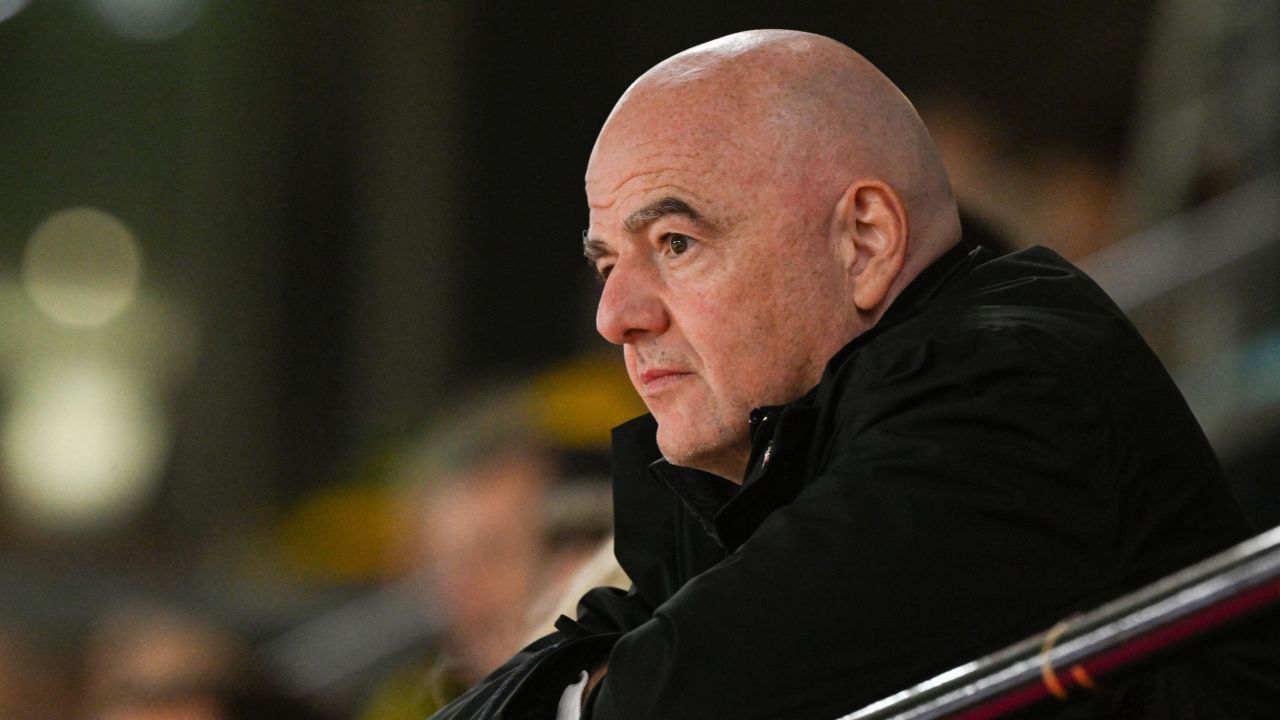

- Infantino Offers FIFA Governance Review as FFE Fallout Deepens Pressure on His Leadership
FIFA president Gianni Infantino has proposed an independent external review of the organisation’s governance and decision-making processes following sustained criticism over the abandoned FIFA Forward Enterprise project.
In a letter to members of the FIFA Council and all 211 national associations, Infantino said the process should examine how major strategic decisions are taken and identify reforms capable of strengthening transparency, participation and accountability.
The move comes ahead of the next FIFA Council meeting in October and follows weeks of pressure from several member associations and confederations.
The immediate trigger is the fallout from the FIFA Forward Enterprise, or FFE, proposal, which would have created a new company to manage commercial and ticketing rights connected to FIFA competitions, including the World Cup.
Under the plan, 21% of the new company would have been sold to a private investment group, according to Citi Sports. The proposal was later abandoned after opposition from football stakeholders and questions over how far member associations had been involved before details entered the public domain.
Infantino acknowledged that the process had created an impression that decisions had already been taken before formal consultation was complete.
“The proposal entered the public domain before FIFA’s planned institutional process had been completed and before it could be presented in full to the Council and the member associations,” he wrote. He added that he recognised the resulting concern but insisted that no final decision had been made.
The FIFA president has also sought to draw a line between commercial restructuring and control of the sport itself. He said the FFE concept would not have transferred FIFA’s authority over sporting decisions to private investors, stressing that the organisation’s constitutional and sporting powers would remain protected. “Democratic processes, independence and sporting authority were never for sale,” Infantino said.
The proposed review is intended to go beyond the mechanics of the abandoned transaction. Infantino said FIFA should consult confederations, national associations and other stakeholders on how its decision-making framework could be improved, including the role of the presidency in major strategic initiatives.
That makes the controversy less about one failed commercial project and more about whether the balance of power inside FIFA gives members sufficient visibility and influence before potentially transformative decisions are advanced.
That wider governance question has become increasingly difficult to contain. Several football bodies have argued that an external review should examine not only the FFE project but also the processes through which other contentious decisions have been handled.
England’s Football Association chair Debbie Hewitt has called for the release of documentation linked to the FFE proposal, while other federations have questioned whether the proposed reforms go far enough to restore trust.
The criticism is not uniform, however, and FIFA has pushed back against some of the attacks on its leadership. In separate legal filings connected to UEFA’s challenge, FIFA has characterised parts of the campaign against Infantino as a “smear campaign”, while maintaining that its established governance and electoral processes should determine leadership questions.
That leaves two competing narratives: one centred on the need for greater checks on presidential power, and another in which FIFA argues that opponents are using legal and public pressure to pursue political objectives they have not secured through the organisation’s membership.
The FFE dispute has also become entangled with FIFA’s finances. UEFA and Concacaf have called for at least US$10m to be distributed to each of FIFA’s 211 member associations from the organisation’s reserves, arguing that the governing body has sufficient resources to increase direct support without requiring member associations to accept a private-investment structure.
The proposal has added another layer to the debate over whether FIFA should seek new external capital or instead make greater use of its existing balance sheet.
For FIFA members, the underlying question is therefore not simply whether private investment is acceptable.
It is whether strategic commercial changes involving some of football’s most valuable rights can be developed without broader approval at an early stage, and what safeguards should apply before such proposals become sufficiently advanced to affect relationships within the organisation.
Infantino’s willingness to consider an independent review is an acknowledgement that the process itself has now become part of the problem.
The issue also carries significance because FIFA is approaching another presidential election in 2027. Infantino has said he intends to remain in office and wrote that he remained “fully committed to leading FIFA and confident in what we can achieve together.”
His critics, meanwhile, are increasingly focusing not only on whether he should be challenged electorally but on whether structural reforms are required to place tighter limits around executive decision-making regardless of who occupies the presidency.
The response from several federations suggests that announcing a review may not by itself settle the dispute. Germany, the Netherlands, Sweden and Wales have all expressed reservations about the adequacy of the reform proposal, with some officials arguing that the credibility problem goes beyond procedural adjustments.
Those objections do not establish a consensus among FIFA’s 211 members, but they demonstrate that the controversy has moved from a single commercial disagreement into a broader contest over institutional trust.
What happens next will depend heavily on the scope and independence of any review. A process confined to procedural recommendations may satisfy members primarily concerned about consultation, while those demanding deeper structural change are likely to focus on who appoints the reviewers, what documents they can access and whether their recommendations are binding.
The credibility of the exercise may therefore depend as much on the architecture of the review as on its eventual conclusions.
For Infantino, the FFE controversy has created a governance problem that cannot simply be resolved by withdrawing the original proposal. Once questions have been raised about who knew what, when members were consulted and how much power the presidency should exercise over major commercial initiatives, abandoning the transaction leaves those institutional questions intact.
The proposed independent review is FIFA’s attempt to address that second-order crisis but whether it rebuilds confidence will depend on whether member associations see it as genuine reform rather than damage control.

