

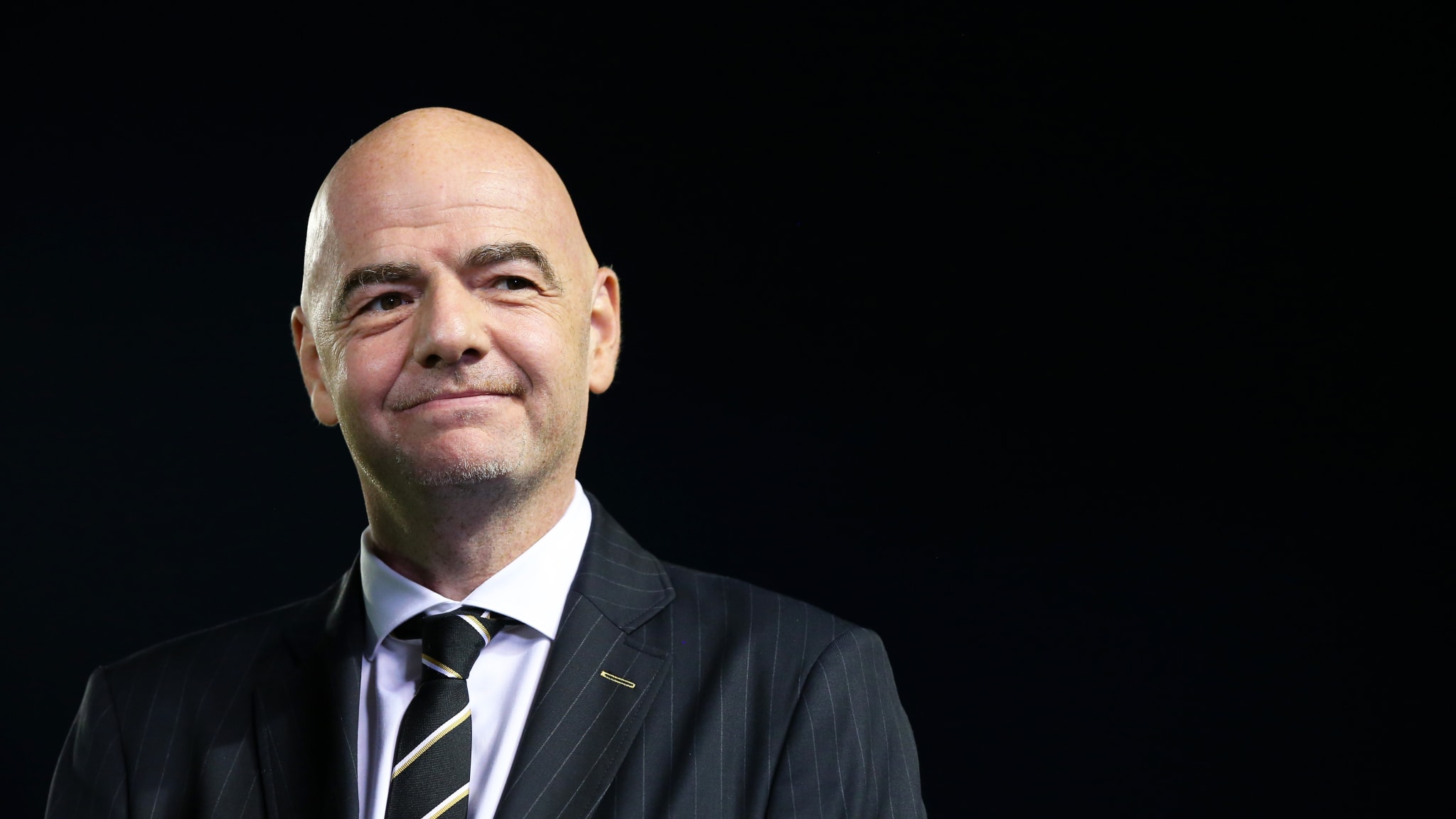

- Infantino’s FIFA Re-Election Bid Faces Revolt as Sweden and Serbia Pull Support
Pressure is intensifying on FIFA President Gianni Infantino ahead of next year’s leadership election after the football associations of Sweden and Serbia withdrew their support for his re-election, widening a revolt over governance, transparency and the direction of world football.
The decisions mark a significant change in the political environment surrounding Infantino, who only weeks ago appeared comfortably positioned for another term after securing backing from more than 200 of FIFA’s 211 member associations.
Sweden and Serbia have now joined Wales in withdrawing support, while England’s Football Association is also expected to follow, according to Reuters. The reversals raise the prospect of a more competitive FIFA presidential election than had previously been expected.
Infantino announced in May that he would seek re-election at the FIFA Congress in 2027, telling delegates at the organisation’s 76th Congress that he intended to remain president for the next term. He has led FIFA since 2016.
The immediate trigger for the latest backlash has been controversy surrounding a failed proposal to sell a 20.00% stake in a new commercial entity overseeing major FIFA competitions, including the World Cup, to private investors.
The proposal had been intended to raise as much as US$4.20 billion, but was abandoned following strong opposition from within international football. Critics raised concerns over governance, transparency and the implications of bringing external equity investors into commercial structures connected to some of FIFA’s most valuable competitions.
For Sweden, the issue appears to have gone beyond disagreement over a single commercial proposal.
Swedish Football Association chairman Simon Åström said the federation no longer had confidence in Infantino’s leadership, citing recurring deficiencies in governance and transparency. Sweden said it would now work with UEFA and other national associations to identify an alternative candidate.
Serbia, which had formally backed Infantino as recently as May 25, also reversed its position.
The Serbian association said recent events had damaged the image and reputation of FIFA and its president and argued that the future governance of world football must be based on transparency, dialogue, mutual respect and broader consultation with national associations and confederations.
The decision is politically important because Serbia had previously been counted among Infantino’s supporters rather than his established critics.
It suggests that the challenge confronting the FIFA president may be spreading beyond associations that have historically aligned themselves closely with UEFA’s opposition to aspects of FIFA governance.
Just weeks earlier, Infantino appeared almost certain to secure another term.
Reports in mid-July indicated that more than 200 national federations had formally backed his candidacy. Support from Africa, Asia and South America alone appeared sufficient to provide a comfortable majority even without unanimous European support.
But letters of support are not binding.
Associations can withdraw or transfer their endorsements before the nomination deadline, meaning the significance of the latest defections lies less in the number of votes immediately lost than in the possibility that other federations could follow.
That makes momentum increasingly important.
If additional European associations withdraw their backing and a credible challenger emerges, what appeared to be another uncontested election could become a genuine leadership contest.
UEFA has already emerged as a focal point for opposition.
Media reports that both UEFA and CONCACAF have withdrawn their support, further complicating Infantino’s position and potentially creating the institutional basis for an alternative candidacy.
The FIFA presidency is decided by the organisation’s 211 member associations, with each federation holding one vote regardless of the size or commercial strength of its domestic football market.
That structure means Infantino could still retain a substantial electoral advantage if support across Africa, Asia and South America remains intact.
CONMEBOL, for example, publicly announced unanimous support for his leadership earlier this year and backed a potential candidacy for the 2027–2031 term.
The critical question is therefore whether the rebellion remains concentrated primarily in Europe or develops into a broader cross-confederation challenge.
Potential alternatives are already beginning to attract attention.
CONCACAF President Victor Montagliani, UEFA President Aleksander Ceferin, Asian Football Confederation President Salman bin Ibrahim Al Khalifa, Paris Saint-Germain President Nasser Al-Khelaifi and Norwegian Football Federation President Lise Klaveness among figures who could emerge in discussions over a possible successor. None should be treated as a confirmed challenger at this stage.
Candidates must secure the required backing and enter the race before the deadline later this year, with the election scheduled to take place in Morocco in March 2027.
Until an alternative candidate formally enters, Infantino remains the overwhelming institutional favourite.
But the political dynamics have changed sharply.
What initially looked like scattered criticism has developed into the withdrawal of formal endorsements by national associations, accompanied by more direct questioning of FIFA’s governance and commercial decision-making.
The significance of Sweden and Serbia lies therefore not simply in two votes.
Their decisions challenge the perception that Infantino’s coalition is irreversible.
If more associations conclude that previously issued endorsements can be withdrawn without significant political cost, FIFA could move from an anticipated coronation to a contested election.
For Infantino, the immediate priority will be preventing that momentum from spreading beyond Europe and preserving the broad coalition that appeared to guarantee his re-election only weeks ago.
For his critics, the challenge is different: withdrawing support is one thing; assembling enough federations behind a credible alternative capable of defeating an incumbent FIFA president is considerably harder.
The next several months will determine whether the growing revolt represents a temporary governance dispute or the beginning of the most serious challenge yet to Infantino’s decade-long grip on world football.

