


Inside the Room: Navigating a Sovereign Debt Restructuring
It’s taken me a long time to write this.
A few things stand out in the life of every government. Each one hopes its “wins” define their legacy. My time was slightly different. As much good as was done, I feel what will live long in the memory of those who witnessed President Akufo-Addo’s second term will be less about the country’s response to COVID-19 and more about the imposition of the dreaded debt restructuring.
It was a brutal but necessary act. And I had the unfortunate privilege of seeing it go down up close.
It was a difficult period; I still remember the headlines. Old people losing their pensions. “Haircuts” entering the Ghanaian lexicon. Receiving calls from anyone who had my number, frantically asking what everything meant for their money and if it was safe. Then there were the protests, right in front of the Finance Ministry.
It was heavy.
I don’t want to use this article to go into too much technical detail. If you’re into that kind of stuff, there’s an excellent article by the CGD that gets everything right.
Just like the IMF piece, I’m drawing on memories from three years ago. The good thing is I shared this article with a few civil servants before publishing. They helped me fact-check the foggiest parts of my memory. Anyone who knows civil servants will attest that they’re notoriously low-key, mostly avoiding the spotlight. So instead of naming them, I’ll say a blanket thank you to all who helped me with fact-checking.
Now, let’s begin.
The Black Widow
The year is 2022. We start the year hoping things will work out. But in politics, one thing is guaranteed: something will go wrong.
On January 14th, the Ministry had rebutted factual inaccuracies in a Bloomberg article on Ghana’s debt situation. Add to that, there was an impasse in Parliament regarding the passage of proposed revenue bills from the last budget. Foreign investors and the markets were on edge.
A meeting is called in the Minister’s office. The usual suspects are there. I’m sitting in, wondering what’s happening.
Then a face pops up on the video call. It’s a lady at Moody’s, our analyst, Lucie Villa.
Some civil servants jokingly gave her the nickname “the Black Widow.” The myth was that any country she reviewed would get their credit rating downgraded. Seeing her on the screen, I figured: we’re in trouble.
She calmly walked through her model and delivered a verdict we felt was offensive. Said she could see we were on the way down, and the way things were looking, we would end the year with a debt-to-GDP ratio possibly above 90%.
How??? It sounded crazy. I knew we had issues, but come on—over 90%? No way. We didn’t borrow that much. I just kept looking around the room in disbelief.
The Minister echoed the same sentiment, asking her on the call what her assumptions were and how she could possibly think we’d get that bad. The whole room nodded. No way.
We offered to “fix” her model. Said maybe she didn’t get some assumptions right. She stuck to her guns.
The call ended with lots of upset faces. She doesn’t know what she’s talking about was the feeling. Downgrade our credit ratings based on stuff that isn’t true?? No way we would take that lying down.
Next thing I knew, myself and a few colleagues in the civil service were tasked with penning a press release. The government was going to take on Lucie! I grabbed my laptop, joined up with the rest of the team, and we put together a press release! Let the world know we’re not being treated fairly!
The press release got published in under a day, and we were off to the races. Just like that, the fight was on.
We decided to appeal the credit rating decision formally. It went nowhere. The President used his platform to advocate for us and for African countries in general, but these things didn’t take us off course from Lucie’s prediction.
Looking back, I’ll hold my hand up and say Lucie was right. We had really overspent during COVID. Our economy was on the fringes; a crash was coming. By July 2022, we were in the arms of the IMF.
Up Against the Wall
We were rapidly losing our dollar reserves. Something had to give.
The problem was that we had borrowed heavily from commercial creditors. And we had to pay them in dollars. Having to pay people in currency you don’t have enough of involves a lot of manoeuvring, but eventually you get found out.
Our currency depreciated by nearly 50%. We couldn’t keep up with payments. Whispers started about the need for a debt restructuring.
For those unfamiliar with the term, it’s just fancy English for telling people: “I borrowed money from you but I can’t pay back right now. I’ll pay you back one day, trust me! But let’s discuss a proposal I have. How about instead of me paying you $5 a month for a year, like we initially agreed, I pay you $2.5 a month for two years instead?”
It had been done before in Ghana during the HIPC years. But this was different. In 2002, creditors were telling us, “It’s cool, you don’t have to pay back”. Now we were about to tell unsuspecting creditors –“I actually can’t pay you back what I owe”.
We flew to anyone who could help. I mentioned the Saudi deal that didn’t happen in my last post. We also went to the US Treasury, Afreximbank, and anyone who would help us. We knew we had a liquidity crisis and had to get money in or we’d get found out.
We didn’t want to be the government that imposed a debt restructuring. With an election two years away? No way.
Plus, we saw what was happening to Zambia. It was super slow, and creditors couldn’t agree on the terms. We didn’t have that much time to waste or get bogged down in conversations that go nowhere, especially when you’re staring collapse in the eye.
I saw an article recently about how Senegal is saying no to a restructuring. Their Prime Minister said, “Restructuring would imply that Senegal is a bad student who borrowed money with the intent to steal. We told them (the IMF) that this country is a country of dignity, a country of pride.”
We probably said the same thing in our offices. But after a while, we couldn’t escape. It kept coming up: your debt is unsustainable; you must consider restructuring. That was the refrain from our development partners. By mid-2022, denial had run its course and we all had one big objective: design something that reduces our country’s debt-to-GDP ratio from near 90% in 2022 to 55% by 2028.
The Four Steps
As always, I’ll try to break down the process. It basically comes down to four steps.
Step 1: Get help. Hire financial and legal advisors who know international markets. We got Lazard and Global Sovereign Advisory, both French firms, and we spoke to people like Lee C. Buchheit, a genius who’d done this kind of work in Ecuador and Greece.
Step 2: Analyse. Determine how much debt relief you need and what categories of debt to include. We realised early that we had to exclude Treasury bills or the country would collapse.
Step 3: Prepare the proposal. The “Sovereign Ask”—outlining the quantum of relief and the methods (i.e. haircuts- reducing what you owe AND/OR maturity extensions, i.e. pushing back when you pay). This kicks off formal negotiations.
Step 4: Negotiate hard. And pray.
In between, there’s a lot of talking with banks and fund managers to converge on an offer that won’t destroy their books. You’re writing down people’s investments, so you need to find the right amount to cut off before their balance sheets break.
Those meetings took place mainly in November and December 2022. While most of the country was distracted by the World Cup, we were in rooms preparing for a restructuring.
The Farmers’ Day Meeting
The meeting that sticks out to me was the “secret meeting” held at the Bank of Ghana on 2nd December.
It was between the Minister, Central Bank governors, a small select group of finance officials, and local fund managers. It was wild.
We called the meeting to give them a heads-up that we would soon announce a debt restructuring. Of course, they had no idea why we called the meeting; you can’t afford leaks before Step 3, or your whole restructuring breaks down. All they got was a letter telling them to show up. Not much context.
Keep in mind, December 2nd was also a holiday in Ghana. I dragged myself to that meeting, nervous on many accounts. First, this was my first chance to see people react to our proposals in person. Second—and yes, this does matter—Ghana was playing Uruguay at the same time we called the meeting.
The Minister and Governors announce what we’re doing. Phones are taken at the door. Our advisors get into it.
I can see the faces drop in the room. What the hell is happening is the only way I can describe the looks on people’s faces.
At the same time, I’m checking my phone. Uruguay has scored. Ouch. 26 minutes.
Five minutes later, even more misery. Uruguay has scored again. 2-0 before halftime.
My mind is thoroughly checked out of the meeting at this point because I can see the groans. People are not happy. Here we are, talking to the bloc of people who traditionally vote for our government—the business elites—and we’re admitting their investments are about to take a hit.
All this while Ghana is losing in the World Cup.
Our Lazard advisor managed the Q&A section. It was brutal to watch. At some point, people just agreed that the best thing to do was to go back to their offices and work with their CFOs to figure out how to handle this when it was announced.
There’s a well-known aphorism: oppositions don’t win elections, governments lose them.
That day, I saw losses on different fronts. Ghana got kicked out of the World Cup. And looking at the shocked faces in the room, my brain told me: we had just started our slide into opposition.
The Final
The work continued behind the scenes. Drafting and redrafting until a package was ready to be presented to the country. On December 5th, we announced a domestic debt exchange programme.
Next was the announcement relating to our external debt. Fast forward to 18th December. The day of the World Cup final.
At that point, I was tired. I was in the office—it was a Sunday, not unusual for civil servants. I’m in a room with the usual suspects, and we’re crafting the press release for tomorrow that announces we’ll suspend payments on our external debt.
I’m really tired. Restructurings are an ordeal to get through. The negotiations hadn’t even started, and I’m worn out. World Cup final, and I can only follow updates on my phone. My phone is buzzing; Messi has won a World Cup! I smiled for a second, a happy moment amidst a difficult period.
I have a crazy amount of respect for the Finance Ministers and Central Bank Governors. To stand in front of the country and deliver this kind of news, knowing the backlash that would come, that takes an insane amount of strength. They did the right thing to fix a broken situation. It’s not easy doing that while being criticised from all angles.
19th December
We announce a suspension of payments on our external debt.
It’s on the internet. The calls start. All I can tell people on the phone is: don’t worry, we’ll have an FAQ that explains everything.
Inside, I’m panicking. If we get this wrong, the country will never forgive us. And I’m really, really tired!
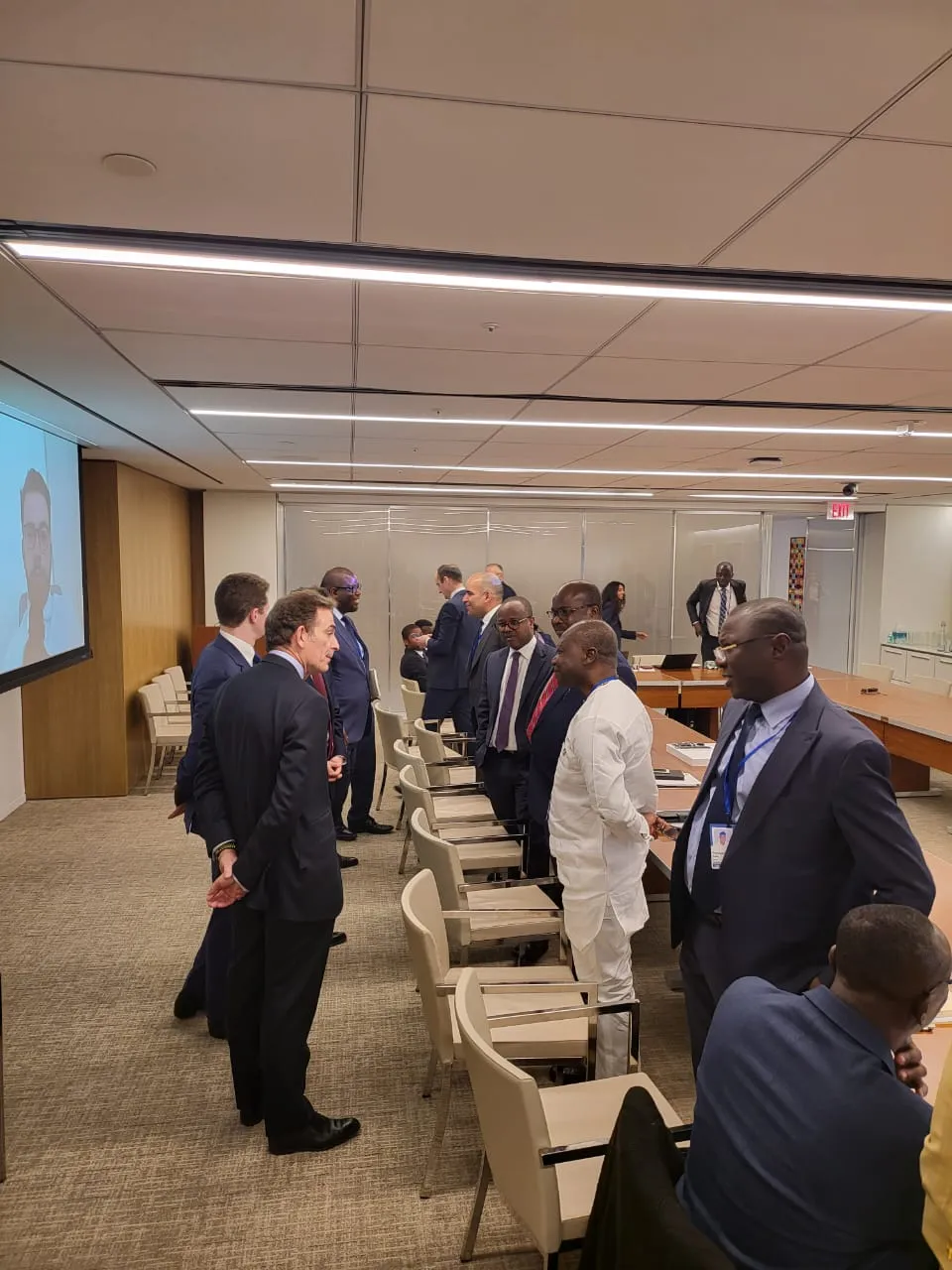
What followed was months of long meetings. Travelling to meet investors and development partners that lent us money, to explain our situation and let them know we were ready to fix our economy so we could eventually bounce back from the restructuring.
Ghana had and indeed still has a lot of goodwill. Most creditors wanted to see us win.
The Bottom Line
Before I left my role in government, the results showed all involved did a good job. It wasn’t ideal, but the debt restructuring eased the foreign currency burden on the budget, lowered external debt service costs, and moderated Ghana’s total debt obligations.
By October 2025, the IMF’s Debt Sustainability Analysis showed Ghana had moved from high risk to moderate risk of debt distress. This is a major milestone on the road back.
It’s hard to take any form of credit for a process that hurt so many. But just like the decision to go to the IMF in 2022, the restructuring was the right thing to do. I know the impact is still being felt today; it’s still painful for those whose investments were affected. I’m not sure that will ever go away.
For now, I can only hope this article was helpful to someone. And to my Senegalese brothers in government right now trying to avoid a restructuring—keep up the good fight!! I hope you succeed!

