


- Ghana’s Plastic Industry Appeals to Mahama Over January 2027 Styrofoam Ban
Ghana’s plastic manufacturing industry has appealed to President John Dramani Mahama to postpone the planned nationwide ban on Styrofoam products until 2030, warning that the proposed January 2027 implementation date could trigger factory closures, loan defaults, job losses and deep financial distress across the sector.
The Ghana Plastic Manufacturers’ Association says the industry has invested about GHS 1.49 billion in Styrofoam production facilities, much of it financed through bank loans and long-term capital commitments.
The association, which represents more than 171 factories, argues that the seven-month transition window between notification and enforcement is too short for manufacturers to recover investments, restructure their operations or shift into alternative packaging lines.
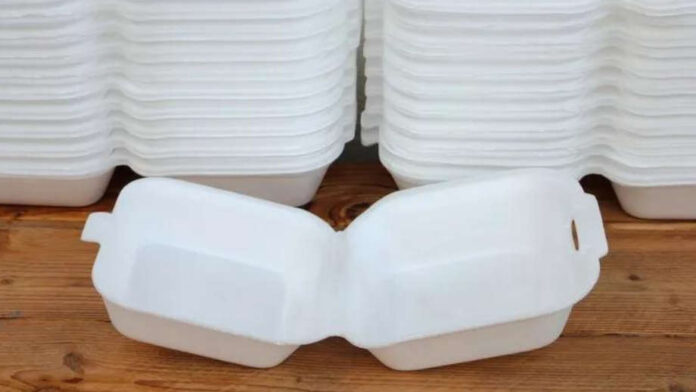
The planned ban, being pursued under the government’s wider environmental protection agenda, would prohibit the production, importation, sale and use of expanded polystyrene products. These include food containers, disposable cups, plates, foam mattresses and insulation materials.
For government, the policy is intended to reduce plastic pollution and promote sustainable waste management. But for manufacturers, the timing and scope of the ban raise difficult questions about industrial policy, credit exposure and employment protection.
The industry’s central argument is not that Ghana should ignore plastic pollution. Rather, it says the country must avoid solving an environmental problem in a way that creates a manufacturing and banking problem.
According to the GPMA, Styrofoam production equipment is purpose-built and cannot be easily or economically converted to produce biodegradable packaging. The association has therefore rejected suggestions that affected factories can simply retool and continue operating with alternative materials.
That claim is important because it goes to the heart of the transition debate.
If machines can be adapted at reasonable cost, a short deadline may be manageable. But if the equipment becomes commercially useless after the ban, then manufacturers face stranded assets, unpaid loans and possible insolvency.
Many firms, the association says, are still years away from recovering their capital expenditure, with some companies having only recently commissioned new plants.
This means the proposed January 2027 deadline could hit businesses that made investments under an existing policy environment, only to face a sudden regulatory shift before those investments mature.
The plastic sector says it directly employs more than 41,000 workers and supports wider activity across recycling, food packaging, beverage production, logistics, retail and related value chains.
A sharp disruption to Styrofoam production could therefore affect more than factory owners. It could hit workers, suppliers, transporters, retailers, food vendors, beverage companies and small businesses that depend on affordable packaging.
The GPMA also warns that an abrupt ban could increase Ghana’s reliance on imported substitutes. If local production capacity is shut down before alternatives are available at scale, the market may turn to imported packaging products.
That would weaken local manufacturing, put pressure on foreign exchange demand and undermine the government’s broader agenda of import substitution and industrialisation.
There is also a financial sector angle.
Manufacturers say banks have expressed concern about outstanding loans tied to Styrofoam machinery. If the ban renders that machinery obsolete, banks could face higher credit risk from manufacturers unable to service loans attached to non-performing assets.
The issue therefore extends beyond environmental regulation. It touches industrial investment, banking sector exposure, employment and Ghana’s competitiveness in packaging production.
The GPMA says it supports efforts to deal with environmental degradation, but insists that Ghana’s core problem is poor waste management rather than production alone.
The association points to recycling-focused models in countries such as Germany, South Korea and the Netherlands, where extended producer responsibility schemes, organised collection systems and recycling infrastructure have helped reduce pollution without necessarily relying on outright bans.
That position raises a legitimate policy question: should Ghana ban Styrofoam quickly, or build a structured system that forces producers, importers, consumers and local authorities to manage waste more responsibly?
Environmental campaigners may argue that Styrofoam is difficult to manage, clogs drains, contributes to flooding and creates long-term pollution. On that basis, they may support a firm ban.
But manufacturers argue that an abrupt prohibition could create unintended costs larger than the problem it seeks to solve, especially if alternatives are expensive, imported or unavailable in sufficient quantities.
The policy challenge for the Mahama administration is to find a credible balance.
Ghana clearly needs stronger action on plastic pollution. Poor waste management contributes to flooding, public health risks, marine pollution and urban sanitation challenges. Styrofoam products are widely used and frequently discarded after single use, making them highly visible in the waste stream.
At the same time, government must consider the cost of regulatory shock.

