


- Private Capital Takes Centre Stage in Ghana’s Push to Close 1.8m Housing Deficit
Ghana is turning increasingly to private capital to address a housing deficit estimated at 1.8 million units, as fiscal constraints and rapid urbanisation expose the limits of relying on government-financed construction to satisfy the country’s growing demand for affordable homes.
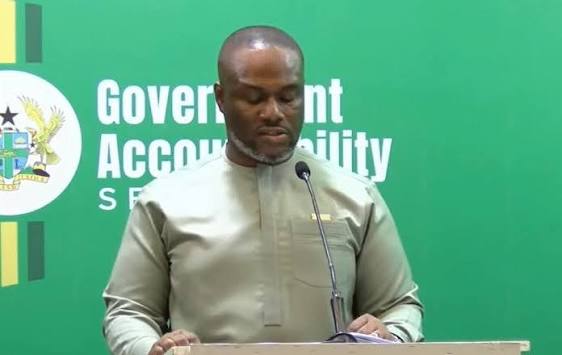
Gizella Tetteh-Agbotui, Deputy Minister for Works, Housing and Water Resources, said the scale of the shortage required a fundamentally different financing model, with private developers, financiers and institutional investors playing a greater role. Speaking at the IFMA Global Africa Conference 2026 in Accra, she argued that public resources alone would be incapable of delivering housing at the scale Ghana requires.
“Government alone cannot provide all the housing that we need,” she said. “We need the private sector. We need partnerships. We need investment, and we need innovation.”
The argument goes beyond the familiar call for developers to construct more homes. A deficit of 1.8 million units represents a vast capital requirement involving land, roads, drainage, electricity, water, construction materials, mortgage financing and the long-term management of completed properties.
For Ghana, that capital requirement has become more difficult to meet through the public balance sheet. After years of fiscal pressure and sovereign debt restructuring, government has limited room to finance large-scale housing programmes directly without competing against equally pressing expenditure on education, healthcare, infrastructure and debt obligations.
Private participation is therefore becoming less of an option than a financial necessity. But attracting private capital into housing will require government to solve the harder question of how investors can earn commercially sustainable returns while ordinary households can still afford the homes being produced.
Ghana’s housing market has historically struggled with that equation. High construction costs, expensive mortgages, land administration difficulties, infrastructure shortages and volatility in inflation and interest rates frequently push completed properties beyond the purchasing power of low- and middle-income households.
This means simply increasing supply may not solve the affordability problem. Developers can build thousands of housing units and still leave the underlying deficit substantially unchanged if the people classified as needing housing cannot afford to rent or purchase them.
A successful strategy will therefore have to treat housing as a complete financial ecosystem rather than principally a construction programme. Public-private partnerships could allow government to contribute serviced land and infrastructure while private developers provide capital and technical expertise, reducing some of the costs that ultimately feed into selling prices.
Long-term domestic capital could also become increasingly important. Pension funds and insurance companies naturally hold liabilities extending over many years, making housing and related infrastructure potentially suitable assets where projects are properly structured and risks are transparent.
The mortgage market presents another challenge. Building homes without simultaneously developing affordable long-term financing risks creating supply that remains inaccessible to much of the population.
Housing finance requires long-duration capital, yet lending institutions operating in an environment historically characterised by high interest rates have found it difficult to provide mortgages at monthly repayments compatible with average household incomes. Creating an effective housing market may therefore require policymakers to focus as much on the cost and maturity of finance as on the number of units developers construct.
There is also a substantial industrial opportunity hidden inside the deficit. A sustained programme of residential construction would generate demand for cement, steel, roofing products, glass, electrical equipment, plumbing materials, furniture, transport and professional services.
If enough of those inputs are produced domestically, tackling the housing deficit could simultaneously support manufacturing and employment. If they are largely imported, however, rapid housing construction could place additional pressure on foreign exchange and reduce the domestic economic multiplier.
Ms Tetteh-Agbotui’s intervention also introduces another dimension that is frequently missing from Ghana’s housing debate: maintenance.
“Across the country, public buildings and homes stand in disrepair: leaking roofs, broken elevators, collapsed drains, and failed plumbing, rendering them unsafe, inefficient, and often unusable,” she has said.
“The root of this crisis is systemic: facility management is excluded from the project development cycle… A building designed without operational foresight is a building destined for early obsolescence.”
That argument changes how Ghana should think about the housing deficit. The challenge is not only the number of new homes that must be added but also the rate at which existing buildings deteriorate and effectively disappear from usable housing stock.
“Despite investments, our housing stock continues to dwindle not because we fail to build, but because we fail to maintain what we build,” Ms Tetteh-Agbotui said.
Maintenance, viewed this way, becomes an economic investment rather than a recurrent cost to be postponed. Extending the useful life of a building by decades protects the original capital invested in construction and reduces the amount government, businesses and households eventually spend replacing deteriorated assets.
It also strengthens the case for integrating professional facility management at the design stage. Decisions around materials, energy consumption, drainage, accessibility and maintenance requirements can significantly influence the total cost of owning and operating a property over its lifespan.
For private investors, those lifecycle economics will matter. Institutional capital is more likely to enter Ghana’s housing market where developments can generate predictable long-term cash flows rather than depend entirely on selling units immediately after construction.
Rental housing, affordable mortgage portfolios, real-estate investment vehicles and properly structured public-private partnerships could potentially create such opportunities, but only where land titles, contracts and revenue arrangements are sufficiently reliable.
That places regulatory reform at the centre of the housing strategy. Investors will require predictable access to land, transparent procurement, enforceable contracts, efficient permitting and credible mechanisms for resolving disputes.
Affordability must remain equally central. A housing programme that succeeds financially for investors but remains beyond the reach of the households represented in the 1.8 million-unit deficit would solve the financing problem without solving the social one.
The IFMA Global Africa Conference, taking place in Accra on August 12 and 13, therefore comes at an important moment. Ghana is confronting a wider infrastructure challenge in which the need for new assets is growing faster than government’s ability to finance them directly.
The 1.8 million-unit housing deficit can consequently be viewed in two ways: as an enormous social liability or as a large investment opportunity capable of mobilising capital into construction, infrastructure, mortgages and local manufacturing.
Turning it into the latter will require more than declaring that the private sector is needed. Ghana must build a housing market in which projects are investable, financing is sufficiently patient, land rights are predictable and the final product remains within reach of households.
That is the harder equation behind the deficit. Government has acknowledged that it cannot build its way out of the housing shortage alone; the next test is whether it can create the financial and regulatory architecture that makes private capital part of the solution without making affordable housing even less affordable.

