

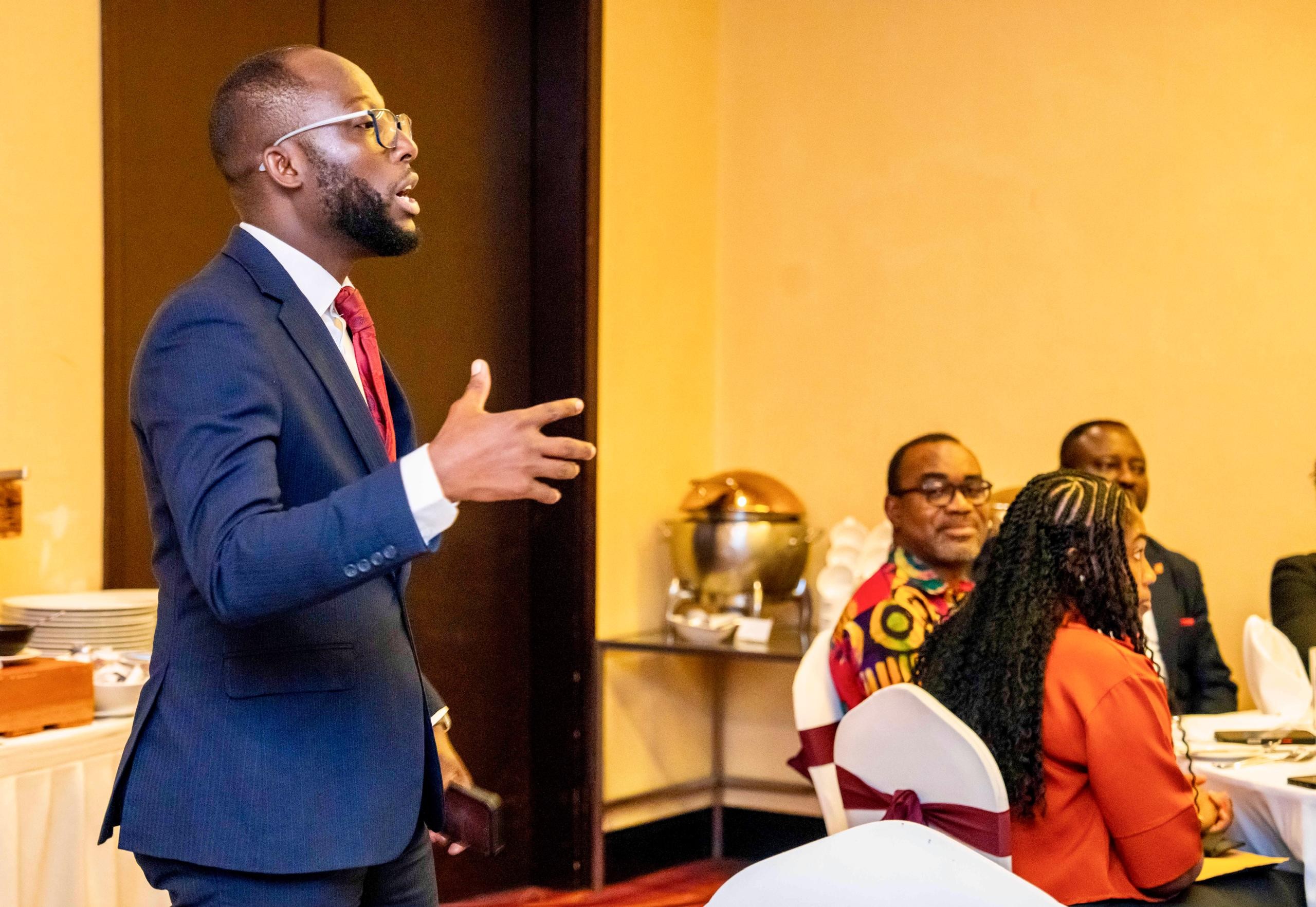

- UBA Ghana Deepens Support for Industrial Growth, SMEs and Intra-African Trade at GISE 2026
United Bank for Africa (UBA) Ghana has reaffirmed its commitment to supporting Ghana’s industrialisation agenda, expanding access to finance for businesses and facilitating intra-African trade as it participates in the 2026 Ghana Industrial Summit and Exhibition (GISE).
Organised by the Association of Ghana Industries (AGI), GISE 2026 will take place from 15–17 September 2026 at the Underbridge Annex, East Legon, Accra, under the theme “Driving Sustainable Export-led Industrial Growth Through Energy Reliability and Digital Innovation.”
The annual summit provides a platform for industry leaders, policymakers, entrepreneurs, investors and development partners to engage on Ghana’s industrialisation agenda, forge strategic partnerships and showcase innovations capable of improving productivity and competitiveness.
For UBA Ghana, the event provides an opportunity to deepen engagement with businesses and demonstrate how banking can serve as a catalyst for industrial growth.
Speaking to the media ahead of the summit, Henry Nii Dottey, Regional Head, Brand, Marketing & Corporate Communications, UBA, said the Bank’s participation reflects its broader commitment to entrepreneurship, industrial development and African trade.
“Supporting entrepreneurship, industry and trade is central to who we are as Africa’s Global Bank. Businesses today require much more than a bank account. They need access to finance, efficient payment systems, markets, trade solutions and a financial partner that understands their growth ambitions,” Dottey said.
He noted that SMEs and indigenous businesses remain critical to building competitive African economies, making it imperative for financial institutions to develop solutions that respond to their particular needs.
Financing businesses for growth
Dottey said one of the biggest challenges facing businesses is not simply the availability of financing but obtaining funding structured around the realities and cash-flow cycles of enterprises.
“Affordable financing must go beyond making money available. It must be accessible and appropriately structured. The repayment profile must recognise the cash-flow cycle of the business if financing is to become a genuine catalyst for sustainable growth,” he explained.
UBA Ghana provides businesses with a range of financing solutions including working capital, asset and vehicle finance, invoice discounting, local purchase order financing, overdrafts, credit lines, import finance, bonds and guarantees.
According to Dottey, the Bank’s participation in GISE is particularly relevant to this year’s focus on export-led industrial growth because businesses will require adequate financing to expand production, improve efficiency, adopt new technologies and compete internationally.
“Ghana’s industrial transformation cannot happen without strong businesses, and strong businesses need strong financial partners. The financial sector must help enterprises invest, increase productive capacity, embrace technology and become competitive locally and internationally,” he said.
Connecting Ghanaian businesses to Africa
Beyond financing, Dottey said UBA’s extensive African footprint provides an important platform for Ghanaian companies seeking to expand into other markets on the continent.
He said the implementation of the African Continental Free Trade Area (AfCFTA) presents significant opportunities for Ghanaian businesses, but financial institutions must help address some of the payment and transaction barriers that continue to constrain intra-African commerce.
“For a Ghanaian SME or manufacturer, Africa should increasingly be viewed as an addressable market rather than a collection of disconnected economies. Our responsibility as a Pan-African bank is to help remove some of the financial barriers that make it difficult for businesses to trade across borders,” Dottey stated.
UBA provides cross-border and trade solutions including PAPSS, AfriTrade, Africash and UBA Connect, which support businesses conducting transactions across African markets.
Dottey said payment innovation will be particularly important to the success of AfCFTA, as businesses need faster and more efficient ways of paying suppliers and receiving proceeds from customers across borders.
“If we want African businesses to trade more with one another, payments cannot remain a barrier. Technology and financial innovation must make it easier for an entrepreneur in Accra to transact with customers and suppliers elsewhere on the continent,” he said.
Digital innovation must solve business problems
With digital innovation forming a key component of the GISE 2026 theme, Dottey said technology must ultimately deliver measurable benefits for businesses rather than become an end in itself.
“Digital innovation must have a practical impact. It should help businesses receive payments faster, manage cash flows better, transact across borders more efficiently and spend more time growing their businesses rather than dealing with financial bottlenecks.”
UBA Ghana will also use the summit to engage manufacturers, SMEs and entrepreneurs to better understand their financing, payments and trade requirements.
According to Dottey, the Bank wants its participation to go beyond showcasing products.
“We are coming to GISE not simply to showcase UBA, but to listen, engage and build relationships. We want businesses to speak to us about their growth plans, the challenges they face and the markets they want to enter, so that together we can explore financial solutions that support those ambitions.”
He said UBA’s ultimate objective is to use its Pan-African network and financial capabilities to connect Ghanaian businesses to opportunities across the continent.
“We want to make it easier for an entrepreneur in Ghana to build a strong business here and have the confidence and financial capability to do business in Nigeria, Côte d’Ivoire, Senegal, Zambia and across Africa.
“That is what we mean when we say UBA is Africa’s Global Bank. We are building bridges between African businesses, African markets and African opportunities,” Dottey concluded.

