


- GACC Challenges Government to Turn Anti-Corruption Commitments into Institutional Results
The Ghana Anti-Corruption Coalition has placed the Mahama administration’s anti-corruption record under fresh scrutiny, arguing that commitments made before the 2024 elections must now be tested against measurable reforms, institutional enforcement and visible results rather than political declarations.
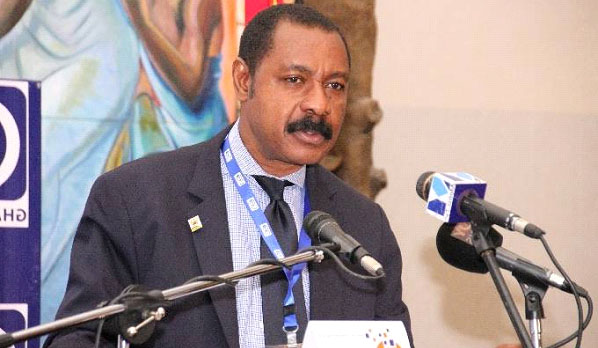
Opening the second National Anti-Corruption Dialogue in Accra, Nana Osei Bonsu, Board Chairman of the Ghana Anti-Corruption Coalition and Chief Executive Officer of the Private Enterprise Federation, said the forum was intended to examine whether the government’s promises on governance and corruption had begun translating into concrete action.
The coalition said the dialogue builds on engagements it held with political parties and presidential candidates in November 2024, when commitments were sought on corruption, accountability and governance reforms ahead of the general election.
“I didn’t say presentation. I said dialogue. Dialogue is between us and everybody else. So we’re not going to be quiet today. We’re going to talk,” Mr Osei Bonsu told participants.
The intervention reflects a broader concern within Ghana’s governance debate: the country does not lack anti-corruption institutions, laws or policy commitments, but continues to struggle with the consistency and credibility of enforcement.
Mr Osei Bonsu said corruption remained a persistent challenge despite Ghana’s democratic progress since the return to constitutional rule in 1992, warning that it continued to undermine public trust, weaken institutions, affect service delivery and impede inclusive national development.
The economic consequences extend well beyond politics.
Weak governance can distort public procurement, misallocate scarce state resources and influence regulatory decisions in ways that increase costs for businesses and households. For the private sector, corruption can raise transaction costs and create an uneven competitive environment in which political access matters more than productivity or efficiency.
For government, ineffective controls can undermine fiscal discipline and reduce the value citizens receive from public expenditure.
That gives added significance to the Mahama administration’s stated commitments on accountability, asset recovery, conflict-of-interest management, public procurement oversight and strengthening anti-corruption institutions.
Mr Osei Bonsu said the government entered office promising to strengthen accountability, combat corruption, recover stolen assets, improve the management of conflicts of interest, enhance procurement oversight and reinforce the effectiveness of institutions charged with fighting corruption.
The question, he suggested, is no longer whether those promises exist but whether they can now be demonstrated through evidence.
“Eighteen months on, citizens are rightly interested in understanding what progress has been made, what challenges remain, and what additional measures are required to strengthen governance and accountability,” he said.
The coalition is seeking to avoid reducing the review to a partisan scorecard.
Mr Osei Bonsu stressed that the objective of the dialogue was neither to praise nor condemn the administration, but to create a platform where government, civil society, business, the media and citizens could examine progress and shortcomings constructively.
“Today’s engagement is very, very important and therefore not be assigning praise or blame. Rather, it is about fostering constructive dialogue,” he said.
That distinction is important in Ghana’s highly polarised political environment, where corruption allegations often become instruments of electoral competition and governments frequently concentrate enforcement attention on officials from previous administrations.
A credible anti-corruption system, however, requires institutions capable of applying comparable standards regardless of political affiliation.
GACC is therefore widening responsibility beyond the presidency and government.
The coalition argues that the fight against corruption must involve state institutions, civil society organisations, the private sector, journalists and citizens, reflecting the reality that no single institution has the reach or authority to address corruption on its own.
“The responsibility of building corruption-free Ghana does not rest with one institution or sector alone. It requires collective action, shared responsibility, and sustained commitment from all stakeholders,” Mr Osei Bonsu said.
That framework places renewed attention on the effectiveness of Ghana’s existing anti-corruption architecture.
The country already has institutions responsible for investigation, prosecution, auditing, administrative justice and public oversight. The deeper challenge is whether those bodies produce consequences sufficiently credible and consistent to deter abuse.
The media also remains central to that process. Investigative journalism can expose questionable transactions and conflicts of interest, while civil society groups can translate technical findings into sustained public pressure.
Businesses, meanwhile, have a direct interest in ensuring that public contracts and regulatory decisions are governed by transparent rules rather than personal or political relationships.
For the Mahama administration, the growing scrutiny presents both risk and opportunity.
Demonstrable progress on recovering public assets, strengthening procurement transparency, enforcing conflict-of-interest rules and protecting institutional independence could improve confidence in the government’s governance agenda.
But prolonged gaps between announced commitments and visible outcomes could reinforce a longstanding public perception that anti-corruption promises are strongest during election campaigns and weaken once governments take office.
GACC therefore wants the debate to move towards practical recommendations rather than simply documenting failures.
“We encourage all participants not to just sit, but openly share their perspectives. There’s no right or wrong. Your perspective is your perspective for fighting against corruption, and contribute practical recommendations,” Mr Osei Bonsu said.
Ultimately, the coalition argues that Ghana’s anti-corruption performance should not be measured by the number of speeches delivered, committees established or pledges announced.
The more meaningful indicators will be whether public institutions become more difficult to capture, whether public resources become harder to divert and whether wrongdoing produces credible and consistent consequences.
“As we deliberate today, let’s focus not only on the challenges before us, but also on the opportunities to strengthen our institutions, promote ethical leadership, and build a culture of accountability that serves the interests of all Ghanaians, irrespective of tribe, party,” Mr Osei Bonsu said.
The National Anti-Corruption Dialogue therefore arrives at a defining stage in the administration’s tenure: the point at which campaign promises increasingly have to be converted into institutional reform, measurable outcomes and evidence that Ghana’s anti-corruption machinery is becoming more effective.

