
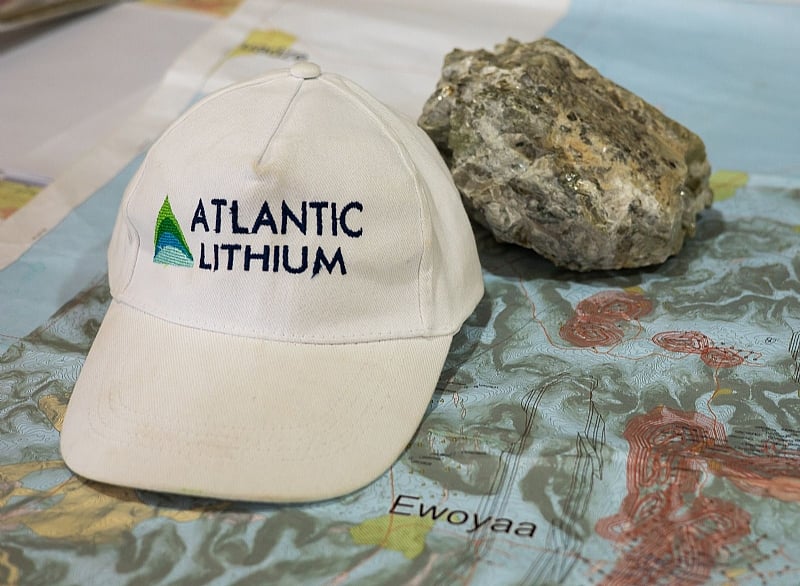

ACEP Outlines Four key Policy Considerations for Revising Lithium Agreement
The Africa Centre for Energy Policy (ACEP) has outlined four critical policy considerations it says government must take into account in revising the lithium mining agreement with Barari DV, the local subsidiary of Atlantic Lithium, following the withdrawal of the deal from Parliament.
In a policy note on the withdrawal of the agreement, ACEP said the proposed fiscal terms, particularly the royalty structure, raise significant competitiveness, sustainability and investor confidence concerns that require careful reconsideration.
ACEP notes that the following considerations are critical in the engagement and potential revision of the lithium agreement:
- A 10–12% gross royalty for hard-rock lithium is globally atypical and places Ghana above the competitive norm.
- Legal certainty is essential to sustaining investor confidence and credibility in the mining regime.
- Progressive, price-linked fiscal mechanisms are more effective than rigid gross royalties in capturing windfalls while preserving viability.
- Fiscal design must ensure project survival across commodity price cycles, as mine failure eliminates all other fiscal and economic benefits.
According to the policy think tank, a proposed gross royalty rate of between 10% and 12% for hard-rock lithium is globally atypical and places Ghana well above prevailing international norms, potentially undermining the country’s attractiveness as an investment destination.
ACEP stressed that legal certainty remains critical to sustaining investor confidence and credibility in Ghana’s mining regime, warning that frequent or abrupt fiscal changes could weaken confidence in the country’s extractive sector governance framework.
The policy note further argued that progressive, price-linked fiscal mechanisms are more effective than rigid gross royalties in capturing windfall gains while preserving project viability, particularly in a volatile commodity market. It added that fiscal design must prioritise mine survival across commodity price cycles, noting that the failure of a project eliminates all associated fiscal and economic benefits.
Providing global context, ACEP noted that hard-rock lithium royalties generally fall within a narrow range internationally, with fixed royalty rates at 5% of gross production value being uncommon for spodumene operations. It observed that the proposed 10% royalty would push the All-In Sustaining Cost (AISC) of the Ewoyaa project above US$600 per tonne, among the highest in the industry, compared with under US$400 in landlocked Mali.
Indicative global royalty rates cited by ACEP show Australia at about 5%, Brazil at 2–3%, Mali at 1–3% and Zimbabwe at around 3%, underscoring Ghana’s position as a significant outlier under the proposed terms.
ACEP also highlighted Ghana’s limited market power in the global lithium space, noting that the Ewoyaa project accounts for roughly 0.5% of global lithium reserves. According to the think tank, such reserve concentration does not justify fiscal rigidity significantly above global competitive ranges.
The policy note further pointed to the cyclical nature of lithium markets, cautioning that high fixed gross royalties are regressive during downturns and pose a direct threat to project viability. It stressed that royalties are the most sensitive fiscal instrument affecting mine survival, adding that many leading jurisdictions, including Chile, are shifting towards profit- and price-linked fiscal regimes.
Beyond royalties, ACEP emphasised that government revenue from mining operations extends to corporate income tax, community development levies, growth and sustainability levies, local procurement and employment, indirect taxes, and dividends from state participation. It said these components must be modelled together to determine overall government take.
The lithium mining agreement was withdrawn from Parliament following sustained public commentary and concerns over the revised fiscal terms, particularly the proposed royalty rate. ACEP noted that, historically, mining and petroleum agreements in Ghana are often approved rapidly, sometimes with the suspension of standing orders.
Against this backdrop, the think tank described the withdrawal of the agreement in response to public debate as notable, reflecting growing public engagement and scrutiny in Ghana’s extractive sector governance.

