

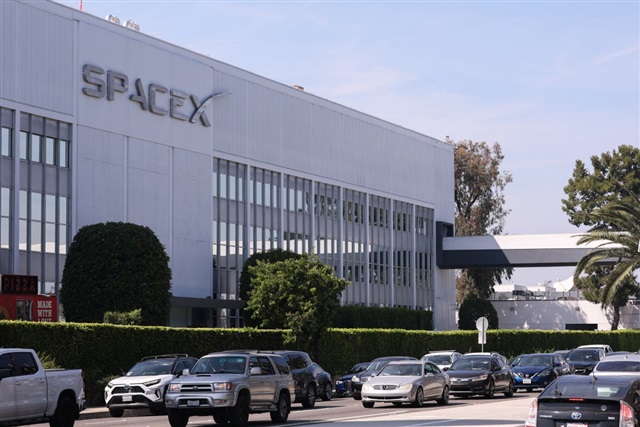

- From SpaceX to AI: Wall Street Braces for a US$4 Trillion Public Market Test
SpaceX’s planned listing on Nasdaq is being framed as the largest initial public offering in history, but for Austin entrepreneur and serial founder Brett Hurt, the more important story is what comes after the market celebration.
The Elon Musk-led space and technology company is expected to price its IPO at US$135 per share, targeting a record US$75 billion raise and a valuation of about US$1.75 trillion to US$1.77 trillion, according to Reuters and other market reports.
That would place SpaceX far ahead of previous IPO records and push public markets into a new era where space infrastructure, artificial intelligence and platform technology are increasingly merging into one investment narrative.
But while many investors are reacting to the immediate spectacle of the SpaceX listing, Mr Hurt is positioning it as part of a much larger market cycle.
A media pitch shared ahead of the publication of his forthcoming book, Love Conquers Fear, argues that SpaceX is only the opening act in a wider IPO wave that could push US$3 trillion to US$4 trillion of technology-related market value into public markets over the next 12 months.
The argument is that SpaceX will not stand alone. Other high-profile artificial intelligence and technology companies, including Anthropic and potentially OpenAI, are expected to intensify investor focus on the next wave of public listings.
Mr Hurt’s perspective carries weight because he has lived through earlier technology cycles. He founded Coremetrics during the dot-com boom, survived the collapse that followed, and later rebuilt the company before its sale to IBM. He also co-founded Bazaarvoice, which listed on Nasdaq in 2012, and later built data.world, which was acquired by ServiceNow in 2025.
His argument is not that the current boom is risk-free. It is that this cycle is structurally different from earlier crashes.
Oliver Wyman has warned that an artificial intelligence-led market collapse comparable to the early 2000s could wipe out about US$33 trillion in market value more than the size of the United States economy.
The Bank of England and the International Monetary Fund have also warned that stretched artificial intelligence valuations could trigger an abrupt market correction if investor expectations around the technology shift suddenly.
But Mr Hurt’s thesis is more nuanced than a simple bubble warning.
He argues that even if public market valuations correct sharply, the technologies driving the boom artificial intelligence, robotics, clean energy and space infrastructure — may continue operating underneath the financial turbulence.
In other words, a future crash may destroy paper wealth without necessarily shutting down the infrastructure of daily life.
That is a sharp contrast with earlier economic collapses, where market failures often fed directly into mass unemployment, business closures and visible social distress.
The SpaceX IPO also raises a deeper social question: where does the wealth go?
SpaceX’s operations have transformed Brownsville, Texas, one of America’s poorer cities, into a central node in the global space economy. Yet the community’s per-capita income remains low, raising questions over whether the wealth created by the listing will remain locally or flow into distant portfolios, private funds and already wealthy investor networks.
That tension makes the SpaceX listing more than a Wall Street event.
It is a test of whether frontier technology can create shared prosperity in the places that host it, or whether those communities merely provide land, labour and infrastructure while the financial upside is captured elsewhere.
For global markets, the listing could become a turning point.
If successful, it may reopen the door for other mega-listings and reinforce investor appetite for artificial intelligence, space, defence technology and infrastructure platforms.
If it struggles after listing, it could become an early warning sign that public markets are no longer willing to absorb extreme private valuations without clearer evidence of profitability, governance discipline and long-term returns.
Either way, SpaceX’s IPO will be watched far beyond the aerospace sector.
It will test investor belief in the next industrial technology cycle. It will test whether public markets can price companies that sit across space, communications, artificial intelligence and infrastructure. And it will test whether the wealth created by frontier technology can be distributed more meaningfully than in previous market booms.
For Mr Hurt, the lesson from past cycles is clear: the danger is not only the crash. The danger is failing to understand what kind of boom is happening before the crash arrives.
SpaceX may ring the bell on June 12.
But the bigger question is whether it is ringing in a new era of productive abundance or the loudest warning signal yet of a market that has run too far ahead of itself.

