

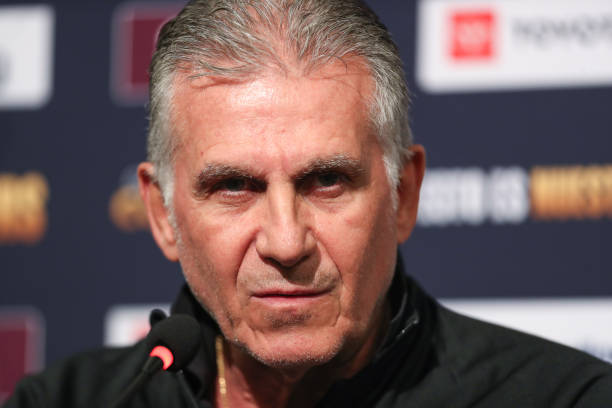

- Black Stars’ Attacking Shortcomings Exposed In 2-0 Defeat to Côte d’Ivoire
Ghana began its campaign to qualify for the 2027 Africa Cup of Nations on a disappointing note after suffering a 2-0 defeat to Côte d’Ivoire at the Stade de la Paix in Bouaké.
Goals from Malick Yalcouye and captain Franck Kessié secured all three points for the Elephants in the opening Group C encounter, leaving the Black Stars under immediate pressure to respond against The Gambia in Accra on September 29.
The result reflected more than Ghana’s depleted squad. It exposed a lack of attacking cohesion, limited control in midfield and an inability to transform possession into sustained pressure against a more composed Ivorian side.
Côte d’Ivoire controlled 66% of possession during the opening half and registered three attempts on target. Ghana managed five attempts but failed to test goalkeeper Yahia Fofana before the interval.
The breakthrough arrived shortly before half-time. Yalcouye found space outside Ghana’s penalty area and drove a powerful low shot beyond the goalkeeper to give the hosts a deserved lead.
Ghana’s defensive shape had restricted the Elephants for much of the half, but the team was punished when it failed to close down the midfielder on the edge of the box.
The timing of the goal was particularly damaging. Having spent most of the first half absorbing pressure, Ghana entered the interval trailing without having established any meaningful attacking rhythm.
Any prospect of an immediate second-half recovery was undermined when Côte d’Ivoire were awarded a penalty in the 54th minute.
Abdul Fatawu Issahaku was adjudged to have fouled Yalcouye inside the area as the midfielder drove through Ghana’s defensive line. Kessié converted from the spot two minutes later to double the hosts’ advantage.
The second goal allowed Côte d’Ivoire to manage the remainder of the contest without taking unnecessary risks. Hervé Renard’s side remained compact, controlled the tempo and invited Ghana to break down an organised defensive unit.
Carlos Queiroz introduced Felix Afena-Gyan, Augustine Boakye and Benjamin Tetteh as he attempted to increase Ghana’s attacking presence.
The substitutions brought greater urgency, but the Black Stars still struggled to create clear opportunities. Caleb Yirenkyi produced Ghana’s first serious effort on target late in the game, forcing Fofana into a save, while Afena-Gyan also threatened with a header.
Côte d’Ivoire finished with 61% possession and 13 attempts, four of them on target. Ghana produced nine attempts but only seriously tested the Ivorian goalkeeper during the closing stages.
Ghana entered the fixture without several of its most influential players.
Captain Jordan Ayew, Mohammed Kudus, Antoine Semenyo, Thomas Partey, Abdul Rahman Baba and Alidu Seidu were among those unavailable. Their absence deprived Queiroz of experience, creativity and established attacking partnerships.
The coach handed opportunities to a reshaped side that included debutants Kojo Oppong Peprah, Christopher Bonsu Baah and Brandon Thomas-Asante. Caleb Yirenkyi and Kwasi Sibo operated in midfield, while Issahaku, Ernest Nuamah and Bonsu Baah supported Thomas-Asante in attack.
The circumstances explain why Ghana lacked some of its usual individual quality. They do not completely explain the team’s failure to produce a coherent attacking plan.
International football regularly requires teams to cope with injuries and withdrawals. The challenge for Queiroz is to create a system that does not depend entirely on Kudus, Semenyo or Jordan Ayew producing decisive individual moments.
Ghana’s attacking players often received possession in isolated positions, with insufficient support around the penalty area. There was little sustained movement between Côte d’Ivoire’s midfield and defence, making it easier for the hosts to force Ghana wide or recover possession.
The Black Stars also struggled to press effectively when they lost the ball. Côte d’Ivoire were consequently able to circulate possession and determine the pace of the game.
The injury that forced acting captain Alexander Djiku off added to Ghana’s difficulties and could become another concern ahead of the next qualifier.
The defeat is not fatal to Ghana’s qualification campaign. The top two teams in Group C will advance to the tournament, which will be co-hosted by Kenya, Tanzania and Uganda.
But Ghana cannot afford to allow one difficult opening fixture to develop into another troubled qualifying campaign.
The Black Stars failed to reach the 2025 AFCON after finishing bottom of a group containing Angola, Sudan and Niger. That failure demonstrated the danger of dropping points early and assuming that qualification can be repaired in the later rounds.
Queiroz was retained after guiding Ghana to the knockout stage of the 2026 World Cup, but AFCON qualification presents a different challenge. The Black Stars must consistently break down African opponents who may defend deeply, compete aggressively in midfield and offer Ghana limited space.
The Côte d’Ivoire defeat showed that defensive organisation alone will not be sufficient. Ghana must develop better progression through midfield, more coordinated movement in attack and a quicker response when the initial tactical plan is not working.
Ghana’s next qualifier against The Gambia at the Accra Sports Stadium has acquired greater importance.
The match should not yet be described as decisive, but anything short of victory would leave the Black Stars facing early uncertainty in a group that also contains Somalia.
The Gambia have built a reputation for discipline and resilience and cannot be treated as a routine opponent. The Scorpions reached the quarter-finals on their AFCON debut in 2021 and possess players capable of troubling stronger teams on the counterattack.
Queiroz must now decide whether to retain the cautious approach used in Bouaké or adopt a more assertive structure at home.
Ghana will be expected to dominate possession in Accra. The more important question is whether the team can use it productively.
The defeat to Côte d’Ivoire can be absorbed if it becomes a lesson rather than the beginning of a pattern. Ghana were missing important players and faced one of Africa’s strongest teams away from home.
But qualification campaigns are rarely lost through one result. They are lost when the weaknesses revealed by that result are not corrected before the next match.

