

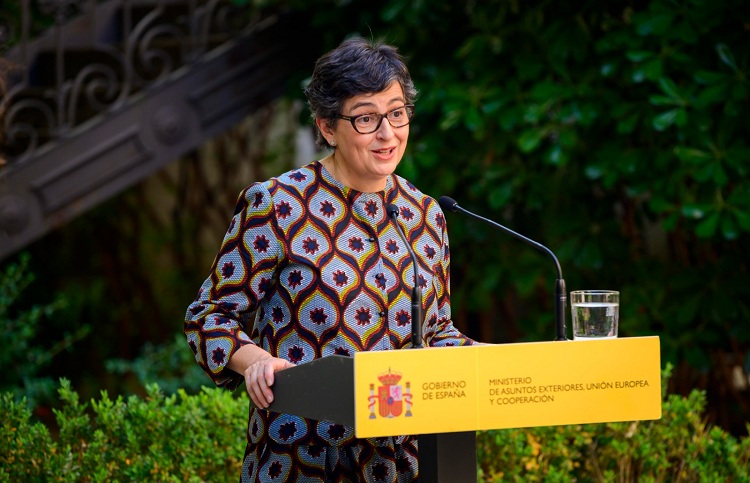

- Global Finance Must Change, but Africa Must Deliver at Home — González Laya
Africa’s development challenge can no longer be explained solely by an international financial system that makes capital disproportionately expensive for poorer economies, nor by domestic policy failures alone. Progress will require both a fairer global financing architecture and stronger implementation by African governments, according to Arancha González Laya, former Spanish Foreign Affairs Minister and Co-Chair of the Future of Development Cooperation Coalition.
Ms González Laya argues that the existing international financial framework is increasingly ill-suited to the needs of low- and middle-income countries, particularly in the cost and availability of long-term capital.
“There are rules that are not fit for purpose,” she said. “For example, cost of capital today for low and middle-income countries is too high, it’s not affordable, and it’s not available at scale.”
The consequences are particularly severe for African economies that need large amounts of investment in infrastructure, digitalisation, electricity, technology and industrial capacity precisely when the financing required for those investments remains expensive.
For governments with limited fiscal space, high borrowing costs can reduce the resources available for productive investment after debt-service obligations are met. The problem becomes more acute where projects require patient capital and may only generate their full economic returns over many years.
That creates what amounts to a development trap.
Poorer economies require better infrastructure to improve productivity and reduce economic risk, yet perceptions of higher risk raise the cost of financing those investments. Higher borrowing costs then make projects more expensive and harder to deliver, reinforcing the vulnerabilities that caused investors to demand a premium in the first place.
The problem extends beyond governments.
African companies also face expensive financing, meaning factories, logistics infrastructure, renewable-energy projects, electricity networks, data centres, broadband systems and agricultural-processing facilities can struggle to generate returns sufficient to justify investment after financing costs are taken into account.
Projects that may be commercially attractive in mature economies can become difficult to finance in African markets simply because the cost of capital consumes too much of the expected return.
Ms González Laya therefore supports reform of international mechanisms governing risk assessment, guarantees and capital pricing. But she is equally clear that deficiencies in the global financial architecture cannot become an excuse for failures within Africa itself.
One of the strongest examples is the African Continental Free Trade Area.
AfCFTA is intended to overcome the fragmentation of 55 national economies and create a larger continental marketplace for African producers. Ms González Laya said that integration could make African economies more resilient by increasing intra-African trade and reducing dependence on volatile external markets.
“Africa took an enormous step forward by building the African Continental Free Trade Agreement,” she said. “Integrating African markets, which are very small-scale, would give Africa the resilience to trade more with itself and rely less on more volatile export markets.”
But agreements alone do not produce trade.
African businesses still confront differences in regulation, customs procedures, product standards, taxation systems and infrastructure that can function as effective borders even where tariffs are being reduced.
“What’s hampering the Africa Continental Free Trade Agreement today are not international rules,” Ms González Laya said. “It is whether or not the governments are ready to implement the commitments they took, whether or not they are ready to erase a little bit more of the trade borders between their countries.”
The warning has particular relevance for Ghana, which has positioned itself as a potential commercial gateway to the continental market.
That strategy will only deliver significant economic value if Ghanaian businesses can use regional integration to expand exports and build cross-border supply chains. Ports, roads, power infrastructure, customs systems and industrial capacity must therefore operate not simply as domestic assets but as parts of a wider African trading network.
The same logic applies to the cost of capital.
If African governments want investors to accept lower risk premiums, they must address the domestic factors that shape perceptions of risk. Predictable regulation, credible institutions, sound fiscal management and effective public-sector delivery all influence the price investors place on capital.
That is where the global and domestic sides of the development debate intersect.
International institutions can reconsider the rules used to price risk and deploy guarantees. They cannot reform every customs authority, eliminate domestic regulatory bottlenecks, construct every road or ensure that governments implement commitments already made.
African governments must therefore demonstrate that cheaper and more abundant financing would translate into productive assets rather than merely larger public liabilities.
The private sector and civil society also have roles to play.
Governments can establish the policy framework, but businesses ultimately determine whether economies develop competitive industries capable of creating jobs and generating exports. Civil society can provide scrutiny over whether public resources are being used efficiently and whether governments are delivering on development commitments.
“How do we get the rules to be more fit for purpose? But also how can we empower governments and beyond governments, businesses, civil society to be actors for change?” Ms González Laya asked.
The argument comes at a difficult moment for the continent. Commodity markets remain exposed to geopolitical shocks, global interest rates continue to influence African borrowing conditions, and competition for foreign investment is intensifying.
Africa also remains heavily dependent on raw-material exports while importing significant volumes of higher-value manufactured products. Breaking that pattern will require deeper regional trade, stronger domestic capital markets, improved infrastructure and greater investment in productive industries.
None of those objectives, however, can be achieved through external reform alone.
Africa does not have to choose between demanding a fairer international financial system and improving domestic governance. It needs both.
The international community must recognise that financing models built around the risk perceptions of wealthy economies can impose disproportionately high costs on developing countries. African governments, in turn, must show that any reform of the global system will be matched by better policy execution, institutional credibility and accountability at home.
Ms González Laya’s formulation is ultimately one of shared responsibility.
Africa possesses a young population, abundant resources, expanding digital economies and the possibility of a genuinely integrated continental market. But opportunity without execution generates little economic value.
The next development bargain must therefore combine cheaper, more appropriate access to capital with stronger implementation by African governments.
The real test is no longer whether Africa can secure another agreement. It is whether those agreements can finally be converted into factories, infrastructure, trade, investment and jobs.

