

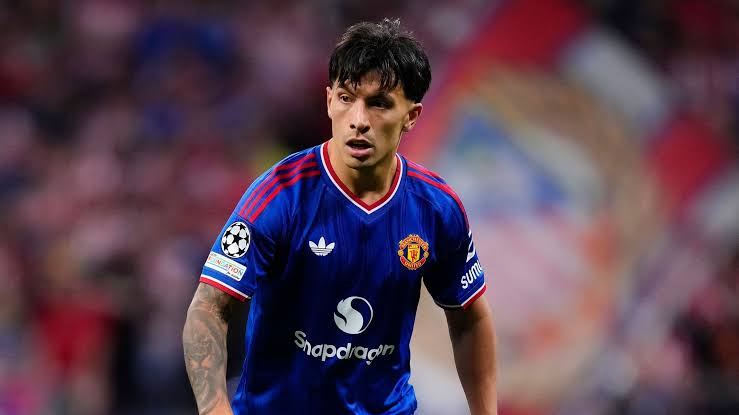

- Manchester United Crisis Deepens as Martínez Turns Criticism on Club Hierarchy
Manchester United’s early-season difficulties have developed into a broader institutional crisis after a fifth consecutive match without victory was followed by public criticism of the club’s recruitment strategy from defender Lisandro Martínez.
United collected only two points from the 15 available across those five matches, leaving the team under increasing pressure to reverse a damaging run before poor form becomes the defining feature of its 2026/27 campaign.
The latest setback came in the Champions League against Atlético Madrid on Tuesday, October 13. Beyond the result, however, Martínez’s comments afterwards suggested that frustration within the playing squad is beginning to extend beyond performances on the pitch.
“I have to control myself a lot,” the Argentine defender said.
“Sometimes it’s a reflection in the mirror of our club at this moment. I expect more from our technical director, I have to be honest. I expected more investment in the summer.”
For a senior player to question the club’s technical leadership and summer spending publicly represents an escalation. Dressing-room frustrations are normally managed internally, particularly when a team is already struggling for results.
Martínez’s decision to speak openly indicates either that private concerns have not been resolved or that confidence in the club’s sporting direction is weakening.
The defender’s criticism will resonate with supporters who believe United entered the season without addressing important weaknesses in the squad. But it also risks creating a convenient explanation for performances that have fallen below expectations.
Recruitment can improve the quality and balance of a team, but it cannot fully explain a run of five matches without victory. Players already at the club retain responsibility for execution, discipline and intensity.
United’s defensive record provides evidence that the problems predate the current campaign. The club conceded 50 goals during the 2025/26 Premier League season, highlighting vulnerabilities that appear not to have been corrected sufficiently.
The situation also raises questions about squad management.
United have struggled to move some players out of the club, with Marcus Rashford’s future among the unresolved issues attracting attention. Difficulty selling players can restrict recruitment by tying up wages, squad places and transfer resources.
This produces a cycle familiar to United supporters: underperforming players remain, new signings are expected to correct structural problems immediately and another transfer window becomes the proposed solution when results deteriorate.
Yet recruitment alone cannot create coherence.
A successful football operation requires alignment between ownership, the technical director, recruitment staff, coaching personnel and players. Transfers must serve a recognisable tactical plan rather than become isolated responses to public pressure.
The more significant concern is that United again appear to lack that shared direction.
Five matches without a victory can occur even in a strong season. What transforms poor form into a crisis is the combination of weak results, public criticism and uncertainty over who is responsible for correcting the decline.
If players believe the squad was inadequately strengthened, the technical leadership must explain the constraints and priorities behind its decisions. If management believes the existing squad is capable of more, performances must improve quickly enough to prove it.
United must also prevent frustration from dividing the club into competing camps. Public disagreements between players and executives can weaken authority, encourage blame-shifting and make it harder for the coaching staff to rebuild confidence.
The season remains at an early stage, leaving time for recovery. A sequence of victories could change the atmosphere and reduce the intensity of scrutiny.
However, a turnaround will require more than one favourable result. United need greater defensive reliability, clearer tactical identity and visible accountability across both the dressing room and executive structure.
Martínez’s comments have therefore changed the nature of the debate.
The question is no longer simply whether Manchester United can end their winless run. It is whether the people responsible for recruitment, coaching and performances still share a common understanding of how the club should move forward.
Without that alignment, another transfer window may add players without resolving the institutional weaknesses behind United’s recurring crises.

