

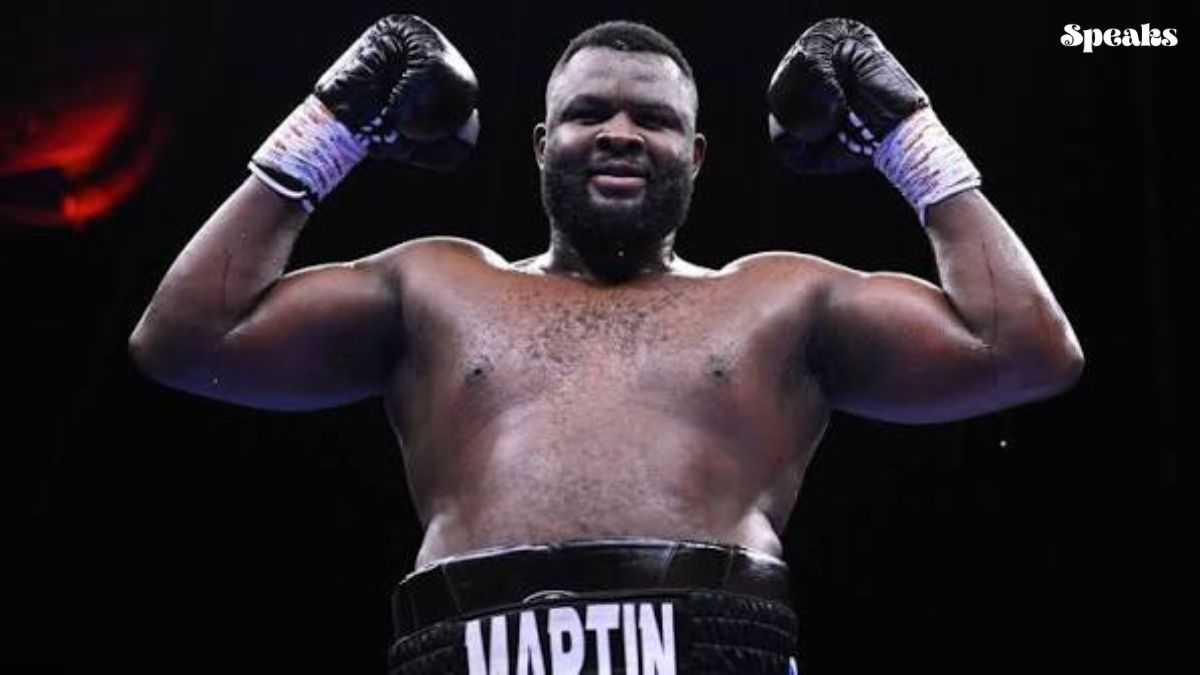

- Martin Bakole Replaces Injured Jai Opetaia to Face Deontay Wilder on Fury–Joshua Undercard
Congolese heavyweight Martin Bakole has been confirmed as Deontay Wilder’s new opponent for the December 11 boxing showdown in Cardiff, replacing injured Australian cruiserweight Jai Opetaia on the undercard of the highly anticipated clash between Tyson Fury and Anthony Joshua.
The late change introduces a significantly different challenge for Wilder, the former World Boxing Council (WBC) heavyweight champion, who will now face a physically imposing and experienced heavyweight rather than an accomplished cruiserweight moving up in weight.
Bakole, who had already been scheduled to compete on the same fight card, will take on the American at the Principality Stadium in Wales in a contest that could have important implications for both fighters’ ambitions in the heavyweight division.
The announcement, confirmed on Monday, November 23, follows Opetaia’s withdrawal after aggravating a hand injury in training.
With less than three weeks remaining before fight night, organisers have opted to promote Bakole into the contest rather than seek an entirely new participant.
The change adds another major heavyweight attraction to an event already headlined by Fury and Joshua, two former world champions whose long-awaited meeting has generated considerable international attention.
Confirmed heavyweight contest on the Fury–Joshua undercard. The event is scheduled for Netflix broadcast.
Wilder, renowned for his extraordinary knockout power, welcomed the replacement and suggested that defeating Bakole could put him in contention for another world-title opportunity.
Speaking in a video circulated on social media, the American said, “Bakole is next, and then after that, it’s going to be crazy.”
He also thanked the Congolese fighter for accepting the contest and promised an entertaining encounter.
The remarks underline Wilder’s determination to re-establish himself among the heavyweight division’s leading contenders after a period in which his performances and results raised questions about his ability to return to the summit of the sport.
The American’s career has been defined by explosive punching power, which helped him establish himself as one of boxing’s most feared knockout artists during his reign as WBC champion.
However, defeats against elite opponents have exposed weaknesses that opponents with strong defensive discipline and effective offensive pressure have sought to exploit.
Bakole presents a different challenge from Opetaia because he is an established heavyweight with the physical size and experience to compete against naturally large opponents.
Standing approximately six feet six inches tall and weighing around 300 pounds, Bakole has developed a reputation for combining considerable physical strength with sustained attacking pressure.
His most significant victories include wins over Tony Yoka, Carlos Takam and American heavyweight prospect Jared Anderson.
The victory over Anderson in August 2024 was particularly important, as Bakole stopped the highly regarded American in the fifth round and strengthened his reputation as a dangerous contender.
That performance demonstrated his capacity to challenge highly rated opponents rather than merely compete against lower-ranked heavyweights.
Nevertheless, Bakole has also experienced setbacks.
He suffered a second-round stoppage defeat against former heavyweight world champion Joseph Parker after accepting the bout at extremely short notice.
The circumstances of that defeat generated debate about his preparation and conditioning, but it nevertheless remains an important result when assessing his recent performances.
Bakole’s selection creates a particularly interesting contest because it brings together two heavyweights with contrasting fighting approaches.
Wilder has historically relied on speed, range and exceptional punching power, particularly his straight right hand, to finish opponents.
His ability to change the course of a contest with one decisive punch has made him dangerous even when losing rounds.
Bakole, by contrast, tends to use his size, combinations and forward pressure to force opponents into difficult exchanges.
A central tactical question will be whether he can close the distance without exposing himself to Wilder’s powerful right hand.
If Bakole succeeds in controlling the space and forcing sustained exchanges, his physical advantages could become important.
However, prolonged forward pressure against Wilder carries obvious risks because the American remains capable of delivering a fight-ending punch.
The contest is therefore more than a straightforward replacement bout.
It offers an opportunity to determine whether Wilder can remain effective against a large, experienced heavyweight and whether Bakole can reproduce the form that established him as a serious contender.
For Bakole, the fight represents an unexpected opportunity to compete on one of the sport’s most prominent international stages.
He had originally been scheduled to face Nigerian heavyweight Solomon Adebayo on the Cardiff undercard.
His elevation to face Wilder significantly increases both the profile and competitive demands of his assignment.
The late adjustment also places additional importance on preparation, although Bakole’s prior inclusion on the card suggests that he had already been preparing for a December contest.
Promoter Dana White welcomed the revised matchup, describing Bakole as a formidable knockout puncher and highlighting the combined finishing records of the two fighters.
White said, “Wilder and Bakole have 66 wins and 59 knockouts.”
The figures underline the organisers’ expectation that the contest could deliver an explosive encounter between two powerful heavyweights.
Opetaia’s withdrawal, meanwhile, removes an intriguing element from the original matchup.
The Australian had been scheduled to step up from cruiserweight to face Wilder, creating a contest between a technically accomplished fighter from a lower weight division and an established heavyweight champion.
His hand injury has prevented that experiment from taking place.
Opetaia is now expected to remain in the 200-pound cruiserweight division, where he has established himself among the leading fighters.
The revised undercard will also feature Welsh heavyweight Moses Jolly against Igor Adiel Macedo, with further bouts expected to be confirmed.
The December 11 event will be headlined by Fury and Joshua, whose confrontation has been anticipated for years.
Both fighters have held major heavyweight world titles, and their meeting represents one of the most significant all-British heavyweight contests of their generation.
The addition of Wilder against Bakole strengthens the heavyweight emphasis of the programme and increases its appeal beyond the British boxing audience.
For African boxing, Bakole’s participation carries particular significance.
The Congolese fighter has become one of the continent’s most prominent heavyweight representatives, with much of his professional career developed in the United Kingdom.
A victory over Wilder would represent a major addition to his record and could improve his position in discussions surrounding future high-profile contests.
However, the outcome will depend on his preparation, tactical discipline and ability to withstand Wilder’s power.
The wider significance of the replacement is that a fight originally designed around a cruiserweight’s move into the heavyweight division has become a contest between two established heavyweight punchers.
For Wilder, victory would provide an important platform for rebuilding momentum and pursuing further opportunities.
For Bakole, the contest offers a chance to demonstrate that his earlier victories over highly regarded opponents were evidence of genuine world-level ability.
And for the organisers, the change maintains a major heavyweight attraction beneath the Fury–Joshua headline bout.
With December 11 approaching, attention will turn to how both fighters approach their final preparations and whether Bakole can exploit the opportunity created by Opetaia’s withdrawal.
The matchup introduces considerable uncertainty, but its competitive appeal is clear: Wilder’s destructive right hand against Bakole’s size, pressure and attacking strength.
For two fighters seeking to strengthen their standing in the heavyweight division, the stakes extend well beyond a single night in Cardiff.

