


MIIF Structure Raises Risks to Mineral Revenue Stability, Weakens Independence – CEDA Director
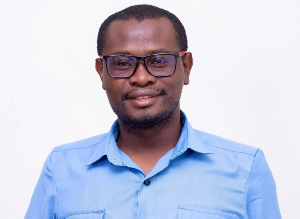
Executive Director of the Centre for Extractives and Development Africa (CEDA), Samuel Bekoe, has raised concerns over the structural design and governance framework of the Minerals Income Investment Fund (MIIF), warning that the Fund’s current setup exposes Ghana to continued mining sector volatility while limiting its independence.
Speaking during the NorvanReports and Economic Governance Platform (EGP) X Space discussion on Sunday, March 29, 2026, themed “Who Watches MIIF? Accountability, Investment Risk, and the Future of Ghana’s Mineral Wealth,” Mr Bekoe argued that unlike comparable sovereign wealth-type funds globally, MIIF’s investment strategy remains narrowly concentrated within the mining sector.
According to him, funds such as those in Norway and Botswana are deliberately structured to diversify investments beyond extractives, using resource revenues to build alternative growth pools in other sectors of their economies.
“Our MIIF… has been set up to reinvest monies largely in the mining sector. So we are still exposed to that particular volatility,” he stated, explaining that fluctuations in commodity prices undermine expected returns.
He noted that an alternative approach would have been to deploy mineral revenues into diversified investments across sectors and geographies, thereby generating more stable long-term returns that could still accrue to the Fund.
Mr Bekoe further questioned the strategic intent underpinning MIIF’s establishment, suggesting that its original design may have been closely linked to the now-defunct Agyapa Royalties transaction.
“Because Agyapa didn’t go through, MIIF was left exposed,” he remarked, adding that the Fund’s structure now raises fundamental concerns about its long-term purpose and effectiveness.
On governance, Mr Bekoe criticised what he described as excessive political control over MIIF’s operations, contrasting it with international best practice where sovereign funds are insulated from political influence and guided by technical expertise.
He pointed out that Ghana’s Finance Minister plays a significant role in the Fund’s governance, including nominating three out of seven board members, approving expenditures, and issuing investment guidelines.
“It’s like you are placing MIIF under the hands and control of the Minister of Finance. The fundamental question is then why set up MIIF?” he questioned.
He further highlighted that the President appoints the board, raising concerns about the ability of the board to act independently of political direction.
Mr Bekoe also noted that even the Investment Advisory Committee, which should provide technical oversight, is not insulated from political influence as its chairperson is appointed by the Finance Minister.
The cumulative effect, he argued, is that MIIF risks functioning less as an independent wealth accumulation vehicle and more as a policy instrument subject to political direction.
“In most countries, they tend to shy away from political influence on these funds… but if you look at ours, it is largely under the President and the Minister of Finance,” he said.
He advocated for a more independent and technically driven governance structure, including the appointment of board members from professional bodies and civil society, to enhance accountability and investment discipline.
Such reforms, he noted, would strengthen the Fund’s credibility and align it with global best practices for managing resource-backed investment funds.

