

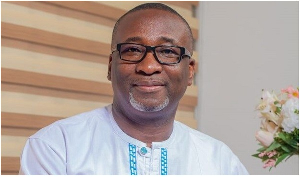

MIIF’s Real Challenge Is Leadership, Not Structure – Dr. Dumanya Calls for Accountability and Strategic Reset
Ghana’s Minerals Income Investment Fund (MIIF) is facing renewed scrutiny over its performance, with policy analyst Dr Bernard Tetteh Dumanya arguing that the Fund’s core challenge lies less in its institutional design and more in weaknesses in leadership, execution and accountability.
Speaking on the Fund’s direction during the NorvanReports and Economic Governance Platform (EGP) X Space discussion on Sunday, March 29, 2026, themed “Who Watches MIIF? Accountability, Investment Risk, and the Future of Ghana’s Mineral Wealth,” Dr Dumanya said MIIF’s mandate, established under Act 978 to manage and invest mineral revenues for long-term national development, is sufficiently clear on paper. The difficulty, he suggested, is not in the framework itself but in how effectively it is being implemented.
“The problem is not the absence of structures. The problem is the people managing them,” he said.
MIIF is subject to multiple layers of oversight, including Parliament, the Ministry of Finance, the Auditor-General and internal compliance systems. Yet, according to Dr Dumanya, these safeguards have not translated into the level of transparency and accountability expected of a sovereign wealth-type institution.
He attributed this gap primarily to limitations in human resource capacity and leadership quality, arguing that even the most sophisticated institutional arrangements cannot function effectively without competent and principled management.
“No matter how well-designed a system is, it depends on the competence and integrity of those running it,” he said.
Dr Dumanya situated the Fund’s performance within Ghana’s broader historical challenge of managing mineral wealth, where revenues have often been channelled towards short-term fiscal needs rather than long-term capital accumulation. This pattern, he said, has weakened the country’s ability to build intergenerational savings and economic resilience.
He also pointed to the persistent risks posed by global commodity price volatility, noting that MIIF was expected to function, in part, as a stabilisation mechanism. So far, however, he said the Fund has yet to demonstrate clear effectiveness in that role.
Beyond these structural and macroeconomic pressures, Dr Dumanya raised concerns about limited transparency and weak public visibility into MIIF’s operations. While accountability frameworks formally exist, he argued that their practical enforcement remains inadequate.
“Accountability frameworks exist on paper, but in practice, they are weak,” he said, adding that opaque decision-making processes risk undermining public trust and deterring investor confidence.
To address these concerns, Dr Dumanya called for the development of a clearer strategic roadmap for MIIF, one that sets out revenue flows, asset allocation priorities, investment strategies and expected returns in a transparent and measurable way.
He also highlighted missed opportunities within Ghana’s extractive sector, including the development of a lithium value chain, gold value addition, industrialisation and strategic infrastructure investment. In his view, these areas represent potential avenues for strengthening economic resilience if effectively integrated into a well-managed sovereign wealth strategy.
Crucially, he emphasised the role of public scrutiny in strengthening institutional performance, urging greater citizen and civil society engagement in monitoring the Fund’s activities.
“Active participation from the public is critical. When citizens pay attention, institutions are compelled to do the right thing,” he said.
Key performance indicators such as asset growth, dividend income, job creation, portfolio diversification and contributions to GDP, he added, should be made more visible to enable informed public oversight.
Despite the challenges, Dr Dumanya maintained that MIIF retains significant potential. Realising that potential, however, will depend on stronger leadership, clearer strategic direction and a sustained commitment to transparency.
“The long-term value of Ghana’s mineral wealth will depend on how well we manage it today,” he said.

