


- Morocco Chase World Cup Legacy as Egypt Break New Ground for Arab Football
Morocco and Egypt have become the remaining standard-bearers for Arab football at the 2026 FIFA World Cup, carrying very different but equally powerful stories into the decisive phase of the tournament.
For Morocco, the campaign is about legacy. Four years after becoming the first African and Arab nation to reach a World Cup semi-final, the Atlas Lions are again proving that Qatar 2022 was not a beautiful exception but the beginning of a new competitive standard.
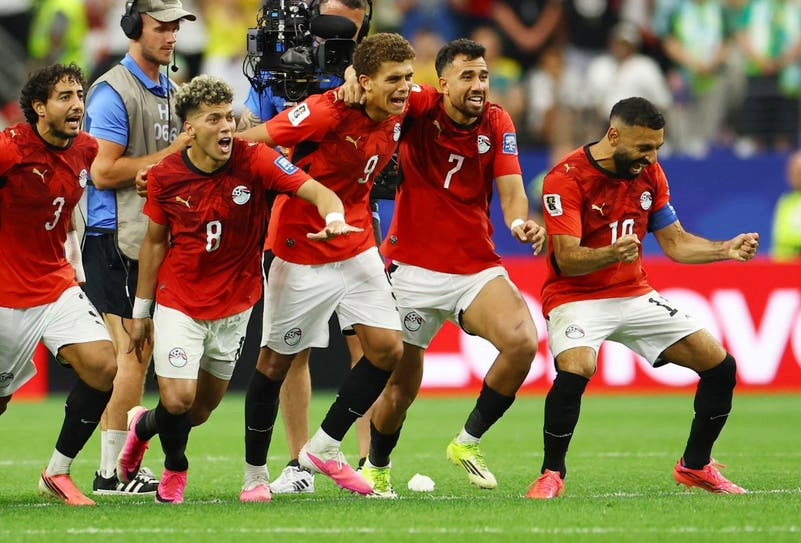
For Egypt, the story is one of breakthrough. Africa’s most decorated national team has finally moved beyond its historic World Cup frustrations, reaching the knockout phase for the first time after a dramatic penalty shootout victory over Australia.
Together, Morocco and Egypt now represent the final Arab interest in a World Cup that began with record regional participation, and their progress has revived hopes that football’s biggest stage may once again produce an Arab and African story of consequence.
Morocco have already taken another major step, sweeping aside co-hosts Canada 3-0 in the round of 16 to reach the quarter-finals. Reuters reported that Azzedine Ounahi was central to that victory, scoring twice after being deployed in a more advanced attacking role by coach Mohamed Ouahbi.
The result set up a heavyweight quarter-final meeting with defending champions France, who edged Paraguay 1-0 in their own last-16 tie.
For the Atlas Lions, the challenge now is no longer simply to surprise. That stage has passed. Morocco’s 2022 run changed expectations around African and Arab football. The team that once shocked Belgium, Spain and Portugal is now being judged not as a romantic outsider, but as a serious tournament force.
That shift is significant. It reflects the depth of the Moroccan project: players operating in major European leagues, a tactically disciplined system, strong technical quality and a national football structure increasingly capable of producing and attracting elite talent.
Their victory over Canada underlined those strengths. Morocco had to absorb pressure, adjust tactically and then punish their opponents with clinical second-half execution. Ounahi’s performance, in particular, showed the value of intelligent midfielders who can break lines, arrive in scoring positions and change the rhythm of knockout football.
There was also a historic individual note. Reports said Brahim Diaz became the first African player to register four assists in a single World Cup tournament after helping Morocco dismantle Canada.
Yet Morocco’s next assignment is formidable. France remain one of the most complete teams in the competition, and their narrow win over Paraguay showed they can manage difficult knockout matches even when not at their most fluid. For Morocco, facing the defending champions offers both risk and opportunity: a chance to measure the current generation against the highest standard in world football.
The Pharaohs arrived at this tournament with one of the most complicated World Cup histories in African football. Egypt were the first African nation to appear at the World Cup in 1934, but despite their dominance of the Africa Cup of Nations, they had never previously built a deep World Cup run.
That changed when they defeated Australia on penalties after a 1-1 draw, winning the shootout 4-2 to reach the last 16 for the first time. Reuters described the result as a historic milestone for a nation whose continental success has long contrasted with its underwhelming record on the world stage.
The achievement came only weeks after Egypt recorded a first-ever World Cup finals win, beating New Zealand 3-1 earlier in the tournament. For a country with seven Africa Cup of Nations titles, the breakthrough has carried emotional weight well beyond the immediate result.
Egypt’s progress has not always been fluent. Under Hossam Hassan, they have relied heavily on defensive structure, resilience and game management. Mohamed Salah remains the symbolic and technical leader, even if injury concerns have limited his explosiveness. Omar Marmoush and other attacking options have added quality, but Egypt’s strength so far has been survival, concentration and the ability to endure pressure.
Egypt now face Argentina, led by Lionel Messi, in a last-16 match that places one of Africa’s most storied football nations against the defending South American giants. For younger players such as Hamza Abdelkarim, the fixture offers both a severe test and an extraordinary stage.
The broader significance is clear. Morocco are trying to extend a modern legacy. Egypt are trying to create one.
For Arab fans, the two campaigns have produced a shared sense of possibility. Al Arabiya noted that Morocco and Egypt now carry the region’s remaining hopes in a tournament that started with unprecedented Arab representation.
That regional pride has also been visible far beyond North Africa and the Middle East. In New York’s Astoria neighbourhood, Al Jazeera reported that Arab communities gathered in cafes and on streets to celebrate World Cup victories by Morocco, Egypt and Algeria, turning the tournament into a public expression of diaspora identity and collective joy.
For Africa, the symbolism is equally important. Morocco’s 2022 semi-final run gave the continent its strongest World Cup statement. Egypt’s 2026 breakthrough gives one of African football’s traditional powers a long-awaited moment of global relevance.
The two nations now stand at different points of the same argument: that African and Arab football should no longer be framed merely through participation, passion or occasional upsets, but through structure, quality, tactical maturity and ambition.
The coming days will determine how far that argument can travel.
Morocco have already reached the quarter-finals and now face France in a tie loaded with sporting and historical meaning. Egypt must first navigate Argentina and the Messi factor, with the chance to turn a breakthrough campaign into something even more memorable.
Whether both advance or not, their campaigns have already deepened the World Cup’s regional narrative.
Morocco are chasing continuity after history. Egypt are chasing history after decades of frustration.
Together, they have ensured that Arab football’s voice remains loud in the knockout rounds, and that Africa’s presence at this World Cup is not merely symbolic, but competitive, emotional and increasingly difficult to ignore.

