

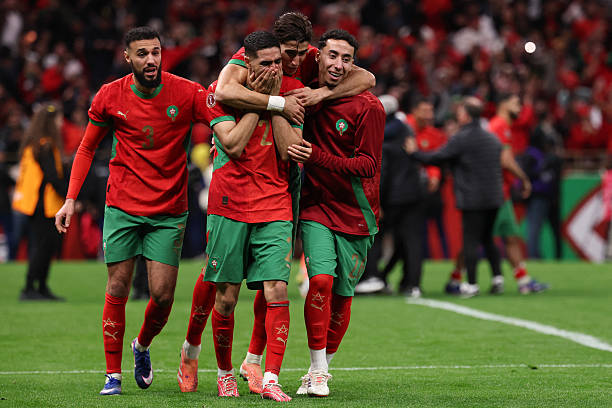

- Morocco Vows Fresh Legal Battle After CAS Restores Senegal’s 2025 AFCON Title
Morocco’s football authorities have vowed to pursue further legal action after the Court of Arbitration for Sport (CAS) overturned a controversial decision awarding the 2025 Africa Cup of Nations title to the North African country, restoring Senegal’s status as continental champions following a protracted dispute over one of the most contentious finals in African football history.
The Royal Moroccan Football Federation (FRMF) announced on Tuesday, November 24, 2026, that it would challenge the ruling, raising concerns about the integrity of the arbitration proceedings and arguing that important legal questions surrounding Senegal’s temporary withdrawal from the pitch had not been adequately addressed.
The decision, delivered in Lausanne, Switzerland, reverses a March 17 ruling by the Confederation of African Football’s (CAF) Appeal Board, which declared that Senegal had forfeited the final and awarded Morocco a 3-0 victory.
CAS instead reinstated the result achieved on the pitch, confirming Senegal’s 1-0 extra-time victory in Rabat on January 18, 2026.
The unanimous ruling represents a significant legal development, establishing that the referee’s decision to restart the final after Senegalese players temporarily left the field was protected under the established field of play doctrine in sports law.
However, Morocco’s determination to pursue further legal remedies means the controversy surrounding the championship could continue, even as CAF prepares to implement the tribunal’s decision.
The dispute originated during a dramatic conclusion to the final between host nation Morocco and Senegal at the Prince Moulay Abdellah Stadium.
With the match approaching the end of regulation time, referee Jean-Jacques Ngambo Ndala awarded Morocco a penalty, prompting Senegalese players to leave the pitch in protest.
The interruption lasted approximately 14 minutes before the players returned and the referee resumed proceedings.
Morocco subsequently missed the penalty, and Senegal secured victory through Pape Gueye’s extra-time goal.
Although Senegal celebrated winning the championship, the controversy continued after the tournament.
Morocco challenged the circumstances surrounding Senegal’s withdrawal, arguing that the players’ conduct constituted a violation of competition regulations requiring the match to be forfeited.
CAF’s Appeal Board subsequently accepted the forfeiture argument and awarded Morocco a 3-0 victory, effectively stripping Senegal of the title it had won on the pitch.
Senegal appealed to CAS on March 25, seeking to overturn that decision and restore the original result.
The case raised a fundamental question about the relationship between the authority of match officials and the powers of football’s disciplinary bodies.
Morocco maintained that Senegal’s temporary departure from the field violated Articles 82 and 84 of the AFCON regulations and should have resulted in the referee ending the contest prematurely.
Senegal argued that the referee had exercised his authority to resume the match, making the resulting sporting outcome binding under the field of play doctrine.
The CAS panel sided with Senegal, concluding that the referee had the exclusive authority to determine whether the match should continue.
Its ruling stated, “The Referee did not err in law.”
The tribunal reasoned that the relevant AFCON regulations applied where a team’s conduct caused a match to be permanently abandoned, rather than where play was temporarily interrupted before being resumed by the referee.
Because both teams returned to the field and demonstrated their willingness to continue, CAS found that the referee had acted within his powers.
The panel also rejected the contention that his decision was arbitrary, acknowledging the tense circumstances but concluding that they did not establish improper decision-making.
The ruling has wider implications for football governance because it reinforces the legal protection generally afforded to referees’ decisions taken during matches.
The field of play doctrine limits the circumstances under which sporting tribunals can reconsider decisions made by match officials in the course of applying the laws of the game.
Exceptions may arise where there is evidence of arbitrariness, bad faith or other recognised legal grounds.
In this case, CAS found no basis for overturning the referee’s decision to allow the match to continue.
Importantly, the tribunal did not conclude that Senegal’s temporary withdrawal was beyond disciplinary scrutiny.
It recognised that CAF had already imposed sanctions against the Senegalese federation, coach Pape Thiaw and certain players through separate disciplinary proceedings.
The distinction is significant: disciplinary punishment for misconduct does not necessarily require the sporting result of a completed match to be reversed.
For Morocco, however, the ruling has failed to resolve concerns about the arbitration process.
The FRMF expressed disappointment that some of its requests had not been addressed to its satisfaction, including concerns about alleged contact between CAS arbitrator Ulrich Haas and Senegalese Football Federation president Abdoulaye Fall shortly before the decision was announced.
The Moroccan federation has questioned whether the alleged communication could undermine confidence in the proceedings.
However, the allegation remains disputed. A spokesperson for the Senegalese Football Federation denied that any telephone communication occurred, while CAS stated that Haas had strongly denied direct contact with the parties at any stage of the proceedings.
No finding establishing improper communication has been reported.
Morocco’s concerns must therefore be distinguished from the tribunal’s confirmed findings on the merits of the appeal.
The Moroccan federation has indicated that it intends to initiate further proceedings challenging the award.
The principal remaining legal avenue is an application to Switzerland’s Federal Supreme Court, which has limited supervisory jurisdiction over international arbitration awards issued in Switzerland.
Such proceedings are not equivalent to a fresh appeal in which the entire football dispute is reconsidered.
A challenge would ordinarily need to establish recognised grounds for setting aside an arbitration award, potentially involving jurisdiction, procedural fairness or the constitution of the tribunal.
The Swiss court’s role is therefore considerably narrower than that of CAS when hearing the substantive appeal.
A further challenge does not, by itself, reverse Senegal’s reinstatement as champions.
CAF has confirmed that it respects the ruling and will undertake the steps necessary to implement it.
The Senegalese Football Federation welcomed the decision as a vindication of its position that the championship should be determined by the result achieved on the pitch.
Its president, Abdoulaye Fall, expressed satisfaction with the outcome while emphasising the importance of maintaining relations with Morocco.
He stated, “The Court of Arbitration for Sport has delivered justice for sport.”
Fall also reaffirmed the ties between the two countries, indicating that Senegal wished to move beyond the dispute.
Senegal forward Sadio Mané similarly appealed for mutual respect, stressing that the controversy should not undermine the relationship between the two footballing nations.
The dispute has generated an unusual situation in which the outcome of an international championship was changed administratively several weeks after the final, only to be restored following arbitration months later.
It raises broader questions about the consistency of competition regulations, the powers of match officials and the mechanisms available for resolving disputes within African football.
For CAF, the episode provides an opportunity to review whether its regulations clearly distinguish between a temporary interruption and a permanent abandonment.
Such clarity could reduce the possibility of future disagreements over matches disrupted by protests, crowd incidents or other exceptional circumstances.
The dispute also highlights the importance of transparent disciplinary processes and timely resolution of appeals.
Where championship outcomes remain uncertain for months, the consequences extend beyond the competing teams to supporters, sponsors, broadcasters and the credibility of the competition itself.
The central issue now is whether Morocco can establish a recognised legal basis for challenging the arbitration process, rather than simply renewing its disagreement with the referee’s decision or the sporting outcome.
CAS has already examined the arguments concerning Senegal’s temporary withdrawal and concluded unanimously that the referee acted within his authority.
Any further proceedings would face a different legal test.
For Senegal, the ruling restores a continental title secured through victory in the final, bringing a measure of certainty to an achievement overshadowed by prolonged litigation.
For Morocco, the decision represents a significant setback after initially securing the championship through CAF’s appeal process.
The federation’s next steps will determine whether the dispute progresses to Switzerland’s highest court or whether the ruling ultimately stands without further judicial intervention.
Beyond the rivalry between the two countries, the episode represents an important test of African football’s regulatory framework.
The question is no longer simply who won the 2025 Africa Cup of Nations on the pitch. CAS has confirmed Senegal’s 1-0 victory.
What remains is whether Morocco can successfully challenge the process through which that outcome was legally reinstated.
Until any competent court decides otherwise, Senegal remains the recognised 2025 African champion.

