


- Nairobi Beats London, Rome and Munich to Host Africa’s First World Athletics Championships
Nairobi will host the 2029 World Athletics Championships after beating competing bids from London, Rome and Munich, handing Africa the right to stage the sport’s flagship global event for the first time.
World Athletics announced the decision on Tuesday following its Council meeting in Budapest, with Munich subsequently awarded the 2031 championships. The outcome places Kenya at the centre of global athletics four years after Nairobi unsuccessfully sought the 2025 edition, which was ultimately awarded to Tokyo.
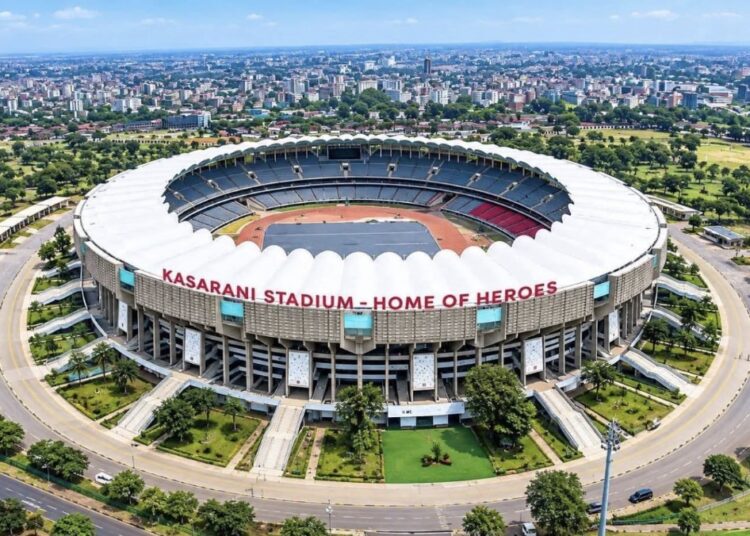
The 2029 championships will be staged at Kasarani Stadium, which is undergoing an extensive structural overhaul ahead of Kenya’s role in hosting matches during the 2027 Africa Cup of Nations.
For Nairobi, the decision represents more than another major sporting event. It is the culmination of nearly a decade of building experience in international athletics hosting, beginning with the World U18 Championships in 2017 and followed by the World U20 Championships in 2021. The city has also developed the Kip Keino Classic into one of Africa’s leading one-day athletics meetings since it joined the World Athletics Continental Tour Gold in 2020.
“Nairobi presented a compelling and emotional bid, and taking the World Athletics Championships to Africa for the first time will be historic,” World Athletics President Sebastian Coe said.
“Kenya is one of the great athletics nations. The sport is woven into the fabric of the country.”
The decision breaks a significant hosting barrier for a continent that has supplied many of athletics’ most celebrated champions but has never staged the senior outdoor World Championships since the competition began in 1983.
Kenya’s competitive advantage extends beyond its history of producing elite distance runners.
World Athletics said its research found that 68% of Kenyans surveyed described their interest in athletics as high, compared with a global average of 39%, making Kenya the most athletics-interested market covered by the survey. Athletics ranks second only to football among the country’s most-followed sports.
That popularity has been reinforced by sustained competitive success. Kenya is the second-most successful nation in World Athletics Championships history and finished second on the medal table at the Tokyo 2025 championships, winning seven gold medals and 11 medals overall.
The country’s athletics identity has been shaped by generations of global champions including Faith Kipyegon, Eliud Kipchoge, David Rudisha, Hellen Obiri, Vivian Cheruiyot, Kip Keino, Paul Tergat and Tegla Loroupe.
Yet winning the hosting rights also shifts attention from Kenya’s performances on the track to its ability to deliver a complex global event off it.
World Athletics said Nairobi’s bid combined operational planning, financial guarantees and the redevelopment of Kasarani Stadium with a wider vision for bringing the championships to Africa. Coe said the governing body had four “outstanding” bids for the 2029 and 2031 editions and described the selection process as difficult.
London, Rome, Munich and Nairobi had all been competing in the process, with Nairobi securing 2029 and Munich taking 2031. British Athletics said it was disappointed after a London campaign backed by the UK government and Greater London Authority failed to secure the championships.
For Kenya, the timing creates an unusual infrastructure opportunity. Kasarani’s redevelopment is already linked to AFCON 2027. The World Athletics Championships two years later could allow Kenya to spread the economic and sporting value of the investment across multiple major events rather than build facilities for a single tournament.
The larger economic opportunity extends into tourism, hospitality, transport, broadcasting, event management and commercial sponsorship.
Major global championships bring thousands of athletes, officials, media representatives and spectators into host cities while placing destinations before international television audiences. For Nairobi, the challenge will be converting that temporary influx into longer-term tourism demand, improved sporting infrastructure and greater commercial activity around athletics.
The event could also strengthen Kenya’s position within Africa’s emerging sports economy.
African countries have increasingly invested in stadiums, convention facilities and transport infrastructure in an effort to capture more of the economic activity associated with major international events. But the financial value of hosting ultimately depends on how effectively existing infrastructure is used, costs are controlled and facilities remain commercially relevant after the closing ceremony.
Nairobi enters that challenge with an established athletics audience and prior experience.
Crowds packed Kasarani during the 2017 World U18 Championships, while subsequent events have helped develop local expertise in security, competition management, broadcasting and spectator operations. World Athletics said those competitions contributed to broader experience across Africa, alongside Uganda’s hosting of the World Cross Country Championships in 2017 and Botswana’s staging of the World Athletics Relays in 2026.
The Nairobi award also forms part of World Athletics’ strategy to spread its premier championship more widely across regions.
Beijing will stage the next World Championships from September 10-19, 2027. Nairobi follows in 2029 before the event returns to Europe in Munich in 2031. World Athletics said both Nairobi and Munich will stage their championships in September as part of its effort to make a major global competition the climax of the outdoor athletics season.
For Kenya, the years between now and 2029 will determine whether the historic award becomes equally significant economically.
The country must complete the Kasarani overhaul, deliver transport and accommodation capacity, provide reliable event operations and demonstrate that African cities can host athletics’ biggest championship at the standard expected of established global venues.
Success could strengthen the case for more major championships to come to Africa and alter the geography of global sports hosting.
Africa has long supplied some of the athletes who define the World Championships. In 2029, for the first time, the continent will provide the stage as well.

